
🎬 All the Empty Rooms
Release Year: 2025 –
Streaming Platform: Netflix
⭐ IMDb: 7.6/10 | 🍅 Rotten Tomatoes: N/A
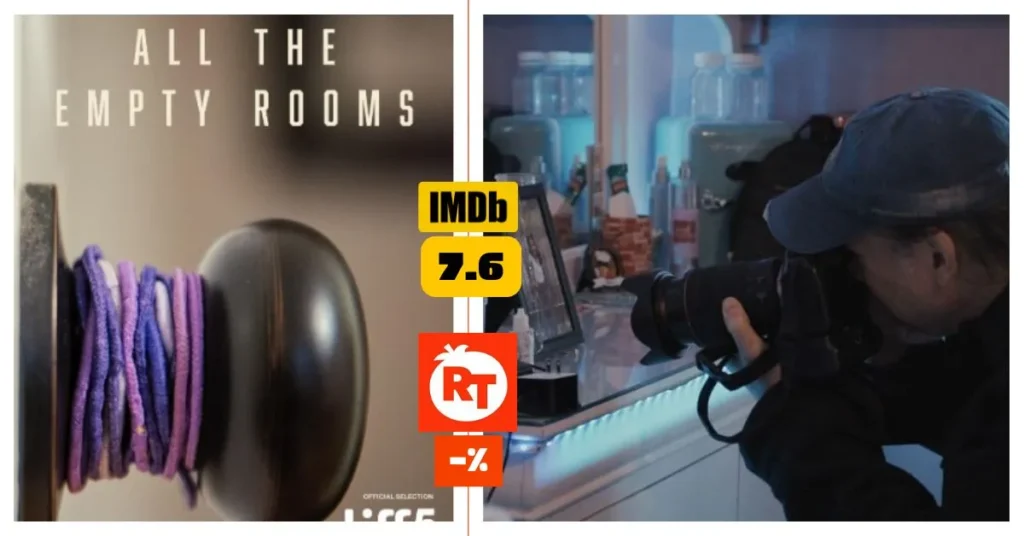
“All the Empty Rooms” is a quietly devastating short documentary that turns the camera not on violence itself, but on the spaces left behind by children killed in school shootings in the United States. Directed by Joshua Seftel and streaming on Netflix, this 34‑minute film follows CBS News correspondent Steve Hartman and photographer Lou Bopp as they document bedrooms that have been preserved almost like shrines, capturing grief in its most intimate form.
As a people‑first documentary, “All the Empty Rooms” is less interested in statistics and policy debates and more focused on the families who wake up every day to look at a door their child will never walk through again. For viewers looking for a powerful, sobering watch on Netflix, this film is concise yet emotionally heavy, and it lingers long after the credits.
Overview of All the Empty Rooms
“All the Empty Rooms” is a 2025 American short documentary with a runtime of around 34 minutes and a PG‑13 rating for thematic material and brief strong language. The documentary centers on Hartman and Bopp’s seven‑year project of photographing the bedrooms of children killed in school shootings, capturing not only the physical details of these spaces but also the emotional landscapes of the parents who keep them intact.
The film features several families whose children were killed in tragedies such as the Saugus High School shooting, the Robb Elementary School shooting in Uvalde, and the Covenant School shooting. Through interviews and carefully composed images, it frames these rooms as sacred spaces, where toys, posters, clothes and even unturned‑off lights speak volumes about lives interrupted.
Story and pacing
Narratively, “All the Empty Rooms” is structured around visits to a handful of bedrooms, with Hartman’s gentle interviewing style and Bopp’s camera acting as our guides. Instead of rushing from story to story, the documentary carefully lingers, letting parents talk about their children, their routines and the ways they have chosen to preserve each room exactly as it was.
The pacing is intentionally slow and meditative, matching the sense of reverence Bopp describes when he removes his shoes and treats every room as a kind of sanctuary. This deliberate rhythm may feel heavy for some viewers, but it fits the subject matter; the pauses, silences and still shots become part of the storytelling, allowing grief and memory to breathe.
Performances and presence on screen
Unlike scripted films, the “performances” here come from real people—parents like Frank and Nancy Blackwell, Javier and Gloria Cazares, and Bryan and Cindy Muehlberger, who appear as themselves and share their stories on camera. Their presence is unpolished and raw in the best way, with moments of quiet reflection, visible pain and, at times, fragile warmth when they recall everyday details about their children.
Steve Hartman and Lou Bopp also function as on‑screen personalities, though the film wisely keeps the focus on the families rather than on the journalists. Hartman’s empathetic questions and Bopp’s attentive, almost forensic visual curiosity add a gentle framework, but the documentary never feels like it is about them; it is always about the kids whose rooms we are allowed to enter.
Direction and visuals
Director Joshua Seftel brings a restrained, observational style that lets the subject speak for itself instead of leaning on manipulative tactics or heavy narration. Working with cinematographer Matt Porwoll, he uses calm, steady shots, close‑ups of objects and slow moves through each bedroom to emphasize texture and detail—posters on walls, stuffed animals, drawers filled with childhood treasures.
Visually, the film often feels like a series of moving photographs, which mirrors Bopp’s project of shooting over ten thousand images inside these rooms. One particularly haunting example mentioned in coverage is the bedroom of 9‑year‑old Jackie Cazares in Uvalde, where the lights have never been turned off and a chair sits beside the bed for her father, a small visual choice that carries enormous emotional weight
The score by composer Alex Somers adds a subtle emotional undercurrent without overwhelming the scenes, using delicate, atmospheric music that respects the gravity of the subject. Seftel and the editors (Erin Casper, Stephen Maing, Jeremy Medoff) avoid flashy cuts in favor of smooth transitions that keep the documentary grounded and coherent.
Pros and cons
Pros
- Deeply human focus: The film gives victims faces, rooms and stories, moving beyond numbers to show who these children were and how their families live with absence.
- Powerful visual concept: Centering the narrative on bedrooms—spaces frozen in time—offers a fresh, emotionally potent way to think about school shootings and grief.
- Respectful tone: From Bopp’s careful approach to Seftel’s unobtrusive direction, the documentary feels reverent rather than exploitative.
- Concise runtime: At about 34 minutes, the film is accessible for viewers who might be hesitant to commit to a feature‑length grief‑centered documentary.
Cons
- Emotionally overwhelming: For some viewers, especially those sensitive to gun‑violence stories or with similar lived experiences, the subject may be too intense, even at a short length.
- Limited policy context: The film consciously stays away from in‑depth political or policy analysis, which may leave viewers wanting more discussion of solutions to gun violence.
- Narrow scope: By design, it focuses on a small set of families, so those looking for broader statistical or historical overview might feel the scope is quite narrow.
Cast & crew
All the Empty Rooms – Cast & Crew Table
| Category | Name | Role / Description |
|---|---|---|
| Main on‑screen participant | Steve Hartman | Self – CBS News correspondent who visits the families and bedrooms. |
| Main on‑screen participant | Lou Bopp | Self – Photographer leading the long‑running project to document the rooms. |
| Main on‑screen participant | Frank Blackwell | Self – Dominic’s father. |
| Main on‑screen participant | Nancy Blackwell | Self – Dominic’s mother. |
| Main on‑screen participant | Rose Bopp | Self – Lou Bopp’s daughter. |
| Main on‑screen participant | Chad Scruggs | Self – Hallie’s father. |
| Main on‑screen participant | Jada Scruggs | Self – Hallie’s mother. |
| Main on‑screen participant | John Scruggs | Self – Hallie’s brother. |
| Main on‑screen participant | Charlie Scruggs | Self – Hallie’s brother. |
| Main on‑screen participant | Gloria Cazares | Self – Jackie’s mother. |
| Main on‑screen participant | Javier Cazares | Self – Jackie’s father. |
| Main on‑screen participant | Meryl Hartman | Self – Steve’s daughter. |
| Main on‑screen participant | Cindy Muehlberger | Self – Gracie’s mother. |
| Main on‑screen participant | Bryan Muehlberger | Self – Gracie’s father. |
| Main on‑screen participant | Dominic Blackwell | Self – Killed in the Saugus High School shooting (archive footage). |
| Main on‑screen participant | Gracie Muehlberger | Self – Killed in the Saugus High School shooting (archive footage). |
| Main on‑screen participant | Jackie Cazares | Self – Killed in the Robb Elementary School shooting (archive footage). |
| Main on‑screen participant | Hallie Scruggs | Self – Killed in the Covenant School shooting (archive footage). |
| Key creative team | Joshua Seftel | Director. |
| Key creative team | Trevor Burgess | Producer. |
| Key creative team | James Costa | Producer. |
| Key creative team | Conall Jones | Producer. |
| Key creative team | Joshua Seftel | Producer (in addition to directing). |
| Key creative team | Matt Porwoll | Producer; cinematography / director of photography. |
| Key creative team | Regina K. Scully | Executive producer. |
| Key creative team | Adam McKay | Executive producer. |
| Key creative team | Kevin J. Messick | Executive producer. |
| Key creative team | Lisa Cortes | Executive producer. |
| Key creative team | Geralyn White Dreyfous | Executive producer. |
| Key creative team | Steve Kerr | Executive producer. |
| Key creative team | Stephen Maing | Story producer; editor. |
| Key creative team | Jeremy Medoff | Story producer; editor. |
| Key creative team | Erin Casper | Editor. |
| Key creative team | Alex Somers | Music – composer. |
| Key creative team | Amanda Marsh | Music editing. |
| Key creative team | Peter Albrechtsen | Sound design, including foley and sound mixing supervision. |
This extensive crew list underlines how much care and craft were invested into what might look like a small, simple short on the surface. The combination of experienced documentary producers and high‑profile executive producers like Adam McKay and Lisa Cortes also signals the project’s ambitions in awards and impact spaces.imdb+1
Who should watch All the Empty Rooms?
This documentary is essential viewing for anyone interested in socially conscious nonfiction filmmaking that foregrounds human stories over talking points. Viewers who have followed the debate about gun violence but feel disconnected from the individual lives behind the headlines may find this film especially impactful, because it forces a shift from abstract numbers to concrete, intimate spaces.
It is also a strong choice for fans of reflective, visually driven documentaries and for those who admired Seftel’s earlier work such as “Stranger at the Gate.” However, people who are currently coping with trauma related to school shootings or gun violence should approach it with caution, as its emotional intensity is high despite the short runtime.
Watching it on Netflix
“All the Empty Rooms” is available to stream on Netflix, including in regions like the United States and India, as catalog trackers such as JustWatch list it as part of the platform’s library. Subscribers can find it under the documentary and short categories; there are currently no widely available free‑streaming options without a subscription.
Given its 34‑minute length, it fits well into an evening where you might pair it with a lighter title before or after to balance the emotional load. For families with older teens, it may also function as a conversation starter about safety, grief and the realities behind news coverage, though parental discretion is advised due to the subject matter.
Verdict
As a piece of filmmaking, “All the Empty Rooms” succeeds because it chooses a narrow, emotionally resonant lens and explores it with patience and respect. It does not pretend to solve the epidemic of gun violence, but it does something arguably just as crucial: it insists that each child is remembered as a full, complex human being whose room still tells their story.
For Netflix viewers, this is one of those short documentaries that feels small in duration but large in moral and emotional weight. If the main SEO keyword is All the Empty Rooms review, the honest verdict is clear: this is a deeply moving, carefully crafted film that is absolutely worth 34 minutes of your time, provided you are prepared for its heavy themes.
Reviews & rankings
Critical and audience snapshot
| Metric / Source | Score / Note |
|---|---|
| IMDb user rating (weighted) | 7.6/10 based on user ratings |
| IMDb sample featured user review sentiment | Described as “deeply emotional” and “compulsory to watch” |
| Awards & recognition | Nominated for Critics’ Choice Documentary Award for Best Short Documentary |
| Typical critic descriptors (major outlets) | “Emotionally potent,” “sobering,” “intimate,” “sacred spaces” |
| Recommended viewing on Netflix December slate | Highlighted as one of the notable new docs of the month |
In the landscape of short documentaries on streaming platforms, “All the Empty Rooms” sits in the upper tier thanks to its strong festival and awards profile and its emotionally charged concept. While it may not have the mass buzz of a feature‑length true‑crime series, its impact‑to‑runtime ratio is remarkably high, making it stand out among recent Netflix non‑fiction releases.