
The Grudge Movie Explained: The Curse & Ending Breakdown
🎬 The Grudge
Release Year: 2004
Streaming Platform: Netflix, Peacock, AMC+
⭐ IMDb: 6.6/10 | 🍅 Rotten Tomatoes: 41% (Audience Score: 59%)
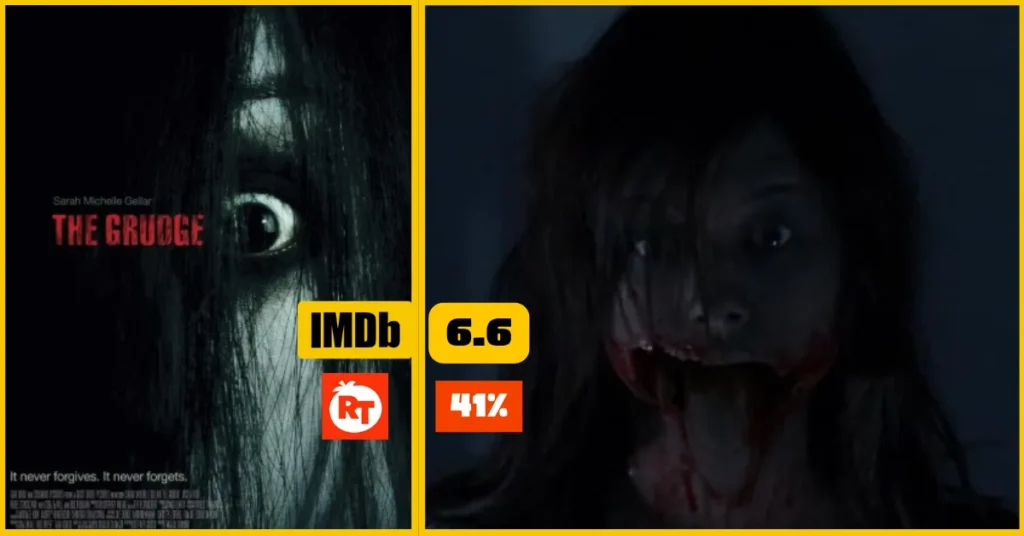
Takashi Shimizu’sThe Grudge(2004) is a cornerstone of modern J-horror and its American remakes. More than just a ghost story, it’s a terrifying study of a curse born from profound rage and sorrow. This article provides a complete“Movie Explained”and“Ending Explained”breakdown. We’ll untangle its non-linear timeline, explain the origin of the curse, and decipher its haunting, bleak conclusion. If the film’s overlapping timelines and relentless spirits left you with questions, you’re in the right place.
Overview
The Grudgeis a supernatural horror film that masterfully creates dread through atmosphere rather than mere jump scares. It is a mood piece, characterized by its pale color palette, unsettling sound design (notably the iconic death rattle), and a unique narrative structure. The story doesn’t follow a linear path. Instead, it jumps across different years, showing how the same curse claims victims who merely step into a poisoned house. The central theme is the inescapable nature of rage and grief, personified by vengeful spirits.
SPOILER WARNING
Story Explained (Full Breakdown)
Act 1 Explained: The Curse is Encountered
The film opens with a prologue in 2004, where a man, Peter, is haunted in his apartment before committing suicide. The story then rewinds to 2002, introducing American exchange studentKaren Davis (Sarah Michelle Gellar). She is a caregiver for an agency and is assigned to visit an elderly, catatonic woman named Emma in a suburban Tokyo home.
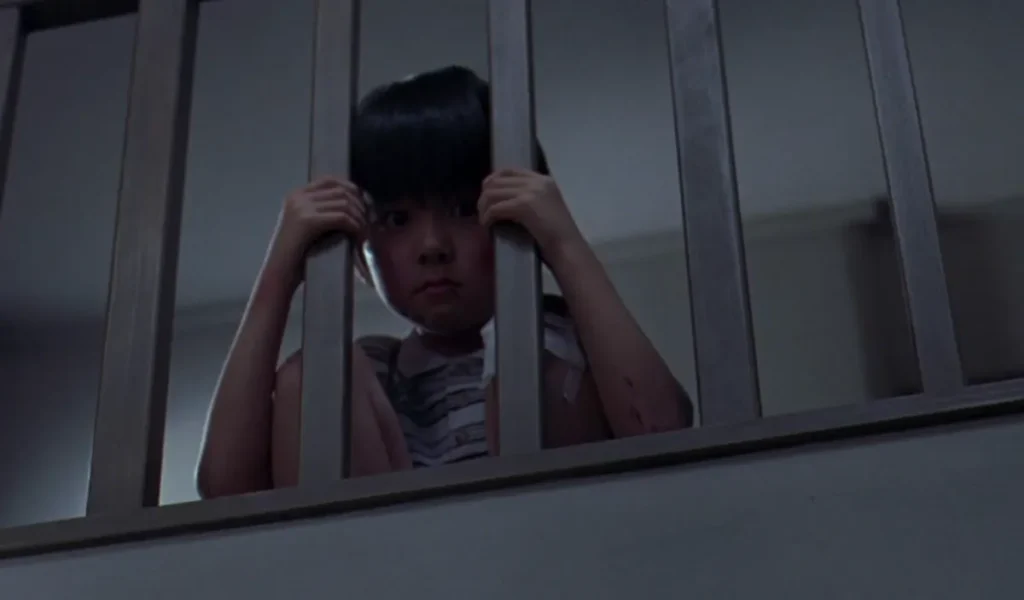
From her first visit, Karen senses something is terribly wrong. The house is cold, static-filled, and filled with ominous noises. She discovers Emma neglected and encounters the ghost of a young boy, Toshio. This act establishes the core rule: the curse is not a ghost that hunts you. It is a stain on a location, a supernatural virus. Anyone who enters the house—or is even tangentially connected to its violence—is infected and doomed.
Act 2 Explained: The Curse’s Origin and Spread
The narrative splinters, showing us past victims. In 2002, the Saeki family lived there. The husband, Takeo, discovered his wife Kayako was obsessed with a professor, Matthew Williams. In a fit of jealous rage, Takeo murdered Kayako, their son Toshio, and the family cat. Their deaths, soaked in betrayal and rage, created the curse.
Kayako’s spirit, with her contorted movements and haunting death rattle, becomes the primary vessel of the grudge. Toshio’s ghost, often seen with the cat, also lingers. The film intercuts Karen’s investigation in the “present” (2002) with the fates of others: Yoko, a caregiver who died earlier; the Williams family (Matthew, his wife Jennifer, and his mother); and the detectives investigating the strange deaths. Each storyline shows the curse’s non-discriminatory, inexorable nature.
Act 3 Explained: The Unraveling and Confrontation
Karen pieces together the house’s horrific history through news clippings and the agency’s records. Her boyfriend, Doug, goes to the house looking for her and is attacked by Kayako. Karen returns to find him catatonic, much like Emma. Realizing the curse follows its victims, Karen learns that the curse has now attached itself toher.
In a desperate attempt to break the cycle, she returns to the Saeki house. She finds Kayako’s secret journal, filled with obsessive love for Matthew. She then encounters the spirit of Takeo, now also a victim of the curse he helped create. The film culminates in the attic, where Karen is physically confronted by Kayako. There is no fight, only terrifying submission to the supernatural force.
Key Themes Explained
The core theme isthe permanence and infectious nature of extreme emotion. A “grudge” is a persistent feeling of ill will. The film literalizes this. The rage and sorrow of the murders didn’t just create ghosts; they poisoned the very location like a toxic spill. This curse is an emotion made supernatural, incapable of reason or appeasement.
It also exploresthe violation of the home. The house, a place of safety, becomes a tomb and a factory of suffering. Furthermore, the theme ofinescapable fateis paramount. The characters are not targeted for personal sins (like in many Western horrors) but simply for being in the wrong place at the wrong time. The curse is an impartial, natural disaster of the spirit world.
Characters Explained
- Karen Davis (Sarah Michelle Gellar):Our viewpoint character. She is compassionate and rational, which makes her descent into the irrational horror more effective. Her arc is from caregiver to victim. She tries to solve the mystery to survive, but her investigation only seals her fate.
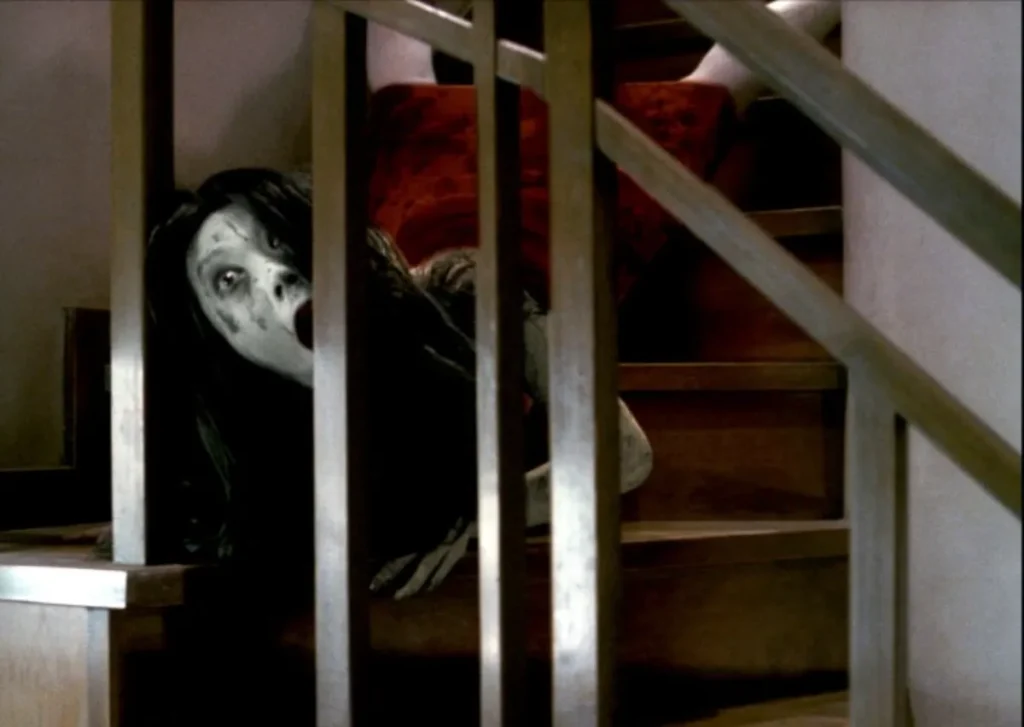
- Kayako Saeki:The primary antagonist. Her spirit is the manifestation of betrayed love, maternal loss, and murderous rage. Her movements are unnatural, drawn from Japanesebutohdance, representing a body broken in life and death. Her death rattle is the sound of the curse itself.
- Toshio Saeki:The ghost of the murdered boy. He often appears as an omen, his pale face and meowing cry signaling imminent danger. He represents the innocence destroyed and weaponized by the grudge.
- Takeo Saeki:The catalyst. His jealous violence created the curse, but he too was consumed by it. His ghost is often seen repeating his murderous act or as a shadowy, tormented figure.
- Detective Nakagawa:Represents the futile attempt to apply logic and police work to a supernatural phenomenon. His partner, Igarashi, becomes a victim, showing that even professional curiosity is enough to attract the curse.
Twist Explained
The film’s central “twist” is not a single reveal but the understanding ofhow the curse operates. The audience slowly learns that:
- Time is Non-Linear for the Curse:Past, present, and future victims exist simultaneously in the haunted space. Ghosts from 2002 can interact with victims from 2004.
- The Curse is a Location-Based Infection:You don’t have to anger the ghost. Simply entering the house infects you, and the curse can then manifest anywhere, following you home.
- There is No Defeat or Resolution:Unlike ghost stories where remains are found or a spirit is appeased, the grudge is an emotion. It cannot be buried or reasoned with. This understanding that the horror is truly unstoppable is the film’s most devastating twist.
Movie Ending Explained
What Exactly Happens?
After her confrontation with Kayako in the attic, the film cuts to a hospital. Karen is now completely catatonic, just like Emma was. Her mother arrives from America to take her home. As Karen is wheeled out, a nurse covers her with a blanket. Under the blanket, we see Kayako’s grotesque face superimposed over Karen’s, and Kayako’s hand reaches out to grasp Karen’s mother’s wrist.
The final scene returns to the cursed house. A new real estate agent is showing it to a young couple. As they talk in the sunlight, Toshio’s face appears at an upstairs window. The curse is waiting for its next victims.
What the Ending Means & How it Connects to the Theme
The ending is the ultimate expression of the film’s themes.Karen’s “survival” is the worst possible fate.She is not dead but utterly consumed, her consciousness replaced or imprisoned by Kayako’s grudge. The curse has used her as a vessel to spread, latching onto her mother through that touch. This shows the curse’s viral nature—it jumps from person to person, across oceans.
The final shot of the house resets the cycle. No amount of death or tragedy cleanses the location. The grudge is eternal, and the modern world (real estate, new families) is blindly walking into ancient, emotional evil. There is no closure, no victory, only the guarantee of more suffering.
Alternate Interpretations & Director’s Intention
One could interpret Karen’s catatonia as a psychological break, a mind protecting itself from what it witnessed. However, the supernatural elements (Kayako’s face, the touch) confirm it’s a spiritual takeover. DirectorTakashi Shimizu, who also directed the original JapaneseJu-Onfilms, intended to create a horror that felt like an unavoidable nightmare. The ending is designed to leave the audience with a deep, lingering dread that follows them out of the theater, mirroring how the curse follows its victims.
Performances
Sarah Michelle Gellarcarries the film with a performance of escalating vulnerability and terror. She skillfully avoids becoming a scream queen, instead portraying a realistic, growing dread.Takako Fujias Kayako delivers an iconic, wordless performance. Her physicality is the film’s most terrifying asset.Yuya Ozekias Toshio is hauntingly still and eerie. The Western actors, likeBill Pullmanin his brief role, effectively sell the confusion and horror of outsiders caught in a culturally specific nightmare.
Direction & Visuals
Shimizu’s direction is minimalist and patient. He uses static, wide shots of empty hallways and rooms, making the viewer scan for movement. Thecolor paletteis desaturated, leaning into whites, beiges, and blues, creating a sickly, lifeless atmosphere. The cinematography often feels like we are peering through barriers—windows, door cracks, banisters—emphasizing the theme of voyeurism and violation.
The sound design is a character itself. The silence is punctuated by creaks, scratches, and the unforgettable“death rattle”(jugonin Japanese), a guttural, clicking sound that has become synonymous with the franchise.
Pros and Cons
Pros:
- Incredibly effective, atmospheric dread.
- Iconic monster design and sound.
- Innovative, non-linear narrative structure.
- The curse’s rules are unique and terrifying.
- Strong central performance from Gellar.
Cons:
- The plot can be confusing on first watch due to timeline jumps.
- Character development is secondary to the horror set-pieces.
- Some CGI effects have aged poorly.
- The bleakness may be too unrelenting for some viewers.
Cast
| Actor/Actress | Character | Role Description |
|---|---|---|
| Sarah Michelle Gellar | Karen Davis | American exchange student and caregiver. |
| Jason Behr | Doug | Karen’s concerned boyfriend. |
| Clea DuVall | Jennifer Williams | Wife of Professor Williams. |
| William Mapother | Matthew Williams | Professor Kayako was obsessed with. |
| Takako Fuji | Kayako Saeki | The vengeful ghost, mother of Toshio. |
| Yuya Ozeki | Toshio Saeki | The ghost of the young boy. |
| Bill Pullman | Peter Kirk | A professor affected by the curse. |
Crew
| Role | Name | Contribution |
|---|---|---|
| Director | Takashi Shimizu | Adapted his own Japanese film for Hollywood. |
| Screenplay | Stephen Susco | Adapted Shimizu’s original story. |
| Producers | Sam Raimi, Rob Tapert | Brought a distinct horror pedigree. |
| Cinematographer | Hideo Yamamoto | Created the film’s pale, haunted visual style. |
| Composer | Christopher Young | Provided the unsettling, minimalist score. |
Who Should Watch?
Fans of atmospheric, slow-burn J-horror. Viewers who prefer lingering dread over gore. Those interested in the cultural export of Japanese horror tropes to Hollywood. If you enjoy ghost stories with clear, terrifying rules and no happy endings, this is for you.
Verdict
The Grudge(2004) is a masterclass in atmospheric horror that successfully transplants a potent Japanese curse to an international setting. While its narrative fragmentation can be challenging, it reinforces the curse’s chaotic, timeless nature. The film’s true power lies in its ending—a brutally effective conclusion that offers zero solace and ensures the horror stays with you long after the credits roll. It cemented Kayako and Toshio as modern horror icons.
Reviews & Rankings
| Source | Score | Comment Summary |
|---|---|---|
| Rotten Tomatoes (Critics) | 39% | Criticized for plot confusion but praised for scares. |
| Rotten Tomatoes (Audience) | 59% | Audiences found it effectively terrifying. |
| IMDb User Score | 6.6/10 | A solid score for a horror remake. |
| Metacritic | 49/100 | Mixed or average reviews. |
Where to Watch
The Grudge(2004) is currently available for streaming onNetflix,Peacock, andAMC+. It is also available for digital rental/purchase on platforms like Amazon Prime Video, Apple TV, and Vudu.
FAQs:
The Grudge (2004) FAQ
Answers to the most common questions about the American supernatural horror film directed by Takashi Shimizu and starring Sarah Michelle Gellar
What is “The Grudge” about?
“The Grudge” is a supernatural horror film about a curse that is born when someone dies in the grip of extreme rage or sorrow. The curse manifests in the place where that person died, and anyone who encounters it is consumed by its fury. The story follows an American nurse named Karen Davis (Sarah Michelle Gellar) who moves to Tokyo and encounters this curse in a haunted house.
Is “The Grudge” a remake of a Japanese film?
Yes, “The Grudge” (2004) is an American remake of the 2002 Japanese film “Ju-on: The Grudge”. Both films were directed by Takashi Shimizu, making this one of the rare cases where the original director also helmed the remake. The American version incorporates elements from both “Ju-on: The Grudge” and its sequel “Ju-on: The Grudge 2”.
Who are the main ghosts in the film?
The two primary ghosts are Kayako Saeki and her son Toshio. Kayako is a woman who was murdered by her husband in a fit of jealous rage. She appears as a pale woman with long black hair covering her face and makes a distinctive rattling sound from her throat. Toshio is her young son who also died and appears as a pale boy with dark hair, often meowing like a cat.
What is the significance of the cat in the movie?
The cat is associated with Toshio Saeki, the young boy ghost. Toshio is often shown with or as a cat, and the sound of a cat’s meow frequently precedes his appearance. In Japanese folklore, cats are sometimes believed to have supernatural abilities and can be vessels for spirits, which aligns with the film’s themes.
Why is the curse unstoppable?
The curse in “The Grudge” is portrayed as unstoppable because it’s not a traditional ghost bound by rules. It’s an emotional stain that infects locations and people. Once someone encounters it, they’re marked and will eventually be killed by it, regardless of distance or time. This makes it particularly terrifying as there’s no apparent way to escape or defeat it.
How does “The Grudge” differ from other horror franchises?
Unlike many Western horror films where ghosts haunt specific people or places for specific reasons, the curse in “The Grudge” is more like an infectious emotion that spreads indiscriminately. The nonlinear storytelling, where events are shown out of chronological order, also sets it apart. Additionally, the ghosts Kayako and Toshio have become iconic for their distinctive appearances and sounds.
Was the film successful commercially?
Yes, “The Grudge” was a significant commercial success. Made on a budget of approximately $10 million, it grossed over $187 million worldwide. Its success launched an American franchise with two direct sequels (The Grudge 2 and The Grudge 3) and a 2020 reboot, as well as cementing the popularity of J-horror remakes in the 2000s.
What is the connection between “The Grudge” and “The Ring”?
Both “The Grudge” (2004) and “The Ring” (2002) are American remakes of Japanese horror films (“Ju-on: The Grudge” and “Ringu” respectively). They were part of a wave of J-horror remakes in the early 2000s and share similar themes of curses that are passed to victims through specific encounters. However, their stories and mythological foundations are completely separate.
Are there any sequels to the 2004 film?
Yes, the 2004 film spawned two direct sequels: “The Grudge 2” (2006) and “The Grudge 3” (2009). There was also a 2020 reboot simply titled “The Grudge” that serves as a direct sequel to the original Japanese films and the American adaptations. Additionally, there are several Japanese “Ju-on” films that expand the mythology.
What makes “The Grudge” culturally significant?
“The Grudge” is culturally significant as it helped popularize J-horror in Western audiences during the early 2000s. Its iconic ghost characters, particularly Kayako with her rattling throat sound and contorted movements, have become part of horror iconography. The film also demonstrated that horror could be effectively cross-cultural, maintaining its Japanese director and core concepts while adapting to an American setting and cast.
FAQ Schema & Discoverability
This page includes structured data markup following Google’s FAQ Schema guidelines, making it more discoverable in search results.
When properly implemented with JSON-LD, this FAQ page could appear as a rich result in search engines with expandable questions and answers directly on the search results page.
The red and white color scheme provides strong visual contrast for readability while creating an atmospheric feel appropriate for the horror movie subject matter.