
🎬 Saw (2004)
Release Year: 2004
Streaming Platform: MAX, Amazon Prime Video (Rent)
⭐ IMDb: 7.6/10 | 🍅 Rotten Tomatoes: 50%
SAW (2004)

1. Introduction
In the landscape of early 2000s horror, few films have left a mark as indelible—or as shocking—asSaw (2004). Directed by James Wan and written by Leigh Whannell, this low-budget thriller didn’t just scare audiences; it outsmarted them. It launched a multi-billion dollar franchise, introduced the world to the terrifyingly methodical Jigsaw Killer, and delivered one of the most unforgettable twist endings in cinema history.
But beyond the blood and the chaos of its iconic “reverse bear trap,” the originalSawis a masterclass in psychological tension and non-linear storytelling. It asks profound questions about human nature: How far would you go to survive? What defines a life worth living? In thisSaw Movie ExplainedandEnding Explainedbreakdown, we will dissect the film’s intricate plot, analyze its key characters, and delve deep into the meaning of that climactic moment when a dead man rises from the floor.
2. Overview
Sawis a psychological horror-thriller that runs for 103 minutes. It follows the desperate struggle of two men, Dr. Lawrence Gordon and Adam, who wake up chained in a dilapidated industrial bathroom. With no memory of how they got there, they must piece together clues left by a serial killer known as the Jigsaw Killer to survive. The film’s mood is grim, claustrophobic, and gritty, relying more on suspense and moral dilemmas than on excessive gore.
⚠️ SPOILER WARNING: Major Plot Reveals Ahead ⚠️
We are about to break down the entire plot, including the twists and the ending. If you haven’t seen the film yet, proceed with caution—or go watch it first. You’ve been warned.
4. Story Explained (Full Breakdown)
To understand the genius ofSaw, we have to look at its non-linear narrative as a puzzle itself. The story unfolds in three distinct phases.
Act 1 Explained: The Bathroom
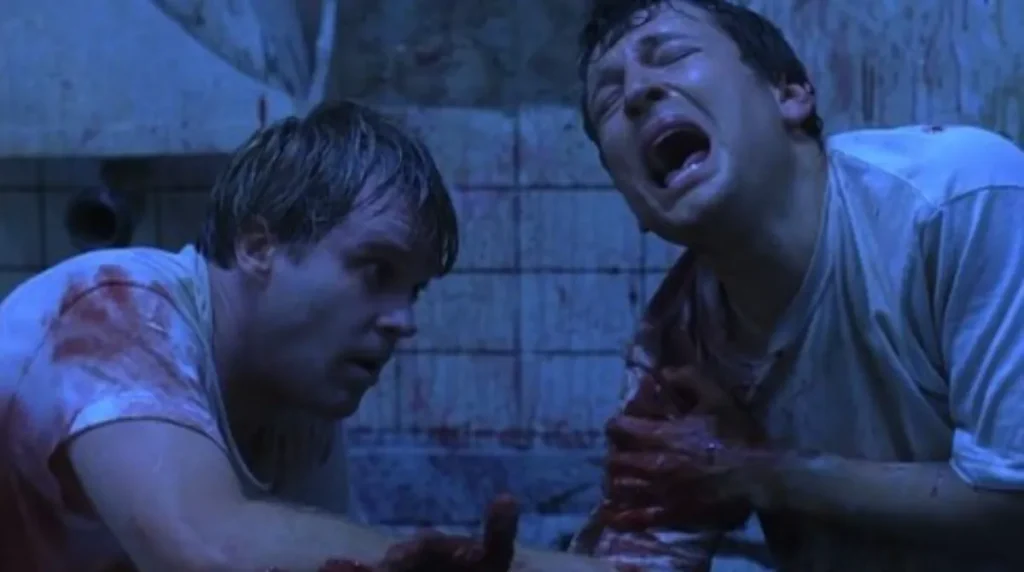
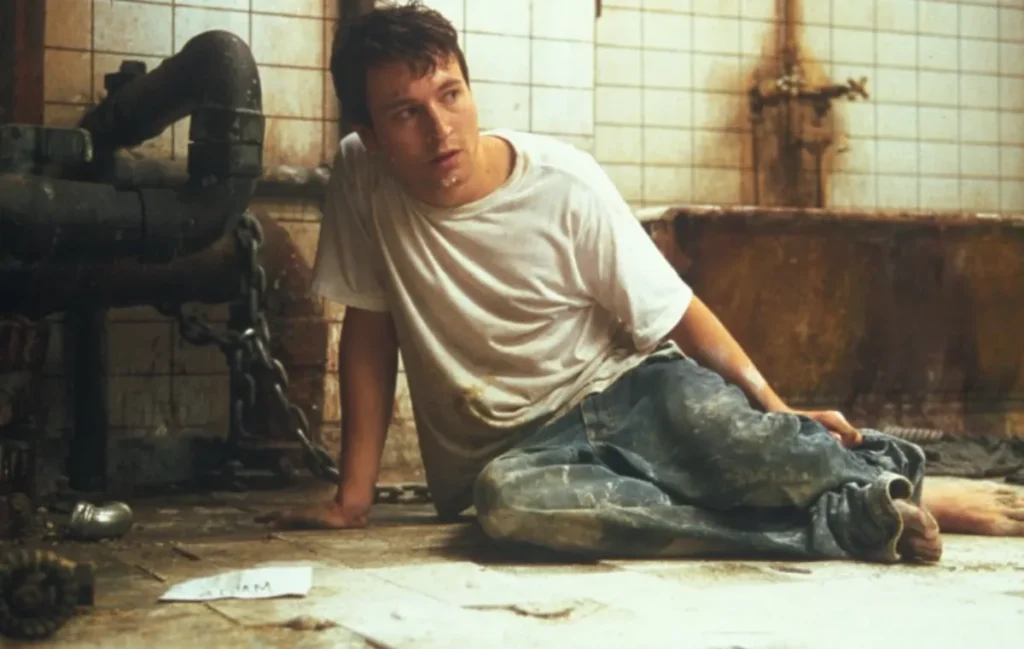
The film opens with Adam (Leigh Whannell) waking up submerged in a bathtub. Across the room, Dr. Lawrence Gordon (Cary Elwes) awakens. Both are chained to pipes. Between them lies a dead man in a puddle of blood, holding a revolver and a microcassette recorder. They quickly realize they are pawns in a “game.” Lawrence is instructed to kill Adam by 6:00 PM, or his wife and daughter will be killed, and Adam will die anyway. The only “tools” they have are two hacksaws, which Adam discovers are useless against the chains—they are meant for bone.
Act 2 Explained: The Investigation
The narrative flashes back to the police investigation led by Detective Tapp (Danny Glover) and his partner Sing. We are introduced to the Jigsaw Killer’s M.O. through past victims, including Amanda (Shawnee Smith), who survived the horrific reverse bear trap. The police trace Jigsaw to a lair, but Sing is killed by a trap, and a guilt-ridden Tapp is taken off the case. Obsessively continuing his investigation on his own, Tapp becomes convinced that the killer is actually an orderly at the hospital named Zep Hindle (Michael Emerson), whom he begins stalking.
Act 3 Explained: The Clock Runs Out
Back in the bathroom, time is running out. Lawrence, desperate, shoots Adam with the hidden gun (non-lethally) to “win” the game, hoping to save his family. At the same time, Zep, who has been holding Lawrence’s family hostage, arrives at the bathroom to finish the job. Adam manages to overpower Zep, bludgeoning him to death with a toilet tank lid. Believing the nightmare is over, Adam searches Zep’s body for a key to his chain. Lawrence, having sawed through his own foot to escape, crawls out of the room for help, leaving Adam alone in the dark with the corpse.
5. Key Themes Explained
Sawis often dismissed as “torture porn,” but its themes run much deeper.
- Appreciation of Life:The core philosophy of Jigsaw (John Kramer) is that people who take their lives for granted need a “test” to appreciate the gift of existence. He doesn’t see himself as a murderer, but as a teacher.
- Survival and Instinct:The film constantly asks the audience: “What wouldyoudo?” Would you cut off your foot to live? Would you kill a stranger to save your family? It strips away civilization to reveal raw human instinct.
- The Voyeur vs. The Participant:Jigsaw targets Adam for being a voyeur—someone who watches others (he was hired to photograph Lawrence) but does nothing to improve his own pathetic life.
6. Characters Explained
- Adam (Leigh Whannell):He represents the everyman. Cynical, scared, and reactive. His name is thematically significant, as “Adam” suggests the first man, naked and primal in his struggle.
- Dr. Lawrence Gordon (Cary Elwes):He represents the “blessed” man (the meaning of Lawrence) who has everything—a career, a family—but destroys it through infidelity. His arc forces him to fight for the family he ignored.
- John Kramer / Jigsaw (Tobin Bell):The architect. A dying man angry at the world’s indifference to life. He doesn’t pull the trigger; he forces you to pull it yourself.
- Zep Hindle (Michael Emerson):The “red herring.” He is actually another victim of Jigsaw, tasked with watching the Gordons. He is just another pawn following orders to survive.
- Amanda (Shawnee Smith):Jigsaw’s first known survivor. She represents the possibility of change, though her trauma is palpable.
7. Twist Explained
The twist inSawis legendary for a reason. Throughout the film, we are led to believe the dead body on the floor is just a victim. It’s a red herring designed to make us focus on Zep as the primary villain.
However, as Adam sits alone in the dark room, the “corpse” begins to move. The man in the middle of the floor, John Kramer (Tobin Bell), rises, rips a patch of fake skin from his head, and calmly walks toward the door. The realization is staggering: Jigsaw has been in the room the entire time, listening to everything. He was never just a killer; he was an observer, testing the men without being detected.
8. Movie Ending Explained
This is the most critical section of ourSaw Ending Explainedbreakdown.
What Exactly Happens
After Lawrence crawls out screaming for help, John Kramer stands up. He reveals he faked his death by covering his gunshot wound with wax and pig’s blood. Adam tries to shoot him with Zep’s gun, but Jigsaw activates a remote control, electrocuting Adam and throwing him to the floor. Jigsaw picks up the saw, looks at the despairing Adam, and delivers the iconic line:“Game over.”He walks out and slams the door shut, leaving Adam screaming in the darkness, chained and hopeless.
What the Ending Means
The ending is a brutal lesson in Jigsaw’s philosophy. Adam had the key to his freedom the entire time. In the beginning of the film, when he woke up in the bathtub, the water drained, and we heard a metallic clink go down the drain. That was the key to his chain. Because he was too panicked and oblivious, he lost his chance.
Jigsaw’s closing of the door symbolizes the finality of missed opportunities. For Jigsaw, Adam failed the test. He was a voyeur who never took action, and in the end, his passivity seals his doom.
Alternate Angle Interpretations
Some analysts suggest the ending is also about the birth of a legend. It is the moment John Kramer fully transforms from a dying man into the omnipresent boogeyman of the franchise. By rising from the dead, he establishes himself as someone who is everywhere and nowhere, controlling the game from within.
9. Performances
Cary Elwes delivers a career-best performance as Dr. Gordon, perfectly capturing the character’s descent from arrogant authority to terrified survivalist. His physicality during the foot-cutting scene is disturbingly realistic. Leigh Whannell, as Adam, provides the audience’s emotional anchor—his fear is palpable and relatable. However, Danny Glover’s performance as Detective Tapp is often noted as a weak point, feeling overwrought and out of sync with the film’s grim tone. Tobin Bell, though on screen for mere minutes, creates an iconic villain through sheer presence and menace.
10. Direction & Visuals
James Wan’s direction is kinetic and inventive, especially considering the film was shot in just 18 days on a million-dollar budget. He uses a desaturated color palette of greens and grays to emphasize the filth and decay. Editor Kevin Greutert is the unsung hero; his frenetic, rapid-fire editing style creates a sense of anxiety and disorientation that perfectly mimics the victims’ mental states. The camera work is often shaky and claustrophobic, making the audience feel trapped in the bathroom alongside Adam and Lawrence.
11. Pros and Cons
Pros:
- Iconic Twist:The ending remains one of the most shocking in modern cinema.
- Original Concept:It revitalized horror by focusing on psychological terror and moral dilemmas rather than just slasher tropes.
- Tension:The claustrophobic setting creates unbearable suspense.
Cons:
- Pacing:Some flashback sequences feel like padding to extend the runtime.
- Supporting Acting:Danny Glover’s performance is widely criticized as subpar.
- Gore for Shock:While less graphic than its sequels, some scenes still border on exploitative.
12. Cast
| Actor | Character |
|---|---|
| Cary Elwes | Dr. Lawrence Gordon |
| Leigh Whannell | Adam |
| Tobin Bell | John Kramer / Jigsaw |
| Danny Glover | Detective David Tapp |
| Monica Potter | Alison Gordon |
| Michael Emerson | Zep Hindle |
| Shawnee Smith | Amanda Young |
| Ken Leung | Detective Steven Sing |
| Dina Meyer | Kerry |
13. Crew
| Role | Name |
|---|---|
| Director | James Wan |
| Writer | Leigh Whannell |
| Producers | Gregg Hoffman, Oren Koules, Mark Burg |
| Editor | Kevin Greutert |
| Cinematographer | David A. Armstrong |
| Music Composer | Charlie Clouser |
14. Who Should Watch?
If you love psychological thrillers likeSe7enorThe Usual Suspects,Sawis essential viewing. It is perfect for viewers who enjoy plot twists and character-driven horror. However, if you are squeamish about self-mutilation or intense psychological pressure, this film might be a tough watch.
15. Verdict
Saw (2004)is more than just a horror movie; it is a cleverly constructed puzzle box that rewards attentive viewing. While it launched a franchise that eventually became known for excessive gore, the original stands alone as a tight, effective, and brilliantly twisted thriller. The ending doesn’t just shock you—it makes you rethink everything you just watched. It is a must-see for any fan of the genre.
16. Reviews & Rankings
- Critical Consensus:A low-budget horror film with a high-concept plot that sacrifices character depth for shocking twists, but remains undeniably effective.
- Audience Score:Generally higher than critical scores, indicating strong cult status and rewatchability.
| Source | Score |
|---|---|
| IMDb | 7.6/10 |
| Rotten Tomatoes (Critics) | 50% |
| Rotten Tomatoes (Audience) | 84% |
| Metacritic | 46/100 |
17. Where to Watch
Ready to play a game? You can streamSaw (2004)onMAX. It is also available for rent or purchase on platforms likeAmazon Prime Video,Apple TV, andVudu.
Welcome to the game. Finish this article.
🔪 SAW (2004) FAQ
James Wan directed Saw, and it premiered at the Sundance Film Festival in January 2004. The wide theatrical release in the US was on October 29, 2004. It was Wan’s feature directorial debut, with a screenplay by Leigh Whannell.
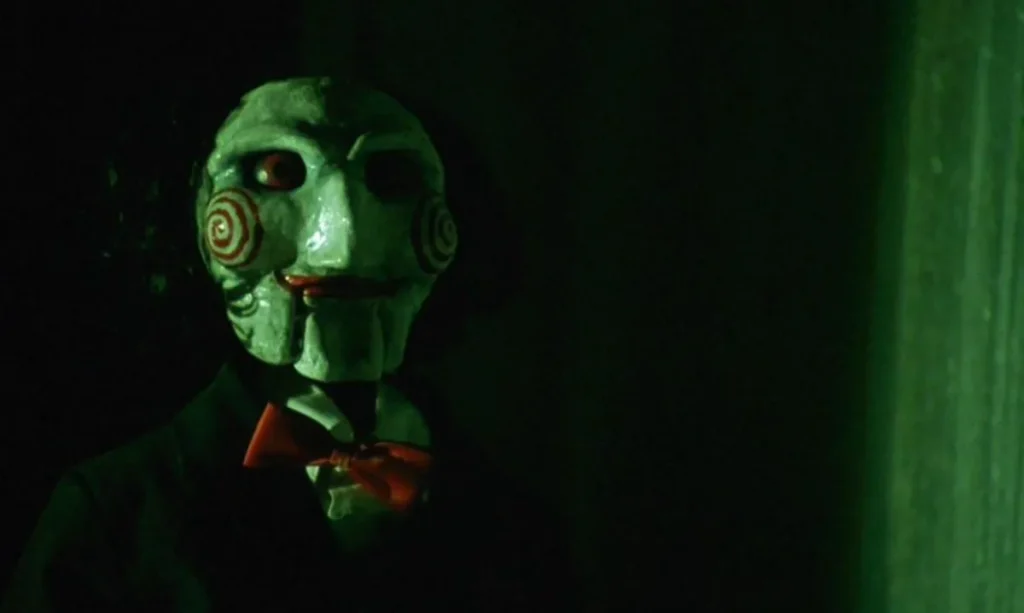
The mastermind behind the traps is John Kramer, portrayed by Tobin Bell. In the first film he is only referred to as “Jigsaw” by the police because he cuts a puzzle piece from his victims.
Leigh Whannell (who also wrote the film) plays Adam Stanheight, and Cary Elwes plays Dr. Lawrence Gordon. They wake up chained to pipes on opposite sides of a filthy industrial bathroom.
The film was made on a shoestring budget of $1.2 million. It became a massive hit, grossing over $103 million worldwide, launching a multi-billion dollar horror franchise.
That phrase is spoken by the Jigsaw puppet (Billy) in a video message. It perfectly captures the film’s central theme: forcing victims to make a terrible choice to survive. Dr. Gordon hears it early in the movie.
That’s Zep Hindle (played by Michael Emerson), the orderly who has been watching the two men. He appears to be a corpse with a gun in hand, but in the third act, he rises — a key twist. But the real surprise is yet to come…
⚠️ SPOILER ⚠️ After Dr. Gordon crawls away, Adam watches as the “dead” body in the center of the room stands up. It’s John Kramer (Jigsaw) — he had been posing as a corpse the entire time. He closes the door, leaving Adam to die, uttering: “Game over.”
Principal photography was incredibly fast: just 18 days. The cast and crew worked long hours in a single warehouse location (most of the bathroom scenes). The quick shoot added to the gritty, claustrophobic feel.
Not at all. Leigh Whannell and James Wan originally wrote a straightforward thriller with no sequels in mind. The massive success and the open-ended finale (with Jigsaw rising) made a sequel inevitable. Saw II was released only one year later, in 2005.
As of 2025, Saw is available for streaming on Amazon Prime Video, Tubi (with ads), and for rental/purchase on Apple TV, Google Play, and Vudu. Always check your local provider — and maybe keep the lights on.