
🎬 Hereditary
Release Year: 2018
Streaming Platform: MAX
⭐ IMDb: 7.3/10 | 🍅 Rotten Tomatoes: 90%
Hereditary (2018) is a gut-wrenching horror masterpiece that blends family drama with supernatural dread. Directed byAri Aster, this film delivers a fullmovie explainedalongside a chillingending explained, unpacking layers of grief, inheritance, and demonic forces.
If you’re searching forHereditary movie explained, you’ve landed in the right spot. We’ll break down the plot act by act, decode the twists, and reveal what the finale truly means – all while keeping the analysis fresh and spoiler-conscious.
Buckle up for a cinematic deep dive into one of the scariest films of the decade.
Overview
Hereditary falls squarely into psychological horror with supernatural elements. It explores a family’s unraveling after a matriarch’s death, blending slow-burn tension with explosive terror.
The runtime clocks in at 127 minutes, creating a suffocating mood of inevitable doom. Themes of inherited trauma and loss dominate, wrapped inAri Aster‘s meticulous style.
No major spoilers here – just enough to hook you before we dive deep.
SPOILER WARNING
Story Explained (Full Breakdown)
Act 1 Explained
The film opens with the Graham family mourning Ellen, the enigmatic grandmother.Annie Graham(Toni Collette), a miniaturist artist, delivers a restrained eulogy that hints at strained family ties.
Her husbandSteve(Gabriel Byrne) tries to hold things together. DaughterCharlie(Milly Shapiro), an odd teen with a close bond to Ellen, sketches unsettling figures. SonPeter(Alex Wolff) navigates high school life, oblivious to brewing chaos.
Subtle weirdness creeps in – Charlie’s tic-like head clucking, Annie’s sleepwalking confessions about resenting motherhood. The act sets a tone of quiet dysfunction.
Act 2 Explained
Tragedy strikes at a party, shattering the family. Charlie’s death leaves Annie unmoored, blaming Peter in raw, visceral confrontations.
Annie seeks solace in a support group, sharing eerie family history – Ellen’s cult-like obsessions and manipulative past. Peter experiences ghostly visions, while Annie befriends occult enthusiastJoan(Ann Dowd).
Paranoia escalates with decapitated pigeons, slamming doors, and Annie’s deteriorating miniatures mirroring real-life horror. The supernatural bleeds into the mundane.
Act 3 Explained
Annie uncovers Ellen’s demonic legacy tied toPaimon, a king of hell craving a male host. Joan reveals the cult’s plan: Peter’s body as the vessel.
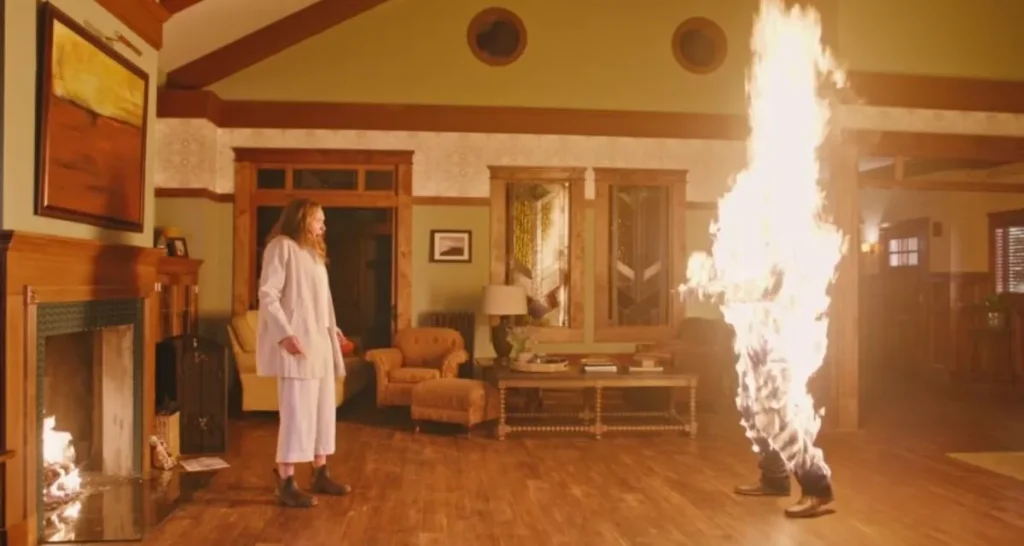
Self-harm, possessions, and fiery accidents ramp up the frenzy. The family home becomes a ritual ground, with symbols etched everywhere.
The climax hurtles toward inevitable sacrifice, blending grief’s madness with infernal inevitability.
Key Themes Explained
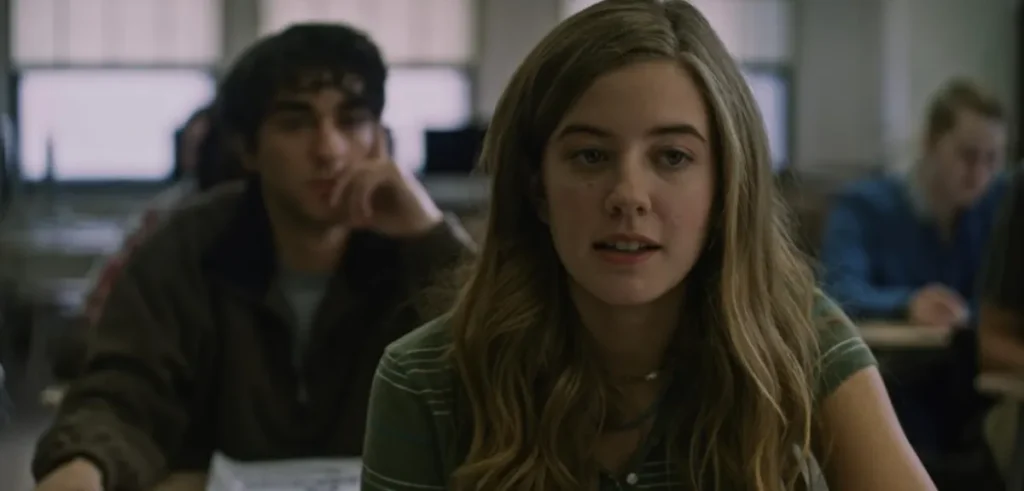
Hereditary isn’t just scares – it’s a metaphor for grief as an inherited curse. The miniatures symbolize Annie’s futile control over chaos, crumbling like her life.
Demons represent generational trauma: Ellen’s cult passed down like DNA. Headless motifs underscore lost agency, with Charlie’s decapitation echoing Paimon’s lore.
Free will crumbles under fate, questioning if we’re puppets of biology or the supernatural.
Characters Explained
Anniestarts composed but fractures into rage, her arc from denial to demonic complicity driven by loss.Toni Collettenails the maternal horror.
Peterembodies reluctant victimhood, his stoner apathy masking terror as Paimon’s host. His transformation from bystander to possessed king feels tragically earned.
Charlieis the wildcard – innocent yet occult conduit, her quirks foreshadowing doom.Stevegrounds the madness as the rational everyman, incinerated by it.
Joanmasks cult zealotry with faux empathy, a wolf in grandma’s clothing.
Twist Explained
The mid-film reveal flips the script: Charlie’s death wasn’t random. It’s cult orchestration to free Paimon’s spirit for Peter’s body.
This ties back to Ellen’s letters and symbols, recontextualizing “family” as a demonic dynasty. No cheap jump – it’s baked into subtle clues like the clucking tic.
Modern viewing sees it as psychological allegory: grief “possessing” survivors.
Movie Ending Explained
The finale erupts in ritual horror. Annie decapitates herself on the attic beam, her soul claimed as cult members crown Peter – nowPaimonincarnate.
He levitates, smiling serenely amid floating debris, as the cult bows. The camera pulls back to reveal the completed Paimon sigil on the wall.
This means inescapable inheritance: the Grahams were doomed by Ellen’s pact. Paimon’s male-host obsession connects to misogyny themes – females sacrificed for the king.
Alternate view: it’s all Annie’s psychosis, with Peter’s “possession” as collective delusion.Ari Asterintends ambiguity, forcing viewers to question reality versus supernatural truth.
Director’s vision? A grief snuff film where family bonds summon hell itself.
Performances
Toni Collettedominates as Annie, her scream in the car scene a primal force of nature – raw, unhinged, unforgettable. She balances fragility and fury without scenery-chewing.
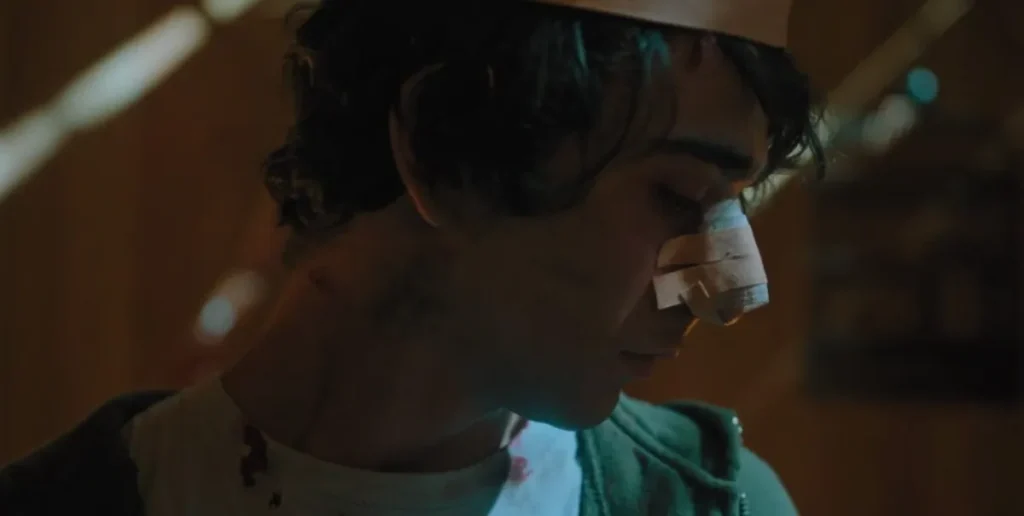
Alex Wolffevolves Peter convincingly from sullen teen to broken vessel, his attic terror evoking quiet devastation.Milly Shapirochills as Charlie with minimal dialogue, her presence unnerving.
Gabriel ByrneandAnn Dowdprovide sturdy support – Byrne’s understatement heightens horror, Dowd’s Joan simmers with sinister warmth. Ensemble elevates the script.
Direction & Visuals
Ari Aster‘s direction masterfully builds dread through long takes and confined spaces. The dollhouse miniatures recur as voyeuristic portals, blurring model and reality.
CinematographerPawel Pogorzelskiemploys shallow depth-of-field for isolation, with muted yellows evoking decay. Decapitation motifs and silhouettes symbolize severed control.
Sound design amplifies unease – clucks, creaks, and Colin Stetson’s score pulse like a heartbeat from hell.
Pros and Cons
Pros:
- Unmatched emotional terror andToni Collette‘s career-best work.
- Layered themes rewarding rewatches.
- Visual storytelling that’s pure artistry.
Cons:
- Pacing drags in Act 2 for some.
- Extreme scenes may overwhelm casual viewers.
- Demonic lore dumps feel lore-heavy.
Cast
| Actor | Role | Notable For |
|---|---|---|
| Toni Collette | Annie Graham | Oscar-buzzed horror intensity |
| Alex Wolff | Peter Graham | Subtle possession arc |
| Milly Shapiro | Charlie Graham | Eerie, wordless presence |
| Gabriel Byrne | Steve Graham | Grounded paternal anchor |
| Ann Dowd | Joan | Creepy cult manipulator |
Crew
| Role | Name | Highlight |
|---|---|---|
| Director | Ari Aster | Debut feature mastery |
| Writer | Ari Aster | Personal grief influences |
| Cinematographer | Pawel Pogorzelski | Innovative depth techniques |
| Composer | Colin Stetson | Haunting, minimalist score |
| Editor | Lucian Johnston | Tense rhythm builds |
Who Should Watch?
Horror fans craving psychological depth over jump scares. If you lovedThe WitchorMidsommar, Hereditary delivers. Skip if family trauma triggers you.
Perfect for late-night MAX binges with headphones.
Verdict
Hereditary redefines horror as a family elegy possessed by demons.Ari Astercrafts amovie explainedin every frame, culminating in anending explainedthat haunts long after.
Stream it on MAX for a masterclass in dread. Not flawless, but profoundly disturbing.
Reviews & Rankings
| Platform | Score | Audience Quote Snippet |
|---|---|---|
| IMDb | 7.3/10 | “Slow burn to nightmare fuel” |
| Rotten Tomatoes | 90% | Critics: “A new generation of horror” |
| Metacritic | 87/100 | “Visceral and unforgettable” |
Ranking among 2018 Horrors:#1 Psychological, Top 5 Overall.
Where to Watch
CatchHereditary (2018)streaming onMAXright now. Perfect for your next horror night – grab popcorn and dim the lights!