
🎬 Get Out
Release Year: 2017
Streaming Platform: Prime Video (Buy/Rent), Hulu, Peacock
⭐ IMDb: 7.8/10 | 🍅 Rotten Tomatoes: 98%
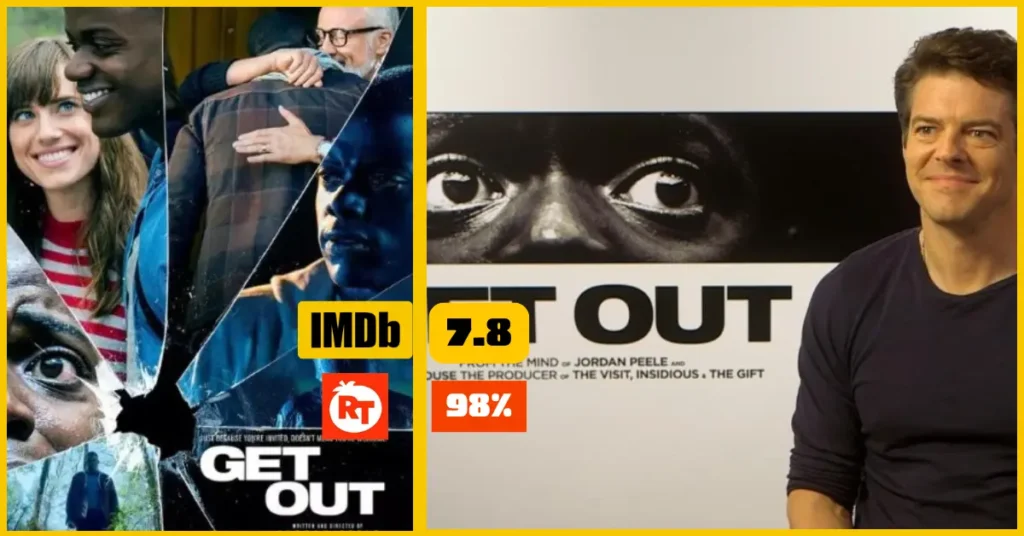
👁️ GET OUT 2017
🏆 88 WINS · 218 NOMINATIONS
Academy Awards (Oscars) 2018
BAFA 2018
Golden Globes 2018
Critics’ Choice Awards
Gotham Independent Awards 2017
African-American Film Critics Assoc.
Kansas City Film Critics
Online Film Critics Society
Black Reel Awards 2018
Directors Guild (DGA)
Empire Awards 2018
British Independent Film Awards
| Award / Organization | Category | Recipient | Result |
|---|---|---|---|
| AACTA International | Best Screenplay | Jordan Peele | Nominated |
| AARP Movies for Grownups | Best Ensemble | Get Out cast | WON |
| Academy Awards (Oscars) | Best Original Screenplay | Jordan Peele | WON |
| Academy Awards | Best Picture / Director / Actor | Blum / Peele / Kaluuya | Nominated |
| African-American Film Critics | Best Picture, Director, Actor, Screenplay | Get Out, Peele, Kaluuya | WON (4) |
| Alliance of Women Film Journalists | Best Original Screenplay | Jordan Peele | WON |
| American Film Institute | Top Ten Films of the Year | Get Out | WON |
| Austin Film Critics | Best Film, Best Original Screenplay, Best First Film | Get Out / Peele | WON (3) |
| Black Reel Awards | Outstanding Film, Director, Screenplay, Actor, Score, Emerging Director, Breakthrough Male | Get Out, Peele, Kaluuya, Abels | 7 WINS |
| Boston Society of Film Critics | Best Actor, Best New Filmmaker | Daniel Kaluuya, Jordan Peele | WON (2) |
| BAFTA | Rising Star Award | Daniel Kaluuya | WON |
| British Independent Film Awards | Best International Independent Film | Get Out | WON |
| Chicago Film Critics | Best Original Screenplay | Jordan Peele | WON |
| Critics’ Choice Awards | Best Original Screenplay, Best Sci-Fi/Horror | Jordan Peele, Get Out | WON (2) |
| Detroit Film Critics | Best Breakthrough | Jordan Peele | WON |
| Directors Guild (DGA) | First-Time Feature Film | Jordan Peele | WON |
| Dorian Awards | Screenplay of the Year | Jordan Peele | WON |
| Dublin Film Critics’ Circle | Best Screenplay | Jordan Peele | WON |
| Empire Awards | Best Screenplay, Best Horror | Peele, Get Out | WON (2) |
| Evening Standard British Film | Best Actor | Daniel Kaluuya | WON |
| Florida Film Critics | Best Original Screenplay, Best First Film | Jordan Peele, Get Out | WON (2) |
| Georgia Film Critics | Best Actor, Best Original Screenplay, Breakthrough | Kaluuya, Peele | WON (3) |
| Golden Trailer Awards | Best International Poster | Get Out | WON |
| Gotham Awards | Audience Award, Breakthrough Director, Best Screenplay | Jordan Peele | 3 WINS |
| Kansas City Film Critics | Best Picture, Best Original Screenplay, Best Sci-Fi/Horror | Get Out, Peele | 3 WINS |
| Online Film & Television Association | Best Picture, Best Original Screenplay, Best Feature Debut, Best Casting | Get Out, Peele | 4 WINS |
| Online Film Critics Society | Best Picture, Best Original Screenplay | Get Out, Peele | WON (2) |
| San Francisco Film Critics | Best Original Screenplay | Jordan Peele | WON |
| Satellite Awards | Best Original Screenplay | Jordan Peele | WON |
| Seattle Film Critics | Best Screenplay, Best Villain (Sunken Place) | Peele / Get Out | WON (2) |
| St. Louis Film Critics | Best Original Screenplay, Best Horror | Peele, Get Out | WON (2) |
| Toronto Film Critics | Best First Feature, Best Supporting Actor (Lil Rel) | Jordan Peele, Lil Rel Howery | WON (2) |
| Vancouver Film Critics | Best Screenplay | Jordan Peele | WON |
| Washington DC Area Film Critics | Best Original Screenplay | Jordan Peele | WON |
| Writers Guild (WGA) | Best Original Screenplay | Jordan Peele | WON |
In 2017, comedian-turned-filmmaker Jordan Peele didn’t just direct a movie; he detonated a bomb in the middle of the horror genre.Get Outis far more than a simple scary story. It’s a cultural touchstone, a “social thriller” that holds a mirror up to modern liberalism and the face of performative allyship.
ThisGet Out movie explainedguide will take you deep into the Armitage estate. We will break down the plot from start to finish, decode the hidden meanings behind the “sunken place,” analyze the terrifying characters, and fully explain the movie’s ending. Whether you’re watching for the first time or the tenth, get ready to see the details you missed.
Overview
Get Outis a 104-minute psychological horror film that masterfully blends suspense, satire, and social commentary. The story follows Chris Washington, a young Black photographer, who travels to upstate New York to meet the family of his white girlfriend, Rose Armitage. What starts as an awkward weekend of meet-the-parents nerves quickly spirals into a waking nightmare as Chris uncovers the family’s horrifying secret. The film’s genius lies in its pacing, using uncomfortable silences and micro-aggressions to build dread before plunging into full-blown terror.
⚠️ SPOILER WARNING: We are about to break down the entire plot ofGet Out, including the ending. If you haven’t seen it yet, stop reading and go watch it. Then, come back.
Story Explained (Full Breakdown)
Act 1: The Sunken Place
The film opens with a young Black man, Andre, walking alone through a white suburb at night. He is suddenly attacked and shoved into a car—a chilling prologue that sets the tone. We then meet Chris and Rose, a happy couple preparing for their weekend trip. Chris is nervous, wondering if Rose’s parents know she’s dating a Black man. Rose assures him they are “so not racist,” even claiming her father “would have voted for Obama a third time.”
Upon arriving at the lavish, secluded Armitage estate, things feel… off. Dean Armitage (the father) greets them with a rambling monologue about his father losing to Jesse Owens. They meet the groundskeeper, Walter, and the housekeeper, Georgina. Both are Black and act with a robotic, vacant politeness that immediately puts Chris on edge.
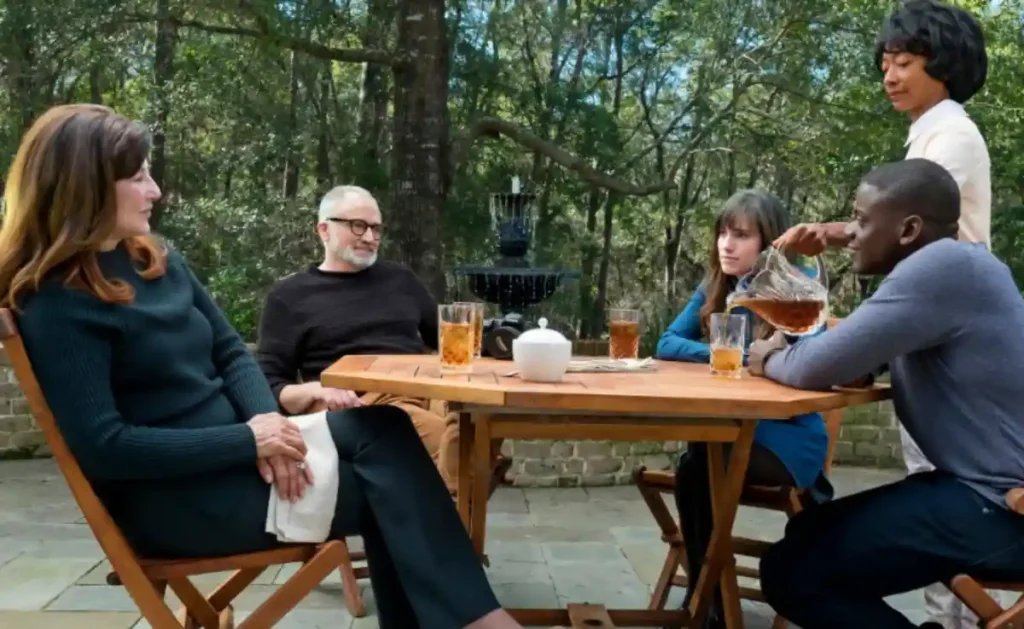
That night, unable to sleep, Chris sneaks out for a cigarette. Rose’s mother, Missy, a hypnotherapist, catches him. She offers to help him quit smoking. As she stirs her tea, the clinking of the spoon against the ceramic cup hypnotizes Chris against his will. He plummets into a dark void—”the sunken place”—where he is conscious but completely paralyzed, a mere spectator in his own body.
Act 2: The Auction
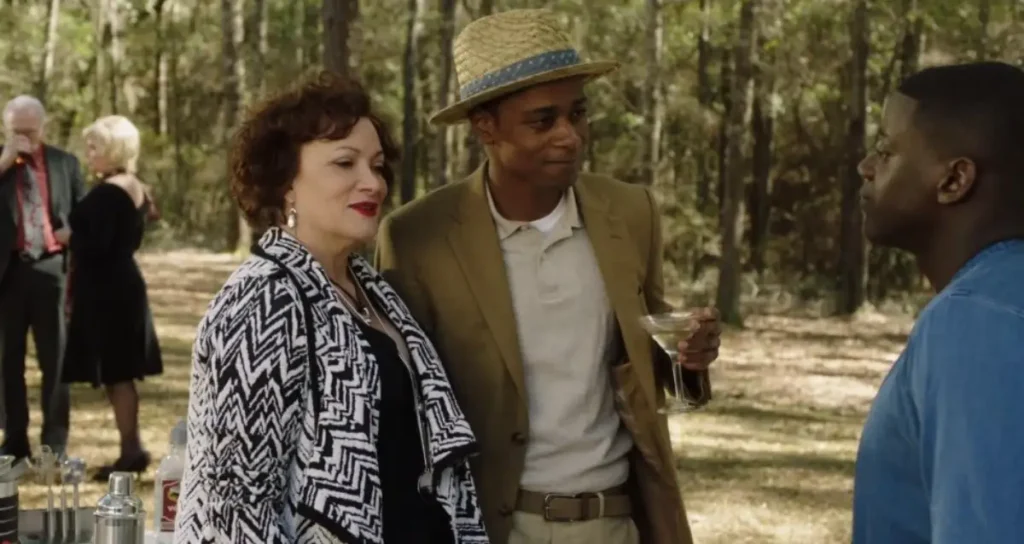
The next day, the Armitages host a lavish garden party. Chris is paraded around and meets their wealthy, older, white friends. The guests are unnervingly fascinated with him. They touch his body, comment on his “genetic makeup,” and ask invasive questions about his sex life. One guest, a blind art dealer named Jim Hudson, is the only one who seems to connect with Chris on a human level, appreciating his photography.
Chris spots another Black man at the party, Logan, who is much older and married to a white woman. Chris tries to fist-bump him, but Logan gives him a limp handshake. Suspicious, Chris pulls out his phone to discreetly take a picture. When the flash goes off, Logan’s face contorts in panic. He lunges at Chris, screaming, “Get out! Get out of here!” before the family restrains him, claiming it’s a seizure.
Chris sends the photo to his best friend, Rod, a TSA agent. Rod calls back immediately, panicked. He identifies the man as Andre Hayworth, a missing person from New York. Chris realizes he is in grave danger and tells Rose they must leave immediately. As he packs, he finds a hidden closet full of photographs—pictures of Rose with several different Black people, including Walter and Georgina. He finally understands: Rose has been luring him, just like she lured all the others. Rose walks in, and his hope that she is an innocent victim shatters. She smirks and coldly says, “You know I can’t give you the keys, right babe?” Missy taps her spoon on the teacup, and Chris is sent back to the sunken place.
Act 3: The Coagula
Chris wakes up strapped to a leather armchair in the basement, paralyzed. A video plays on an old TV. Dean Armitage explains that Rose’s grandfather, a Nazi who lost to Jesse Owens, founded the “Order of Coagula.” He developed a surgical procedure to transplant a white person’s consciousness into a Black person’s body, granting them extended life, strength, and youth. The blind art dealer, Jim Hudson, appears on screen, explaining that he bid on Chris for his eyes—he wants to see through them. The original consciousness of the victim remains trapped in the “sunken place,” a passive passenger in their own body forever.
But Chris has a secret weapon. While paralyzed, he notices the soft padding of the chair. He manages to pull out a chunk of cotton with his fingers and stuffs it in his ears. When Jeremy, the brother, comes to untie him for the surgery, he speaks, but Chris can’t hear the hypnotic trigger. He springs into action, smashing a glass bottle and killing Jeremy. In a frantic, cathartic rampage, Chris escapes his restraints and kills Dean and Missy.
Key Themes Explained
Get Outis a layered masterpiece. The horror on the screen is a metaphor for a much deeper, real-world terror.
- The Sunken Place as Marginalization:Jordan Peele himself described the sunken place as a metaphor for systemic oppression. It represents the way society silences marginalized people. No matter how hard Chris screams, no one can hear him. He is fully aware and conscious, but he is rendered powerless.
- The Theft of the Black Body:The film draws a direct line from slavery to modern times. The Armitages don’t just want to kill Black people; they want to use them. They commodify Black bodies for their physical strength and cultural coolness. As Dean says, “Texturally, there’s so much more enjoyment in it.” This reflects the historical exploitation of Black labor and the appropriation of Black culture.
- Hypocrisy of Liberalism:The film is a scathing critique of white liberals who believe they are above racism. The Armitages and their friends don’t use racial slurs or wear hoods. They use micro-aggressions and platitudes, like “I would have voted for Obama a third term,” to mask their deep-seated prejudice and predatory intentions.
Characters Explained
- Chris Washington (Daniel Kaluuya):The audience surrogate. He is observant, intelligent, and quiet. His guilt over his mother’s death is the specific trauma Missy exploits to trap him. His photographer’s eye makes him a valuable commodity for the blind art dealer, Jim Hudson.
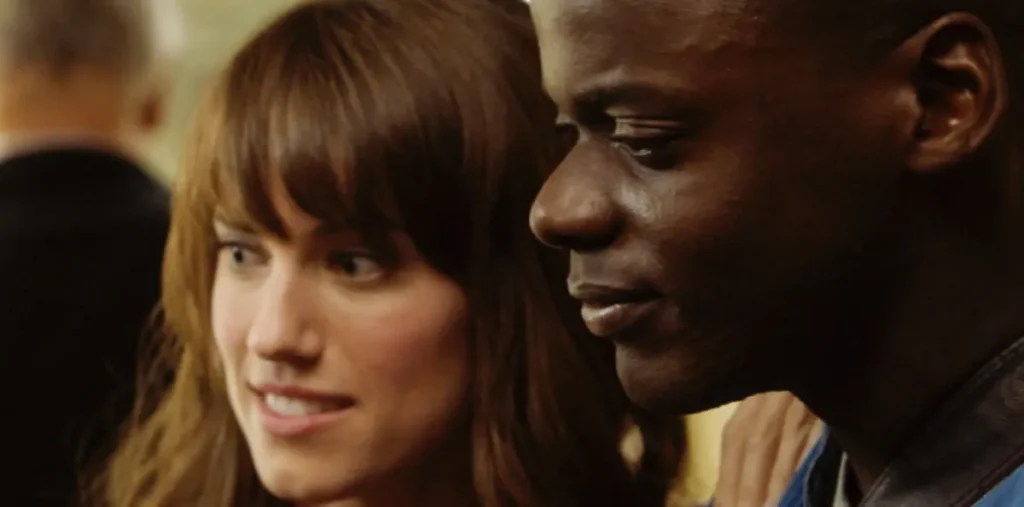
- Rose Armitage (Allison Williams):The ultimate wolf in sheep’s clothing. She presents herself as the “woke” white girlfriend, but she is the most predator. She is the bait. Her final smirk as she dangles the car keys is one of the most chilling moments in modern cinema.
- Rod Williams (Lil Rel Howery):The comic relief and the heart of the film. He is the only one who sees the situation clearly from the outside, immediately suspecting a sex-cult (an “Eyes Wide Shut situation”). He is also the hero who arrives to save Chris in the end.
- Missy Armitage (Catherine Keener):The quiet menace. She uses her skill as a hypnotherapist as a weapon, preying on the subconscious vulnerabilities of her victims to imprison them.
Twist Explained
The primary twist inGet Outis the revelation of what the Armitage family is actually doing. The audience, along with Rod, is led to believe this is a straightforward case of brainwashing for slavery or sexual deviancy. The genius of the twist is that the reality is far more disturbing. The Armitages aren’t just using Black people for labor; they are stealing their very existence to prolong their own lives. They are erasing Black identities to make room for white ones. The victims aren’t just hypnotized; they are surgically trapped in a waking coma while their bodies are piloted by the very people who enslaved them.
Movie Ending Explained
This is the most crucial part of ourGet Out movie explainedjourney.
After killing the immediate family, a wounded Chris stumbles outside. Rose, bleeding, grabs a hunting rifle and chases him. Walter (the groundskeeper) tackles Chris. Remembering how the flash from his phone broke through Logan’s conditioning at the party, Chris pulls out his phone and takes a picture of Walter.
The flash works. Walter’s face contorts, and for a brief moment, the real Walter—the victim trapped inside—breaks through. He grabs Rose’s rifle. He doesn’t shoot Chris. Instead, he turns the gun on Rose, firing a single shot into her stomach. Then, he puts the gun to his own head and pulls the trigger, choosing death over a life of being a puppet. It’s a tragic, violent act of reclaiming his own body.
Rose lies in the middle of the road, bleeding out. She looks up at Chris and pleads, “I love you.” Chris, filled with rage, begins to strangle her. He wants to kill her. But he stops. He can’t bring himself to do it.
At that moment, the sound of a siren fills the air. Red and blue lights flash across Chris’s body. For a second—and it’s a terrifying second—we, the audience, know exactly what is about to happen. After everything he survived, a Black man strangling a white woman in the middle of the road will be shot by the police. The film’s tension reaches its peak as we brace for the inevitable tragedy.
But then, the car door opens. It’s Rod. His TSA uniform is unmistakable. The music swells with relief and triumph. “What… are you doing?” Chris asks, stunned. “TSA, my man. We got your back.” Rod quips. They drive away, leaving the house of horrors behind.
What It Means
Jordan Peele originally wrote and even filmed a different ending—one where the police did arrive and arrested Chris, leaving him to rot in jail for killing the Armitages. Peele changed it because he felt the world needed a hero. He stated, “By the time I was shooting it… people needed a release and hero, which is why I changed the ending and had Rod turn up at the end.”
The final scene is a masterclass in subverting expectations. Peele uses the audience’s real-world knowledge of police brutality to create maximum suspense. The flashing lights represent the “real” horror—the systemic racism that exists outside of the movie. By having Rod arrive, Peele gives the audience a moment of catharsis and joy. It’s a fantasy ending where the system doesn’t win, and a Black man is saved by his friend. Chris finally “gets out.”
Performances
- Daniel Kaluuyadelivers a star-making performance. He spends much of the film reacting with silent terror, and his eyes convey a world of emotion. His transition from polite boyfriend to survivalist fighter is completely believable.
- Allison Williamsperfectly embodies the “cool girl” archetype. Her performance is so convincing that her betrayal lands with devastating impact.
- Lil Rel Howeryprovides the necessary comic relief without undercutting the tension. He is the voice of the audience, and his timing is impeccable.
- Catherine KeenerandBradley Whitfordare perfectly cast as the polite, smiling faces of pure evil.
Direction & Visuals
Jordan Peele’s direction is surgical. Every shot is designed to maximize unease. The use of the “uncanny valley” is prevalent, particularly with the characters of Walter and Georgina, whose expressions are just slightly off. The cinematography by Toby Oliver contrasts the bright, idyllic setting of the Armitage estate with the pitch-black void of the sunken place. The recurring motif of the deer—first as a victim of the road, then as a symbol of the hunted—ties the film together thematically.
Pros and Cons
Pros:
- A groundbreaking and original screenplay.
- Masterful blend of horror, comedy, and social commentary.
- Iconic and terrifying villain reveal (Rose with the keys).
- The “sunken place” is a visually stunning and powerful metaphor.
Cons:
- The comedic tone from Rod, while welcome, can sometimes feel slightly out of sync with the immediate peril Chris is in.
- Viewers expecting a traditional jump-scare fest might be surprised by its slow-burn, psychological pace.
Cast
| Actor | Character |
|---|---|
| Daniel Kaluuya | Chris Washington |
| Allison Williams | Rose Armitage |
| Lil Rel Howery | Rod Williams |
| Bradley Whitford | Dean Armitage |
| Catherine Keener | Missy Armitage |
| Caleb Landry Jones | Jeremy Armitage |
| LaKeith Stanfield | Logan King / Andre Hayworth |
| Stephen Root | Jim Hudson |
| Betty Gabriel | Georgina |
| Marcus Henderson | Walter |
Crew
| Role | Crew Member |
|---|---|
| Director | Jordan Peele |
| Writer | Jordan Peele |
| Producer | Jason Blum, Sean McKittrick, etc. |
| Cinematographer | Toby Oliver |
| Composer | Michael Abels |
Who Should Watch?
If you love smart horror that makes you think,Get Outis essential viewing. It’s perfect for fans ofThe Twilight Zone,Rosemary’s Baby, and films that use genre to explore real-world social issues. It’s a movie that rewards repeat viewings, as you’ll pick up on new details and foreshadowing every time.
Verdict
Get Outis more than just a movie; it’s a phenomenon. It proved that horror could be intelligent, profitable, and culturally relevant all at once. Jordan Peele crafted a film that is terrifying, hilarious, and heartbreaking, often within the same scene. With its unforgettable imagery, pitch-perfect performances, and a ending that provides both catharsis and commentary,Get Outis a modern masterpiece that will be studied and enjoyed for generations.
Reviews & Rankings
Get Outholds a rare 98% on Rotten Tomatoes and was nominated for four Academy Awards, including Best Picture. It won the Oscar for Best Original Screenplay, making Jordan Peele the first African American to win that award.
Where to Watch
You can streamGet OutonHuluandPeacock. It is also available to rent or purchase on digital platforms likePrime Video,Apple TV, andVudu.
⚡ GET OUT (2017) ⚡
🔴 10 burning questions — answered in red & white