
🎬 The Wonder
Release Year: 2022
Streaming Platform: Netflix
⭐ IMDb: 6.6/10 | 🍅 Rotten Tomatoes: 84%
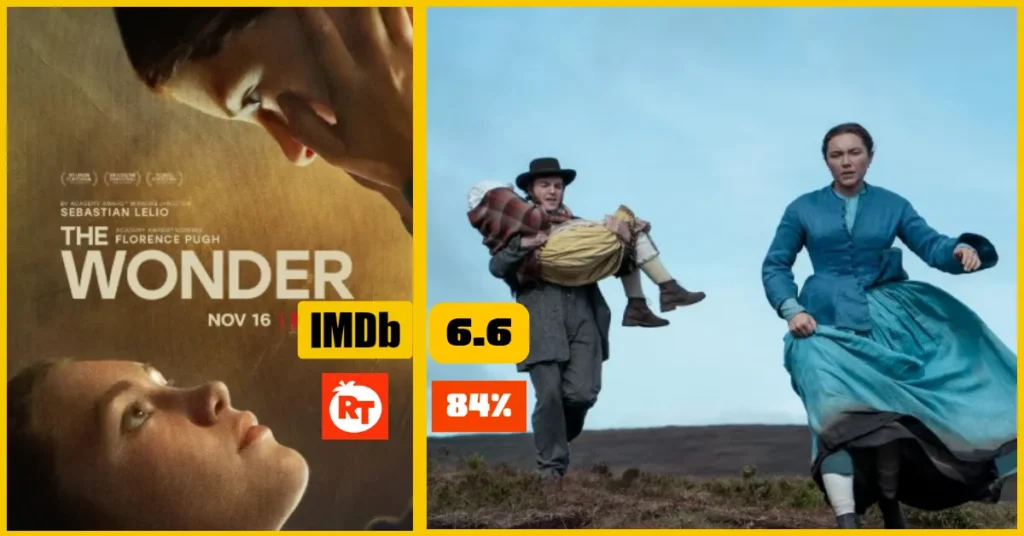
THE WONDER
✨ Outstanding British Film nominee at the 76th BAFTA Awards — one of the most acclaimed Netflix period dramas of 2022.
Florence Pugh’s performance as Lib Wright earned universal praise alongside breakthrough work by Kíla Lord Cassidy.
🏆 Total tally: 6 wins (BIFA Best Music, National Board of Review Top10, ReFrame Stamp, Girls on Film Cinematography & Ally Award, plus additional festival honors). 📽️ 33 nominations including BAFTA, BIFA (12), IFTA (6), London Critics’ Circle, San Sebastián.
The Wonder Movie Explained: A Haunting Tale of Faith and Survival
Sebastián Lelio’sThe Wonder, streaming on Netflix, is a psychological period drama that feels more like a quiet, creeping thriller. Set in 1862 in rural Ireland, it stars Florence Pugh as an English nurse sent to observe a miraculous event: a young girl who claims to have survived without food for four months. But is this a true miracle or a dark, calculated lie?
ThisThe Wonder movie explainedguide will break down the entire story, from the rigid religious fervor of the Irish Midlands to the film’s breathtaking and hopeful conclusion. We will dissect the characters, the symbolism, and most importantly, unpack the powerfulmovie ending explainedin detail.
Overview
The Wonderis a slow-burn psychological drama based on the novel by Emma Donoghue. It explores themes of faith, trauma, and the power of storytelling. The mood is bleak, claustrophobic, and deeply atmospheric, mirroring the oppressive nature of the community.
The film runs for just under two hours and is a masterclass in building tension not through jump scares, but through silent observation and the weight of unspoken truths.
⚠️ SPOILER WARNING ⚠️
This article contains major spoilers for the entire plot and ending ofThe Wonder. If you haven’t watched the film yet, we highly recommend you experience it on Netflix first.
Story Explained
Act 1: The Arrival of the Nurse
The film opens with a jarring, modern meta-commentary. A voice calls out “Narrator,” and we hear a clapperboard, reminding us we are about to watch a story. This deliberate break of the fourth wall sets the tone:we are here to witness a tale, but whose version is the truth?
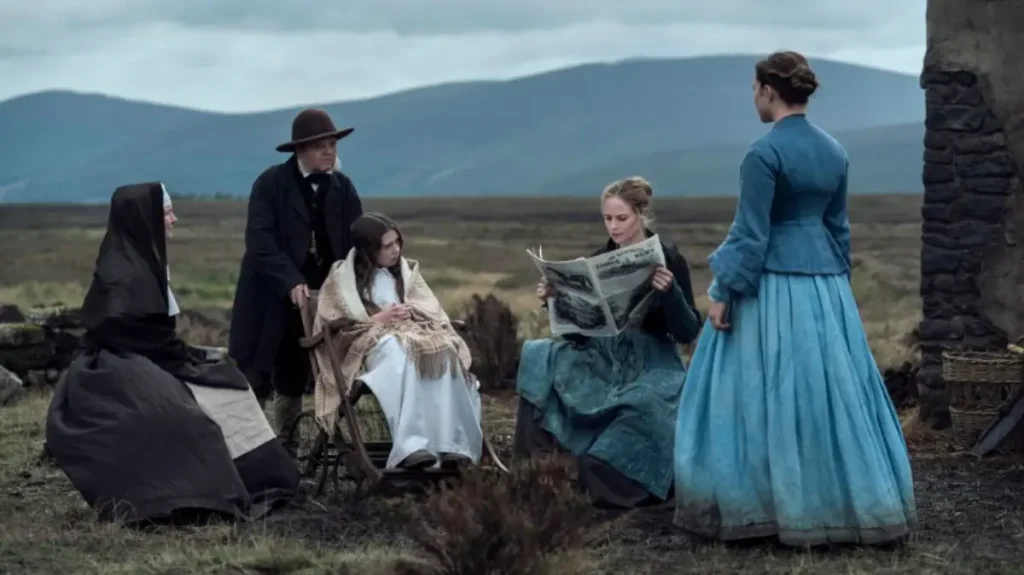
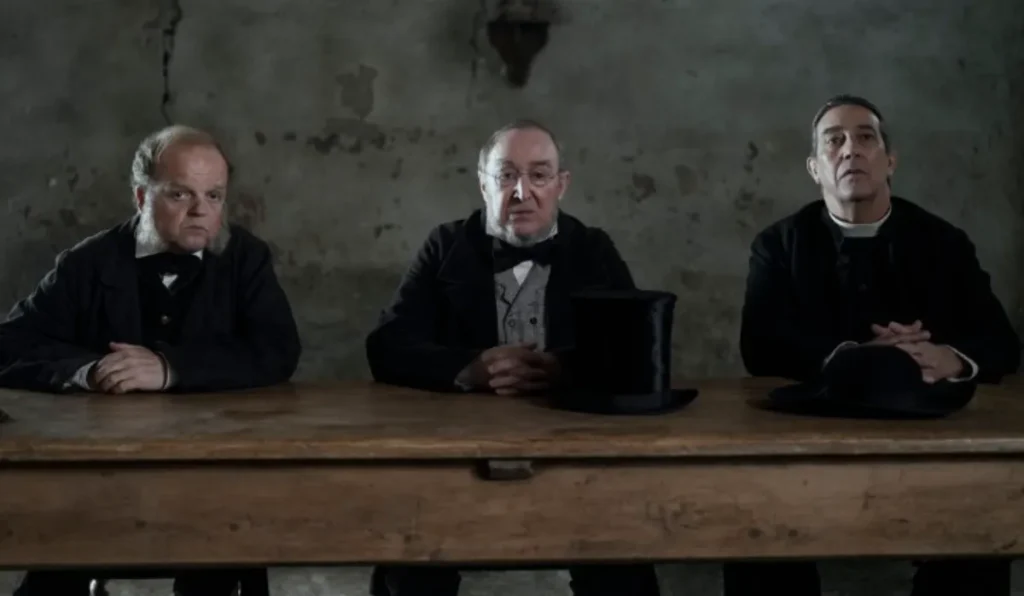
We meet Lib Wright (Florence Pugh), an English nurse who served in the Crimean War under Florence Nightingale. She arrives in a small, impoverished Irish village to join a “committee” of local dignitaries. Their mission is to observe eleven-year-old Anna O’Donnell (Kíla Lord Cassidy), a pious girl who has not eaten in four months and claims to live on “manna from heaven.”
Lib is skeptical and clinical. She is paired with Sister Michael (Josie Walker), a stern nun who represents the church’s vested interest in proving this is a miracle. They are tasked with a 24-hour watch in shifts to see if Anna is secretly eating.
Act 2: The Vigil and the Skepticism
As Lib begins her shifts, she watches Anna, who appears frail but strangely serene. The family, led by the manipulative father and grieving mother, treat Anna as a living saint. The village begins to flock, treating the house as a shrine.
Lib, a woman of science, is horrified. She knows that no one can survive without food. She searches the room for hidden food but finds none. She tries to reason with Anna, explaining the science of starvation, but Anna counters with her faith, believing she is eating the body of Christ.
A subplot emerges with William Byrne (Tom Burke), a local journalist and war correspondent. He is also skeptical and begins to bond with Lib over their shared trauma from the war. He represents the voice of reason from outside the community. Lib’s frustration grows as the committee ignores the medical danger Anna is in, preferring to believe in the “wonder.”
Act 3: Uncovering the Truth
The turning point comes when Anna collapses. Realizing the girl is on the brink of death, Lib intensifies her efforts to find the truth. The night before the final committee meeting, she breaks protocol. She stays up all night, whispering to Anna, trying to break through her religious fervor.
Through a heartbreaking confession, Lib discovers the truth: Anna is not a saint. She is a child carrying a massive, silent trauma. The twist is revealed: Anna had been secretly eating food her mother had been leaving in the room—not out of malice, but out of a twisted sense of duty. However, the final, tragic revelation is that Anna had stopped eating because she believed she was a sinner. She had witnessed her older brother die in her arms, blaming herself for his death. Her fasting is a form of self-punishment and a desperate attempt to reunite with him in heaven.
Key Themes Explained
The Wonderis a multi-layered story that uses the “miracle” of the fasting girl to explore deeper societal and psychological issues.
- The Power of Storytelling:The film begins and ends with the narrator reminding us we are watching a story. It highlights how communities, families, and even individuals create narratives to cope with trauma or gain power. The town needs the story of the miracle; Anna needs the story of her sin to make sense of her brother’s death.
- Religious Fanaticism vs. Science:Lib represents post-Enlightenment science and reason, while the Irish community represents a deep, almost medieval Catholic faith. The film doesn’t wholly condemn faith but critiques how it can be weaponized—by the church for control, and by the family to hide their own guilt.
- Trauma and Guilt:At its core,The Wonderis about a child drowning in guilt. Anna’s starvation is not a holy act; it is a slow, quiet suicide driven by the unbearable pain of survivor’s guilt. Lib herself is haunted by her own war trauma, making her uniquely able to recognize the trauma in Anna.
Characters Explained
- Lib Wright (Florence Pugh):A pragmatic, scarred nurse. She begins as a detached observer, treating this like a medical case. Through her connection with Anna, she rediscovers her humanity and maternal instinct, willing to risk everything to save the girl.
- Anna O’Donnell (Kíla Lord Cassidy):The “wonder.” She is a deeply intelligent and devout child, but her faith is a shield for her pain. Her transformation is heartbreaking to watch as she transitions from a serene martyr to a terrified little girl.
- William Byrne (Tom Burke):The outsider and Lib’s ally. He represents the power of the written word. His willingness to help Lib fake Anna’s death shows his belief that some stories (like Anna’s death) are worth changing to save a life.
- Sister Michael (Josie Walker):The enforcer of the church’s will. She is not a caricature of evil but a true believer who is willing to let a child die to preserve the institution’s reputation.
- The O’Donnell Family:Represent the toxic nature of grief. The father is obsessed with the financial and social prestige of the miracle. The mother, Rosaleen, is a silent, guilty enabler, secretly feeding Anna but unable to stop the deadly narrative.
Twist Explained
The central twist ofThe Wonderis not that Anna is a fraud. The committee expects a fraud. The real twist is thereasonfor the fraud.
First, we learn Anna’s mother, Rosaleen, was secretly slipping her food, believing she was helping sustain the miracle. When this is stopped, the danger becomes real.
The final, gut-wrenching twist is that Anna is starving herself out of guilt. She believes her brother’s soul is in purgatory because she kissed him after he fell and broke his neck. In her child’s logic, her sin of “taking God’s place” in the kiss requires a penance as extreme as starvation. It’s a tragic misunderstanding of theology, faith, and a child’s sense of responsibility.
Movie Ending Explained
This is the most crucial section of anyThe Wonder movie explainedguide. The ending is both a literal escape and a powerful metaphor.
What Exactly Happens?
When the committee refuses to intervene, knowing Anna will die to prove her holiness, Lib and William take matters into their own hands. They stage Anna’s death. In the dead of night, they remove the comatose Anna from her bed and place a sack of flour in her place. William then sets fire to the cottage. The town believes Anna O’Donnell died in the fire, her soul ascending to heaven.
In reality, Lib and William have rescued Anna. They take her to a small boat and escape across the lake. The final shot is of Lib and Anna, now healthy and alive, on a ship sailing to a new life. The narrator’s voice returns, telling us this is the story they want to tell—that the girl lived.
What the Ending Means
The ending is a direct rejection of the tragic, “historical” ending where the child dies for the sake of a miracle. The film argues thatwe, as the audience, have the power to choose the ending we tell.
By having the narrator explicitly state that they are telling this version of the story, director Sebastián Lelio breaks the fourth wall to ask: why must a story about a starving girl end in tragedy? The fire is a symbolic cleansing. It destroys the old, oppressive world of the O’Donnell home and the small-minded community. The water (the lake and the sea) represents rebirth, freedom, and a baptism into a new life.
Director’s Intention
Lelio has stated in interviews that he wanted to give the story a hopeful ending, diverging from the novel. He viewed the act of saving Anna as the ultimate act of liberation—not just from starvation, but from the narratives that were killing her. The ending reinforces the film’s central theme: we have the agency to change the story. Lib and William wrote a new story for Anna, one of survival, love, and freedom.
Performances
Florence Pugh delivers a powerhouse performance, carrying the film’s emotional weight with remarkable subtlety. Her transformation from a cold, buttoned-up nurse to a fierce, maternal protector is riveting.
Kíla Lord Cassidy is a revelation as Anna. Her performance is incredibly nuanced for a young actor; she manages to portray both the serene “saint” and the terrified child with equal authenticity. The chemistry between Pugh and Cassidy is the emotional core of the film.
Tom Burke provides a grounding presence as the grounded, moral anchor, while Josie Walker is perfectly unsettling as the embodiment of cold, institutional faith.
Direction & Visuals
Director Sebastián Lelio creates a masterclass in atmospheric tension. Cinematographer Ari Wegner uses a muted color palette of greens, browns, and grays to evoke the bleakness of post-famine Ireland.
The film is shot in a boxy, almost claustrophobic 4:3 aspect ratio. This choice traps the characters and the audience in the suffocating confines of the O’Donnell home, mirroring the entrapment of Anna’s situation. The use of candlelight and shadow creates a gothic, almost folk-horror aesthetic that perfectly complements the story’s dark themes.
Pros and Cons
Pros:
- Florence Pugh’s mesmerizing lead performance.
- A slow-burn tension that is masterfully sustained.
- A thought-provoking and thematically rich narrative.
- A powerful, visually stunning ending that defies expectations.
- Excellent period detail and atmosphere.
Cons:
- The pace is very slow, which may not appeal to viewers looking for a conventional thriller.
- The fourth-wall-breaking narration can feel jarring or pretentious to some.
- The plot is relatively simple, relying heavily on mood and performance over intricate twists.
Cast
| Actor | Role |
|---|---|
| Florence Pugh | Lib Wright |
| Kíla Lord Cassidy | Anna O’Donnell |
| Tom Burke | William Byrne |
| Niamh Algar | Kitty O’Donnell |
| Toby Jones | Dr. McBrearty |
| Ciarán Hinds | Father Thaddeus |
| Dermot Crowley | Sir Otway |
| Josie Walker | Sister Michael |
Crew
| Role | Name |
|---|---|
| Director | Sebastián Lelio |
| Screenplay | Sebastián Lelio, Alice Birch, Emma Donoghue |
| Based on | The Wonderby Emma Donoghue |
| Cinematography | Ari Wegner |
| Music | Matthew Herbert |
| Editor | Kristina Hetherington |
Who Should Watch?
- Fans of Florence Pugh:If you loved her inMidsommarorLittle Women, this is another showcase of her incredible range.
- Lovers of Slow-Burn Period Dramas:If you enjoy films likeThe BeguiledorThe Piano, the atmosphere and pacing will be right up your alley.
- Viewers Seeking Thought-Provoking Stories:This is a film that will stay with you, sparking conversation about faith, trauma, and the nature of truth.
Verdict
The Wonderis a haunting and beautifully crafted film that uses a simple premise to explore profound human questions. Florence Pugh gives one of her finest performances in a role that demands both clinical detachment and raw emotion. While its slow pace may test some viewers, the film’s powerful thematic depth and its ultimately hopeful, cathartic ending make it a must-watch. It is a story about stories, a meditation on guilt, and a triumphant ode to survival.
Reviews & Rankings
| Platform | Score |
|---|---|
| Rotten Tomatoes (Critics) | 84% (Certified Fresh) |
| Rotten Tomatoes (Audience) | 70% |
| IMDb | 6.6/10 |
| Metacritic | 75/100 |
Where to Watch
The Wonderis aNetflix Originalfilm. You can stream it exclusively onNetflixin all regions.
🎬 The Wonder (2022)
The Wonder is set in 1862 rural Ireland. An English nurse, Lib Wright (Florence Pugh), is sent to a small Midlands village to observe a young girl named Anna O’Donnell (Kíla Lord Cassidy), who claims to have survived without food for months — a “miracle” attracting pilgrims and journalists. Lib, alongside a nun, is tasked with watching Anna day and night. As skepticism clashes with fervent faith, Lib uncovers a dark family secret and psychological trauma behind the fast. The film explores manipulation, collective hysteria, and the resilience of truth. A layered, slow-burn period drama.
The movie is adapted from the 2016 novel The Wonder by Emma Donoghue (author of Room). While the central story is fictional, it draws inspiration from historical “fasting girls” phenomena in the Victorian era — cases where young women, often in devout Catholic communities, claimed miraculous survival without food. These cases were sometimes tied to religious fervor, trauma, or social pressure. Donoghue crafted a fictional narrative weaving historical context, making the film a critique of both skepticism and blind faith.
Florence Pugh leads as Nurse Lib Wright. The ensemble includes Kíla Lord Cassidy (Anna O’Donnell), Tom Burke (journalist William Byrne), Niamh Algar (Kitty O’Donnell), Ciarán Hinds (Father Thaddeus), Toby Jones (Dr. McBrearty), Elaine Cassidy (Rosaleen O’Donnell), and Dermot Crowley. The supporting cast delivers intense performances that highlight the claustrophobic atmosphere of 19th-century Irish society. Directed by Sebastián Lelio (A Fantastic Woman, Disobedience).
Principal photography took place in Ireland, primarily in County Wicklow and Dublin areas. The production team built authentic period sets, including the O’Donnell family cottage and the village interiors, to reflect post-famine rural Ireland. Some exterior scenes were shot in the scenic hills of Wicklow, capturing the raw, moody landscape that underscores the film’s oppressive yet beautiful tone. The choice of Irish locations enhanced historical credibility and cultural texture.
⚠️ Spoilers ahead. After Lib discovers Anna is being secretly fed by her mother through a “breath of life” ritual, the conspiracy is exposed. To save Anna from a slow death, Lib and journalist William Byrne stage Anna’s “death” and secretly escape with her to Australia. The final scene shows Lib, William, and Anna starting a new life, breaking free from religious fanaticism and patriarchal control. The meta-ending breaks the fourth wall, reminding viewers that stories have power — and that this story chooses hope and liberation over tragedy.
The Wonder examines the clash between science and religion, the construction of narratives, female autonomy, and collective trauma. It critiques how communities create “miracles” to suit ideological needs, while also showing the dangers of radical skepticism. The film highlights victimization of children under the guise of piety, and the resilience of women who defy oppressive systems. Additionally, storytelling itself becomes a theme — the movie opens and closes with a soundstage, reminding us that facts are shaped by who tells the story.
Yes, The Wonder is a Netflix Original Film released in November 2022. It is available for streaming worldwide on Netflix in all regions where the service operates. The film received a limited theatrical release in select countries before its digital premiere. To watch, simply search for “The Wonder” on Netflix — it’s available in 4K Ultra HD with multiple language subtitles and dubbing options.
Florence Pugh received widespread critical acclaim, earning nominations for Best Actress at the British Independent Film Awards (BIFA) 2022. The film was nominated for Best Cinematography (Ari Wegner) at various critic circles. It was also shortlisted for several technical categories (costume design, production design) by the Irish Film & Television Academy (IFTA). While not a massive awards contender, it was praised for its atmosphere, performances, and direction.
The screenplay (co-written by Donoghue herself) stays largely faithful to the novel’s core mystery and resolution. However, the movie introduces the meta-framing device: the film begins on a modern soundstage with a narrator stating “this is a story,” emphasizing constructed reality — a device not present in the book. Some subplots are streamlined, and the character of William Byrne (journalist) has a slightly expanded romantic nuance. The novel offers deeper interior monologue from Lib, while the film relies on visual storytelling and Florence Pugh’s nuanced performance.
The film is rated R (Restricted) in the US and 15 in the UK for mature thematic content including child endangerment, disturbing scenes related to starvation, and emotional intensity. It contains no explicit gore, but psychological tension and themes of religious manipulation may be unsettling for younger viewers. Parental guidance is recommended for teens under 16. It’s a profound drama for mature audiences interested in historical psychodrama and feminist storytelling.