
🎬 The Pale Blue Eye
Release Year: 2022
Streaming Platform: Netflix
⭐ IMDb: 6.6/10 | 🍅 Rotten Tomatoes: 86%
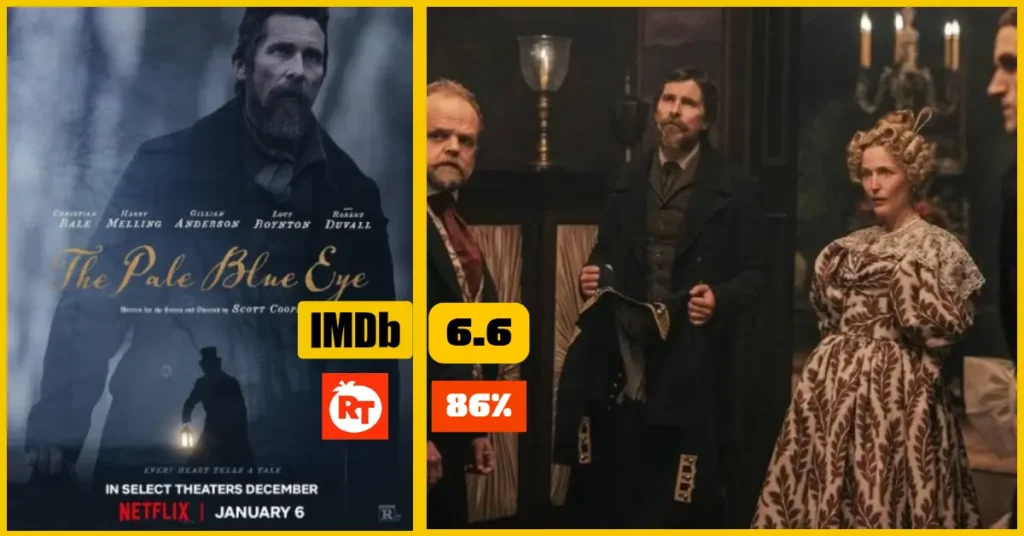
⚜️ THE PALE BLUE EYE 2022
🏆 Awards & Accolades — mystery, atmosphere, and the macabre
Introduction
Scott Cooper’sThe Pale Blue Eyeis a gothic thriller that feels like a classic ghost story, but the real ghosts are the ones we carry inside us. Set in the frigid winter of 1830 at West Point, this Netflix original brings together a world-weary detective and a young, eccentric cadet named Edgar Allan Poe to solve a gruesome murder. However, what starts as a standard whodunit transforms into a devastating character study about grief, vengeance, and the dark lengths a father will go to avenge his daughter.
In thisThe Pale Blue Eye Movie Explainedarticle, we will break down the complex narrative, examine the key characters, and most importantly, dive deep into the film’s shocking ending. We will explore how the final twist re-contextualizes the entire investigation and reveals the tragic truth behind the “Pale Blue Eye.”
Overview
The Pale Blue Eyeis a period mystery film that blends historical fiction with the macabre, a clear nod to the literary legacy of its central character, Edgar Allan Poe. The film’s mood is its most defining feature—bleak, somber, and drenched in shadow. Director Scott Cooper intentionally used a controlled, desaturated color palette to make the film feel almost black and white, forcing the audience to focus on the characters rather than the period details.
At its core, it is a slow-burn narrative that examines how personal tragedy can corrode the soul. It runs for 128 minutes, asking viewers to be patient as it layers clues, red herrings, and gothic symbolism.
⚠️ SPOILER WARNING: Major Plot Twists Ahead ⚠️
This breakdown contains detailed spoilers for the entire plot ofThe Pale Blue Eye, including the final twist and the fate of every character. If you haven’t seen the movie yet, we highly recommend watching it first to experience the chilling reveal for yourself.
Story Explained (Full Breakdown)
The plot ofThe Pale Blue Eyeunfolds like a dark tapestry, weaving together a murder investigation with a father’s hidden agenda.
Act 1: The Hanging at West Point
In October 1830, retired detective Augustus Landor (Christian Bale) is summoned to the United States Military Academy at West Point. A cadet, Leroy Fry, has been found hanging from a tree. While the military wishes to rule it a suicide to protect the academy’s reputation, Landor’s instincts tell him otherwise. Upon examining the body, he finds a torn note clutched in Fry’s hand and bruises indicating he was struck before being hanged.
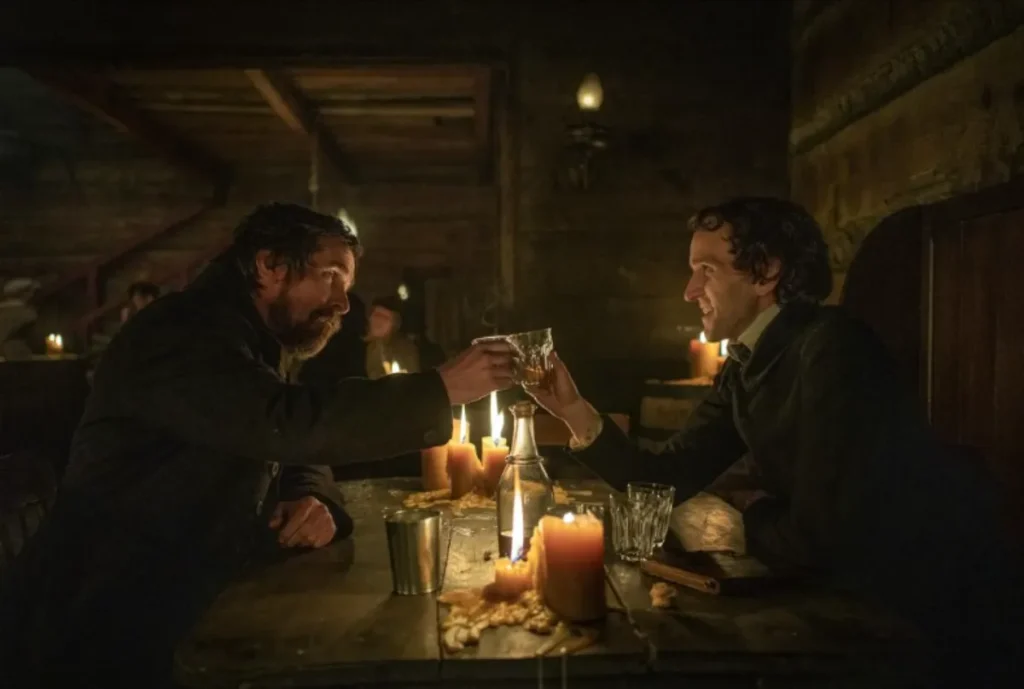
Needing an inside man to navigate the closed-off world of the cadets, Landor enlists the help of a moody, eccentric young poet named Edgar Allan Poe (Harry Melling). Poe is an outcast among his peers, but his sharp mind and fascination with the macabre make him the perfect ally.
Act 2: The Occult Connection
As Landor and Poe investigate, the case darkens. They discover the mutilated remains of a cow and a sheep, their hearts cut out. Soon after, Cadet Ballinger goes missing and is later found hanged, his heart and genitals removed. The murders appear ritualistic, pointing toward black magic.
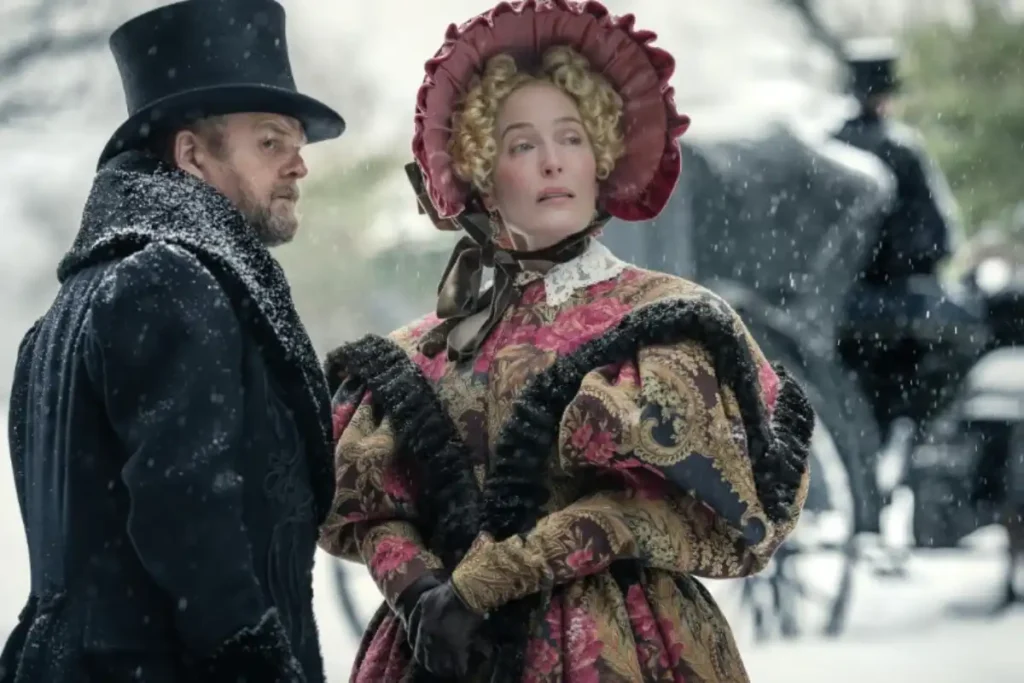
Their investigation leads them to Dr. Daniel Marquis (Toby Jones), the surgeon who performed the autopsies. Dr. Marquis lives with his strange, ethereal daughter Lea (Lucy Boynton), his son Artemus (a cadet), and his neurotic wife Julia (Gillian Anderson). Poe becomes immediately infatuated with the sickly Lea, despite the growing suspicion surrounding her family.
Landor discovers that Dr. Marquis has been dabbling in the dark arts, attempting to perform a ritual he believes will cure Lea of her seizures. The family has been killing animals and, ultimately, the cadets to harvest organs for a Satanic ritual to save Lea.
Act 3: The Failed Ritual
Poe, blinded by his affection for Lea, agrees to participate in the ritual, believing he is helping her. He is drugged and wakes up to find he is the intended human sacrifice. The Marquis family, along with Poe, are in a stone structure prepared for the ceremony.
Landor arrives just in time to save Poe. In the ensuing chaos, a fire breaks out. Dr. Marquis, Artemus, and Lea are all trapped inside and perish in the flames. The case seems closed. The military thanks Landor, and Poe is heartbroken over the loss of Lea. The audience believes they have just watched a story about a grieving father solving a case involving a family driven mad by occult desperation.
Key Themes Explained
- Grief and Revenge:The most prominent theme is how grief can consume a person. The entire film is built on the foundation of Landor’s unresolved pain. It explores how grief can be twisted into a cold, calculating desire for revenge, blurring the line between justice and murder.
- The Birth of a Writer:The film serves as an origin story for Edgar Allan Poe. Every event he witnesses—the hanging, the autopsies, the obsession with death, the ravens, the “tell-tale” clues—foreshadows the dark poetry and fiction he will write as an adult.
- Deception vs. Reality:Nothing inThe Pale Blue Eyeis what it seems. The “supernatural” events are revealed to be man-made. The “detective hero” is actually the criminal mastermind. The film constantly challenges the audience to question the narrative being presented.
Characters Explained
- Augustus Landor (Christian Bale):A retired detective haunted by the disappearance of his daughter, Mattie. He is quiet, observant, and deeply melancholic. Beneath his stoic exterior lies a volcanic rage that drives him to commit monstrous acts.
- Edgar Allan Poe (Harry Melling):A cadet who is intellectually superior to his peers but socially awkward. He is romantic, idealistic, and desperate for validation. His partnership with Landor is the first time he feels his talents are recognized, making the final betrayal even more painful.
- Lea Marquis (Lucy Boynton):The sickly daughter of Dr. Marquis. She is a tragic figure, used by her father as a justification for murder and by Poe as an object of romantic fascination.
Twist Explained
After the fire and the apparent end of the case, Poe has a moment of clarity. He examines the torn note found in Fry’s hand. He realizes the handwriting matches perfectly with a note Landor wrote earlier in the film. The truth crashes down: Landor was not solving the murders; he wascommittingthem.
The Real Story:
Two years prior, Landor’s daughter, Mattie, attended her first ball at West Point. That night, she was sexually assaulted by three cadets: Fry, Ballinger, and Stoddard. Traumatized and shamed, Mattie committed suicide by jumping off a cliff.
Consumed by a grief so profound it turned to ice, Landor decided to execute the men who destroyed his daughter. He killed Fry and staged it as a suicide. When the investigation was launched, he knew he needed a patsy to pin the rest of the crimes on. He created the narrative of the “occult murders,” killing Ballinger and Stoddard in ritualistic ways to frame the Marquis family, whom he knew dabbled in the dark arts. The entire investigation was a charade designed by Landor to hide his personal vendetta.
Movie Ending Explained
The ending ofThe Pale Blue Eyeis a masterclass in tragic irony. Poe confronts Landor with the truth. He has the evidence to expose him. However, in a moment of profound respect and pity, Poe chooses to burn the incriminating note.
Why does Poe do this? He recognizes that Landor, despite his monstrous actions, was a father seeking justice in a world that would deny it to him. He also understands that exposing Landor would mean revealing the assault on Mattie, further tarnishing her memory. Poe looks at Landor and sees the darkness that he will later explore in his own writing.
The film ends with Landor returning to the cliff where Mattie died. He pulls her hair ribbon from his pocket—a keepsake he has held onto for years—and releases it into the wind. He whispers, “Rest, my love”. It is a heartbreaking farewell. His vengeance is complete, but he is more alone than ever. The “pale blue eye” of the title doesn’t just refer to the cold winter sky, but to the vacant, dead gaze of a man who has lost everything, including his own soul.
Performances
- Christian Bale:Bale delivers a restrained powerhouse performance. He portrays Landor’s grief not through outbursts, but through heavy silences and weary eyes. He perfectly hides the monster beneath the melancholic detective.
- Harry Melling:Melling is the standout, stealing every scene he is in. He sheds his “Dudley Dursley” image completely, embodying Poe’s eccentricity, intelligence, and vulnerability. His portrayal makes you believe this awkward cadet could become a literary legend.
- Gillian Anderson:She provides a touch of dark comedy and unsettling energy as the flighty, dramatic Julia Marquis, fully embracing the gothic absurdity of the family.
Direction & Visuals
Scott Cooper’s direction is deliberate and atmospheric. He uses the harsh winter landscape to mirror the coldness in Landor’s heart. Cinematographer Masanobu Takayanagi shoots the film with a ghostly pallor. The scenes are often shrouded in fog or darkness, obscuring details and forcing the viewer to lean in, much like a detective searching for clues. The controlled color palette ensures that the blood—when it appears—is jarring and significant.
Pros and Cons
Pros:
- Outstanding Performances:Bale and Melling create a compelling and tragic duo.
- Atmospheric Mastery:The film’s gothic, wintery aesthetic is immersive and beautiful.
- The Twist:The final reveal is genuinely surprising and emotionally devastating, re-contextualizing the entire movie.
Cons:
- Slow Pacing:The first half of the film moves at a glacial pace that some viewers may find tedious.
- Overly Long:The buildup to the conclusion feels stretched, and the final reveal, while great, comes very late in the runtime.
Cast
| Actor | Role |
|---|---|
| Christian Bale | Augustus Landor |
| Harry Melling | Edgar Allan Poe |
| Gillian Anderson | Julia Marquis |
| Lucy Boynton | Lea Marquis |
| Toby Jones | Dr. Daniel Marquis |
| Harry Lawtey | Artemus Marquis |
| Timothy Spall | Superintendent Thayer |
| Robert Duvall | Jean-Pepe |
Crew
| Role | Name |
|---|---|
| Director | Scott Cooper |
| Writer | Scott Cooper (Screenplay) |
| Novel Author | Louis Bayard |
| Cinematographer | Masanobu Takayanagi |
| Composer | Howard Shore |
Who Should Watch?
The Pale Blue Eyeis perfect for viewers who love slow-burn gothic thrillers likeSleepy HolloworThe Name of the Rose. It’s a film for those who appreciate character studies over fast-paced action and who enjoy stories that pay homage to classic literature. If you are a fan of Christian Bale or want to see Harry Melling in a career-defining role, this movie is a must-watch.
Verdict
The Pale Blue Eyeis a beautifully tragic film that uses its murder mystery framework to tell a story about the destructive nature of grief. While its pacing may test the patience of some viewers, the powerful performances and a brilliantly constructed final twist make the journey worthwhile. It is a somber, poetic, and haunting exploration of how far a father will go to avenge his daughter, and the cold emptiness that awaits him on the other side of revenge.
Reviews & Rankings
- IMDb:6.6/10
- Rotten Tomatoes (Audience):86%
- Letterboxd:Average 3.2/5
- Common Consensus:Praised for acting and atmosphere; criticized for pacing.
Where to Watch
You can streamThe Pale Blue Eye (2022)exclusively onNetflix.
⚔️ THE PALE BLUE EYE ⚔️
2022 · mystery · thriller · answers to West Point’s darkest riddle