
The Wonder Movie Explained – Florence Pugh’s Netflix Thriller: Plot, Themes & Ending
🎬 The Wonder
Release Year: 2022
Streaming Platform: Netflix
⭐ IMDb: 6.6/10 | 🍅 Rotten Tomatoes: 84%
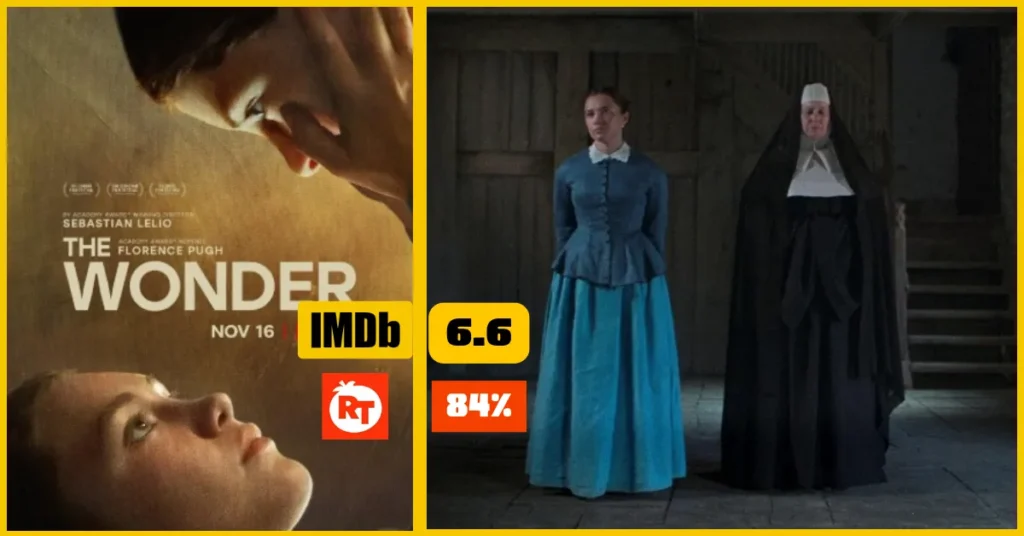
THE WONDER 2022
- Best Original Music — Matthew Herbert (WINNER)
- Best British Independent Film (nom)
- Best Director – Sebastián Lelio (nom)
- Best Lead Performance – Florence Pugh (nom)
- Best Ensemble Performance (nom)
- Best Screenplay / Cinematography / Costume / MakeUp (nom)
- British/Irish Film of the Year — nominee
- Young British/Irish Performer — Kíla Lord Cassidy (nom)
- Actress of the Year – Florence Pugh (nom)
- Supporting Actor – Tom Burke (nom)
- Technical Achievement – Nina Gold (casting) (nom)
- Best Film (nom)
- Best International Actress – Florence Pugh (nom)
- Best Supporting Actress – Elaine Cassidy (nom)
- Best Supporting Actress – Kíla Lord Cassidy (nom)
- Hair & Make-Up (nom)
- Golden Seashell – Official Selection (nom)
- Girls on Film: Best Cinematographer — Ari Wegner (WIN)
- Girls on Film Ally Award — Sebastián Lelio (WIN)
- Best Feature Film / Best Female Orgasm (noms)
- Best Adapted Screenplay – Birch, Donoghue, Lelio (nom)
- Best Woman Screenwriter – Alice Birch (nom)
- Top Ten Independent Films (WINNER)
- SDFCS: Best Body of Work – Florence Pugh (nom)
- Chlotrudis: Best Production Design – Grant Montgomery (nom)
- Indiana Film Journalists: Best Lead Performance (nom)
- Best Foreign Streaming Film (4th place)
Introduction
The Wonder is a haunting period psychological drama that blends mystery, faith, and human desperation. Directed by Sebastián Lelio and starring Florence Pugh, this Netflix film pulls you into a remote Irish village where science clashes with superstition. In this article, we’ll deliver a complete The Wonder movie explained, covering the full plot breakdown and a detailed ending explained to unpack every layer of this gripping story.
Overview
Set in 1862, just after the Great Famine, the movie follows an English nurse investigating claims of a miracle. The mood is tense and claustrophobic, with misty landscapes and dim interiors amplifying the sense of isolation. It’s a slow-burn drama about belief, guilt, and survival. Runtime is about 108 minutes, making it feel intimate yet weighty.
SPOILER WARNING
MAJOR SPOILERS AHEAD!
If you haven’t watched The Wonder yet, stop reading now. This breakdown reveals the entire plot, twists, and ending.
Story Explained (Full Breakdown)
Act 1 Explained
Lib Wright, a no-nonsense English nurse played by Florence Pugh, arrives in rural Ireland. She’s hired by a local committee to watch 11-year-old Anna O’Donnell for two weeks. Anna supposedly hasn’t eaten for four months since her First Communion, surviving on “manna from heaven.”
Lib is skeptical from the start. She measures Anna daily, searching for signs of deception. The family—devout Catholics—insists it’s a miracle. Pilgrims flock to see the “fasting girl,” turning the home into a spectacle.
Lib meets journalist William “Will” Byrne, who covers the story critically. Their conversations reveal Lib’s own trauma: she lost her child and hides guilt over it.
Act 2 Explained
As days pass, Lib grows frustrated. Anna remains healthy-looking despite no food intake. Lib enforces strict rules—no family contact during her shifts—to catch any tricks.
Anna bonds with Lib, sharing innocent moments. But tension builds. Lib discovers the mother, Rosaleen, kissing Anna deeply during visits. Suspicion grows.
Lib learns Anna’s brother died months earlier. The family believes his soul is in purgatory. Anna’s fasting is tied to saving him through sacrifice. Lib confronts the religious fervor blinding the community.
Act 3 Explained
Anna weakens when separated from her family. Lib realizes the “miracle” relies on secret feeding. The committee refuses to intervene, seeing it as divine will.
Desperate, Lib takes drastic action. She fakes Anna’s death by burning the house and claiming tragedy. She escapes with Anna and Will, giving the girl a new life.
Key Themes Explained
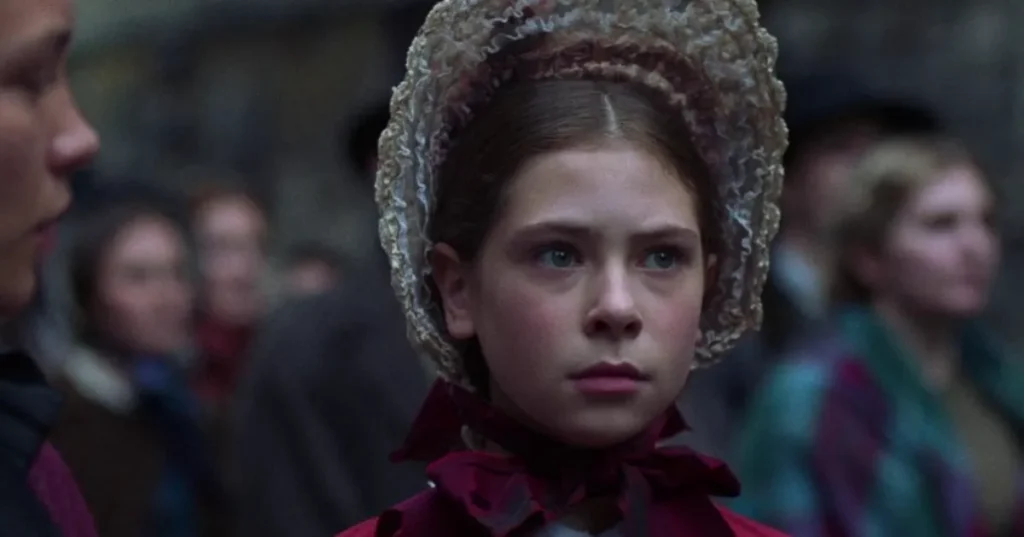
Faith versus reason drives everything. The movie explores how religion can justify harm, especially to children. Anna’s fasting symbolizes self-sacrifice pushed to extremes by guilt and dogma.
Colonial tension simmers—English nurse versus Irish villagers—echoing post-Famine resentment. Stories shape reality: the framing device reminds us we’re watching a constructed tale.
Guilt and redemption arc through Lib. She confronts her past loss while saving Anna from a similar fate.
Characters Explained
Lib Wright (Florence Pugh): Starts detached and scientific but transforms through empathy. Her arc is about healing her own wounds by protecting another.
Anna O’Donnell (Kíla Lord Cassidy): Innocent yet trapped in fanaticism. Her “double love” for her brother reveals incestuous abuse masked as devotion. She clings to the miracle to atone.
Rosaleen O’Donnell: The mother believes sacrifice redeems her son’s soul. Her love is twisted by grief.
William Byrne (Tom Burke): Cynical journalist who finds purpose helping Lib. He represents skeptical truth-seeking.
Twist Explained
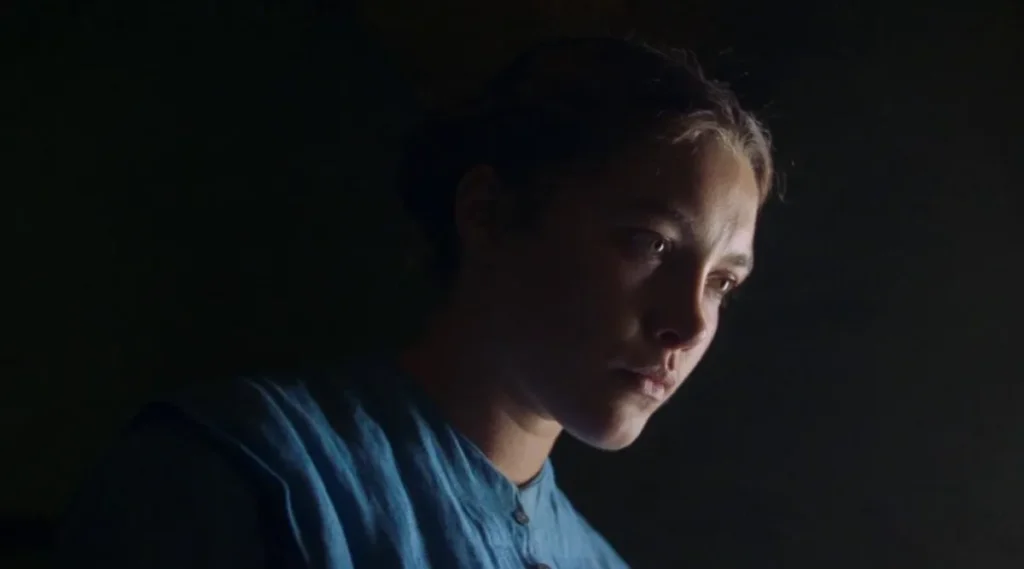
The big reveal: Anna isn’t miraculously fasting. Her mother passes pre-chewed food mouth-to-mouth during kisses. This hidden act sustains the “miracle” while starving Anna spiritually and physically.
It’s a heartbreaking twist rooted in real historical “fasting girls.” The abuse angle—Anna’s brother as both sibling and “husband”—adds dark layers of manipulation.
Movie Ending Explained
In the climax, Anna deteriorates rapidly without family “feeding.” The committee plans a Mass instead of medical help. Lib realizes Anna will die if nothing changes.
Lib drugs Anna lightly, renames her “Nan,” and convinces the girl “Anna” has died. She burns the house to fake the death, blaming a candle mishap.
Lib meets Will, and they flee with Anna/Nan to a ship for Australia. The girl eats normally, free at last.
The final scene breaks the fourth wall: we see the modern film set, with actress Niamh Algar (Kitty) stepping out. It reminds us the story is fiction—we’re invited to believe, just like the villagers.
This ending means hope through action. Lib rejects blind faith for compassionate intervention. Alternate views: some see it as colonial “rescue,” but the focus is on saving a child from fanaticism. Director Lelio emphasizes storytelling’s power—miracles are human-made narratives.
Performances
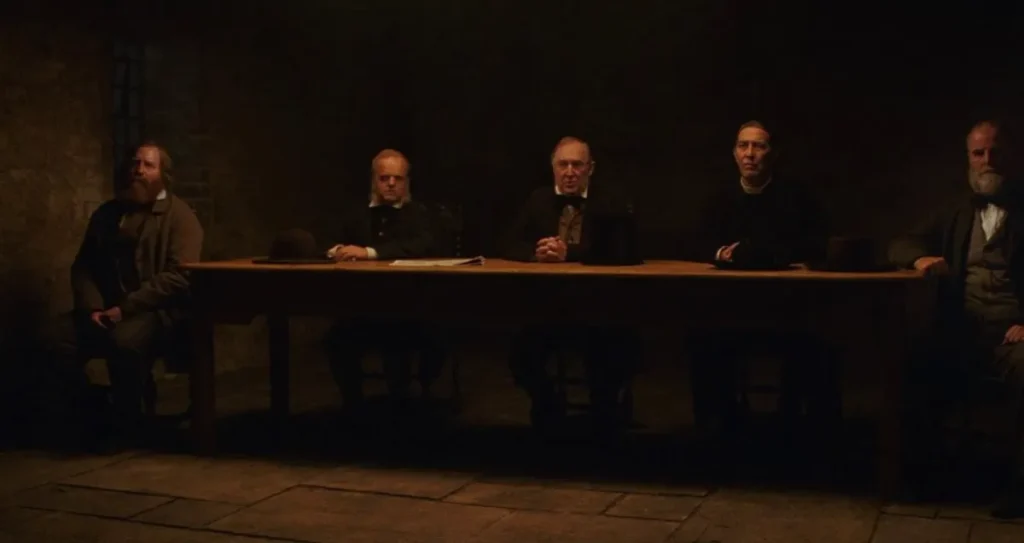
Florence Pugh delivers a powerhouse turn as Lib. Her quiet intensity builds to raw emotion—watch her face during revelations. She balances cold professionalism with buried pain perfectly.
Kíla Lord Cassidy is astonishing as Anna—fragile, devout, heartbreaking. Tom Burke brings grounded warmth to Will. Supporting cast like Elaine Cassidy (Rosaleen) adds chilling conviction.
Direction & Visuals
Sebastián Lelio crafts a stark, immersive world. Cinematography uses muted greens and grays, with tight close-ups trapping us in rooms. Candlelight and fog create eerie atmosphere.
Symbolism shines: locked doors represent trapped faith, open fields suggest escape. The 4:3 aspect ratio feels boxed-in, mirroring Anna’s confinement.
Pros and Cons
Pros: Stunning lead performance, thought-provoking themes, atmospheric tension, clever meta framing.
Cons: Slow pacing drags in the middle, some side characters feel underdeveloped, the fourth-wall break might jar viewers.
Cast
| Actor | Character | Role Description |
|---|---|---|
| Florence Pugh | Lib Wright | English nurse, skeptic turned savior |
| Kíla Lord Cassidy | Anna O’Donnell | Fasting girl, innocent victim |
| Tom Burke | William Byrne | Journalist, Lib’s ally |
| Elaine Cassidy | Rosaleen O’Donnell | Devout mother |
| Niamh Algar | Kitty | Lib’s local aide |
| Ciarán Hinds | Committee member | Religious authority |
| Toby Jones | Committee member | Village doctor |
Crew
| Role | Name | Notable Work |
|---|---|---|
| Director | Sebastián Lelio | A Fantastic Woman (Oscar winner) |
| Writer (novel) | Emma Donoghue | Room |
| Screenwriters | Emma Donoghue, Alice Birch | Adaptation experts |
| Cinematographer | Ari Wegner | The Power of the Dog |
Who Should Watch?
Fans of slow-burn mysteries like The Nightingale or The Witch. Anyone drawn to strong female leads, historical dramas, or stories questioning faith. Skip if you prefer fast action.
Verdict
The Wonder is a compelling, unsettling exploration of belief’s dark side. Florence Pugh anchors it with magnetic force, while the ending delivers emotional payoff and clever commentary. It’s not flashy, but it lingers—proving the real miracle is human compassion over blind devotion.
Reviews & Rankings
Critics praise Pugh and atmosphere (84% on Rotten Tomatoes). Audiences note its thoughtfulness, though some find it slow (around 72% audience score). IMDb holds steady at 6.6/10 from diverse viewers.
Where to Watch
Watch The Wonder on Netflix—stream it anytime for this haunting tale.