
🎬 Planet of the Apes
Release Year: 1968
Streaming Platform: Hulu / Amazon Prime Video / Apple TV
⭐ IMDb: 8.0/10 | 🍅 Rotten Tomatoes: 86%
- Honorary Award — John Chambers for outstanding makeup achievementHONORARY OSCAR 1968 🏆 41st Academy Awards
🎬 NOMINATIONS
Top Ten Films included
📀 ADDITIONAL HONORS
Inducted for cultural/historical significance
(according to IMDb aggregate)
⚡ Honorary Oscar (1968): “for the outstanding makeup achievement in Planet of the Apes” – John Chambers’ prosthetic techniques revolutionized cinema [citation:1][citation:2][citation:7]. Also nominated for Best Costume Design and Best Score (Jerry Goldsmith).
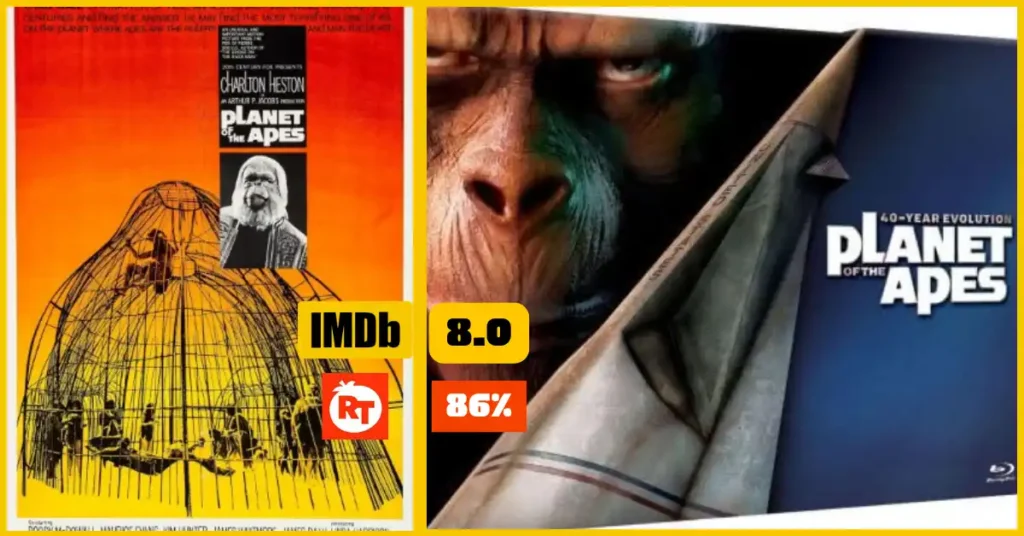
1. Planet of the Apes 1968 : A Deep Dive into the Sci-Fi Masterpiece
Welcome to our deep dive into Franklin J. Schaffner‘s 1968 sci-fi masterpiece,Planet of the Apes. This isn’t just a movie about talking monkeys; it’s a powerful social commentary wrapped in an adventure story. If you’re looking for a clear and detailedPlanet of the Apes 1968 Movie Explainedbreakdown, you’ve come to the right place. We’ll explore the film’s plot, its deep themes, and most importantly, deliver a comprehensivemovie ending explainedsection that analyses one of cinema’s most famous and shocking finales.
2. Overview
Planet of the Apesis a quintessential science fiction film from the late 1960s. It blends action, philosophy, and dystopian themes to create a truly unique cinematic experience. The film’s mood is a mix of thrilling adventure and grim contemplation, with a runtime of 112 minutes. It follows a group of astronauts who crash-land on a mysterious planet where intelligent, speaking apes are the dominant species, and humans are primitive, mute creatures. The movie is famous for its allegorical take on race relations, nuclear war, and the dangers of blind dogma.
3. ⚠️ SPOILER WARNING ⚠️
We are about to reveal the full plot, including the iconic twist ending of the 1968Planet of the Apes. If you are one of the lucky few who has never seen it and wants to experience the surprise fresh, stop reading now and go watch the film!
4. Story Explained (Full Breakdown)
Let’s break down the narrative into its core acts.
Act 1: The Crash and the Hunt
The film opens withGeorge Taylor(Charlton Heston), an astronaut who, along with his crew, has been traveling near the speed of light. He records his cynical thoughts about humanity before entering suspended animation. They crash-land on a seemingly alien planet. After losing one female crew member, the survivors trek through a barren desert and discover a fertile oasis. Here, they encounter mute, primitive humans. The idyllic scene shatters when they are attacked by mounted, rifle-wielding gorillas. Taylor is shot in the throat, damaging his voice, and captured.
Act 2: The Ape Society and the Heretic
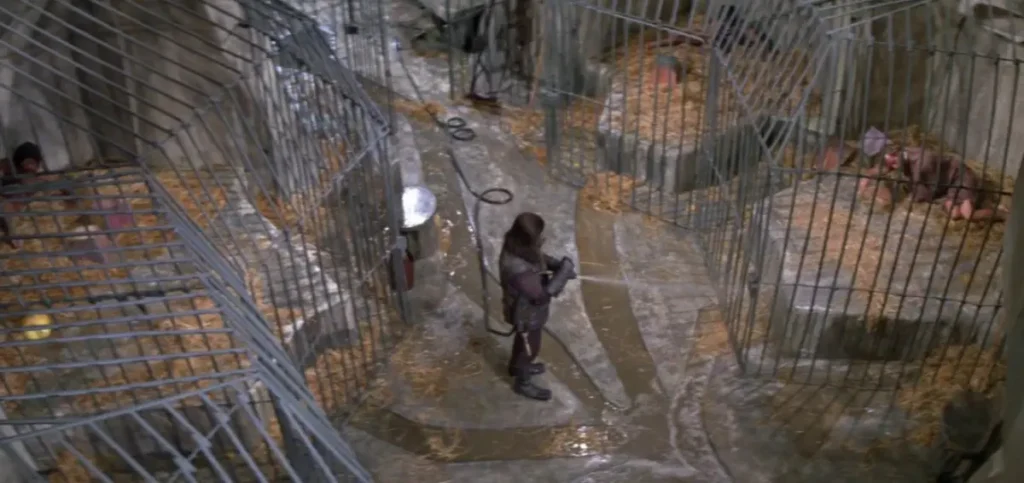
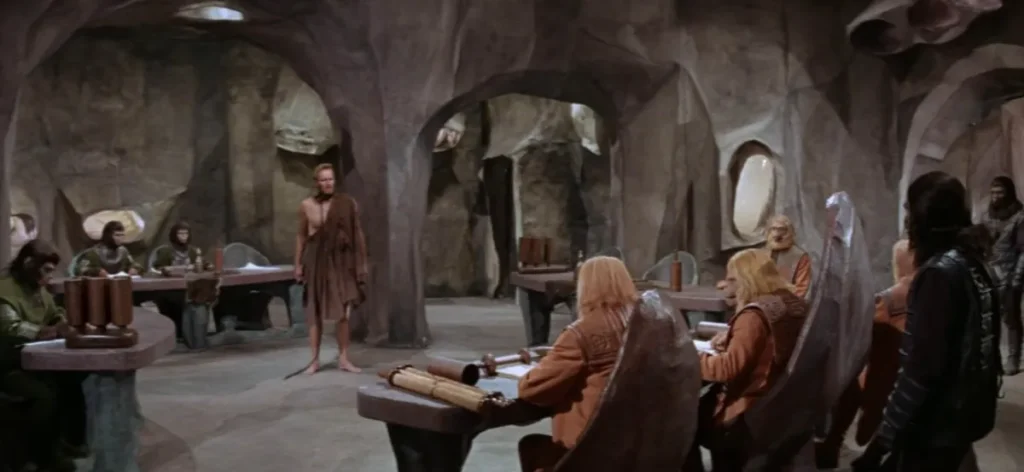
Taylor is caged and treated like an animal by the ape civilization. He is studied by two compassionate chimpanzee scientists,Zira(Kim Hunter) and her fiancéCornelius(Roddy McDowall). They are amazed by his intelligence, which challenges the fundamental beliefs of their society, guarded by the orangutan Minister of Science,Dr. Zaius(Maurice Evans). Zaius knows the truth about humans and is determined to silence Taylor. Taylor, regaining his voice, defiantly shouts, “Get your stinking paws off me, you damn dirty ape!”—a moment that sends shockwaves through the ape community and leads to a tribunal where his very existence is put on trial.
Act 3: The Escape and Revelation
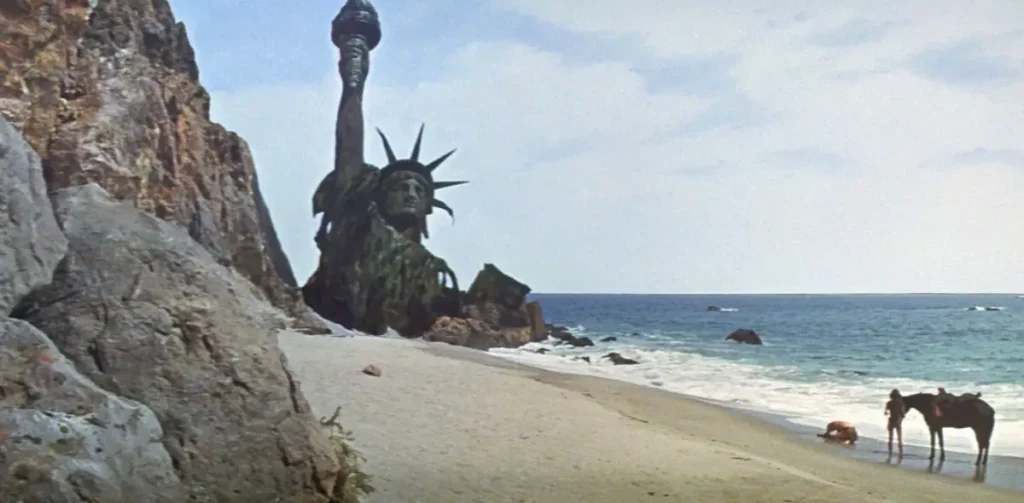
With the help of Zira and Cornelius, Taylor escapes the ape city with a mute human woman,Nova(Linda Harrison). Dr. Zaius pursues them. They venture into the “Forbidden Zone,” a desolate area where Cornelius has previously made archaeological discoveries. He shows them evidence of an ancient, advanced human civilization that predates ape society. This confirms that humans were once the dominant species. After a final confrontation, Taylor and Nova ride off into the desert, leaving Zaius behind. They travel along a shoreline until they see a strange structure jutting from the sand.
5. Key Themes Explained
Planet of the Apesis a film rich with meaning and metaphor.
- Civil Rights and Racism:The most prominent theme is its allegory for the Civil Rights Movement. The film reverses the racial hierarchy, showing a dominant class (apes) subjugating a different species (humans) based on perceived inferiority. Characters like Zira, who argues for Taylor’s intelligence, represent the voice of reason against ingrained prejudice.
- Nuclear War and Self-Destruction:The film was made during the Cold War. The revelation that humanity destroyed itself through war is a direct warning. The planet isn’t alien; it’s a future Earth ravaged by our own hubris and technology.
- Science vs. Fundamentalism:The conflict between Zira/Cornelius and Dr. Zaius mirrors the Scopes “Monkey” Trial. Zaius suppresses scientific evidence (the dig in the Forbidden Zone) to protect the ape’s religious and social order. He knows the truth but believes it’s too dangerous to reveal.
- Human Nature:Taylor begins as a misanthrope, disgusted with humanity. His journey forces him—and the audience—to confront the ugliness of our own species, culminating in the realization that we are, indeed, the “devil’s pawn”.
6. Characters Explained
- George Taylor (Charlton Heston):He is the archetypal American anti-hero—cynical, stubborn, and fiercely independent. His physical fight for freedom mirrors a philosophical fight for the dignity of his species. Heston’s persona perfectly embodies a “last man standing” confronting the sins of his ancestors.
- Dr. Zira (Kim Hunter):She is the heart of the film. A compassionate scientist, she sees past the “animal” to the individual. Her empathy makes her a traitor to her kind but a savior to Taylor. She is the progressive, open-minded intellectual.
- Dr. Cornelius (Roddy McDowall):Zira’s more cautious and intellectual partner. He provides the archaeological evidence that supports their theories, acting as the factual backbone for their heresy.
- Dr. Zaius (Maurice Evans):The film’s most complex character. He is not a simple villain. He is a protector of his society’s stability. He knows the destructive potential of humans because he knows the truth about the past. His final line, “He will bring you death,” is spoken with tragic conviction.
7. Twist Explained
The film’s primary twist is the world-building itself: that apes are intelligent and humans are not. However, this is just a prelude to the real twist. Throughout the film, the audience, like Taylor, assumes they are on a distant planet. The script, co-written byThe Twilight Zone‘s Rod Serling, masterfully plants clues, but the final reveal is the true gut-punch.
8. Movie Ending Explained
This is the moment that defines the film.
What Exactly Happens:
After escaping Dr. Zaius, Taylor and Nova ride along a desolate, rocky shoreline. The camera pulls back to show them as small figures against a vast, empty landscape. They dismount, and Taylor notices something in the sand. He walks towards it, his expression shifting from curiosity to disbelief and finally to utter despair. He falls to his knees and beats the sand in anguish. The camera reveals what he sees: the remains of the Statue of Liberty, half-buried and crumbling on the beach.
What the Ending Means:
This single image transforms the entire film. Taylor realizes he wasn’t on an alien world. He was on Earth all along. The apes didn’t evolve on a distant planet; they rose to dominance on our world after humanity destroyed itself in a nuclear war. The “Forbidden Zone” is what remains of our once-great civilization. The mute, primitive humans are the descendants of the survivors, who have devolved over thousands of years.
How It Connects to the Theme:
The ending validates Dr. Zaius’s entire belief system. He wasn’t just a religious fanatic; he was a guardian of a terrible truth. He knew that given the chance, humanity would destroy the world again. ThePlanet of the Apes movie ending explainedisn’t just a surprise; it’s a profound statement on human nature. We are the architects of our own doom. The “damn dirty ape” Taylor cursed was, in a way, a reflection of himself and all of mankind. The film’s final message is one of hopelessness and a stark warning about the path we are on.
Alternate Angle Interpretations:
Some viewers might see a sliver of hope in Taylor’s despair—the hope that future generations will learn from the past. But the film gives little reason for optimism. Taylor’s primal scream is the sound of a man who understands that his species’ worst enemy was always itself.
9. Performances
Charlton Hestondelivers a career-defining performance. He spends much of the film mute, conveying rage and intelligence through sheer physical presence. His bombastic style fits perfectly, as the film cleverly uses his persona to represent a bygone, self-destructive humanity.
Kim HunterandRoddy McDowallgive incredibly nuanced performances under heavy prosthetic makeup. They bring warmth, humor, and humanity to their ape characters, making them the emotional anchors of the story.
Maurice Evansis brilliantly stern and intellectual as Dr. Zaius. He brings a Shakespearean gravity to the role, making his character’s warnings feel prophetic and weighty.
10. Direction & Visuals
DirectorFranklin J. Schaffnertreats the material with a seriousness that elevates it above standard B-movie sci-fi. He builds tension slowly, allowing the world and its ideas to breathe. The cinematography byLeon Shamroyis stunning, contrasting the stark, beautiful deserts of the American Southwest (standing in for the Forbidden Zone) with the claustrophobic, stone-carved ape city.
Jerry Goldsmith’savant-garde, atonal score is a character in itself. Using ram’s horns, brass, and unique percussion, it creates an unsettling and alien soundscape that perfectly complements the film’s themes. The revolutionary makeup byJohn Chamberswas a landmark achievement, allowing for expressive and believable ape characters and earning him an honorary Oscar.
11. Pros and Cons
Pros:
- Intelligent Script:A thought-provoking sci-fi film that tackles big ideas.
- Iconic Twist:One of the most memorable and impactful endings in cinema history.
- Groundbreaking Makeup:John Chambers’ work set a new standard for prosthetic effects.
- Strong Performances:The cast delivers compelling work, especially the actors under the ape makeup.
- Powerful Score:Jerry Goldsmith’s experimental music is unforgettable.
Cons:
- Dated Pacing:Modern audiences might find the first act slow.
- Heston’s Intensity:His signature style can come across as overly dramatic or “hammy” to some.
- Limited Scope:The ape civilization feels small, like a single village rather than a planet-wide society.
12. Cast
| Actor | Role |
|---|---|
| Charlton Heston | George Taylor |
| Roddy McDowall | Cornelius |
| Kim Hunter | Zira |
| Maurice Evans | Dr. Zaius |
| Linda Harrison | Nova |
| James Whitmore | President of the Assembly |
| Robert Gunner | Landon |
| Lou Wagner | Lucius |
13. Crew
| Role | Crew Member |
|---|---|
| Director | Franklin J. Schaffner |
| Screenplay | Michael Wilson & Rod Serling |
| Based on the Novel by | Pierre Boulle |
| Producer | Arthur P. Jacobs |
| Music | Jerry Goldsmith |
| Cinematography | Leon Shamroy |
| Makeup Designer | John Chambers |
14. Who Should Watch?
- Fans of classic sci-fi and thought-provoking cinema.
- Viewers who appreciate intelligent social commentary and allegory in their movies.
- Anyone who wants to experience one of the most famous plot twists in film history.
- Students of film history interested in groundbreaking makeup and special effects.
15. Verdict
Planet of the Apesis more than just a classic; it’s a landmark film. It uses its fantastical premise to hold a mirror up to humanity, exposing our prejudices and our capacity for self-destruction. While some elements have aged, its core themes and its devastating ending remain as powerful as ever. It is an essential watch for any serious film lover.
16. Reviews & Rankings
- Roger Ebert:Included in his “Great Movies” collection, praising its intelligence and impact.
- Empire Magazine:Ranked it as one of the greatest films of all time, highlighting its iconic status.
- Total Film:Consistently lists it as one of the best sci-fi movies ever made.
- AFI (American Film Institute):Ranked it as having one of the top 10 movie twists of all time.
17. Where to Watch
You can currently stream the original 1968Planet of the ApesonHuluwith a premium subscription, or rent/buy it on digital platforms likeAmazon Prime Video, Apple TV, and YouTube. Check your local listings for availability.