
🎬 The Others (2001)
Release Year: 2001
Streaming Platform: MAX, Amazon Prime Video, Paramount+
⭐ IMDb: 7.6/10 | 🍅 Rotten Tomatoes: 84%
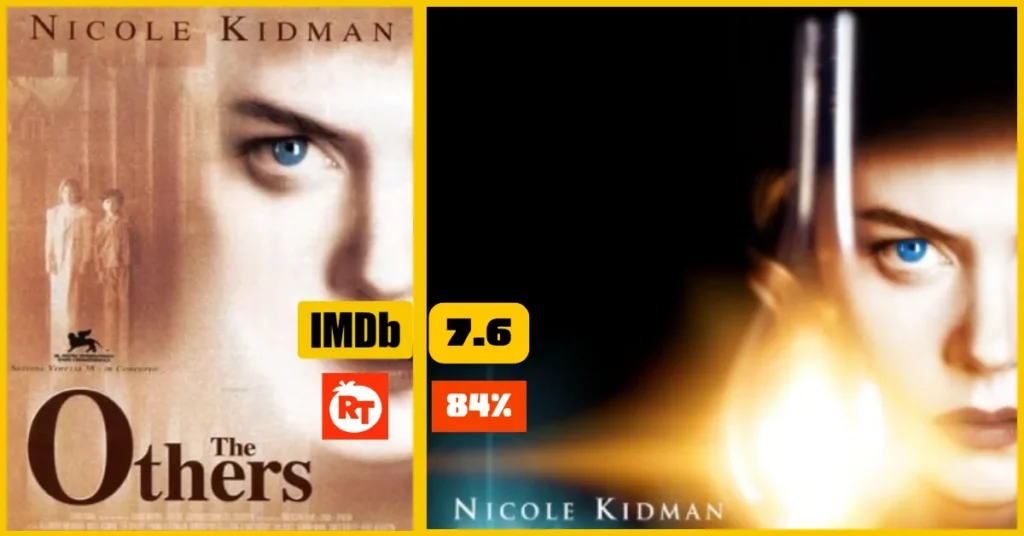
1. The Others Ending Explained: The Truth About Grace and The Children
Is it a haunted house movie, or is it something far more tragic and personal? Alejandro Amenábar’sThe Othersis a masterclass in psychological horror that relies on atmosphere, dread, and a brilliant screenplay rather than cheap jump scares. Starring Nicole Kidman in one of her most iconic roles, this 2001 gothic thriller takes viewers on a journey into a fog-shrouded mansion where the line between the living and the dead is terrifyingly thin.
In thisThe Others Movie Explained + Ending Explainedarticle, we will peel back the heavy curtains of the Stewart mansion. We’ll analyze the story phase by phase, decode the film’s deep religious and psychological themes, and ultimately clarify the film’s devastating conclusion. If you’ve ever wondered about the true identity of “the others,” you are in the right place.
2. Overview
The Othersis a supernatural gothic horror film set in 1945 on the isolated island of Jersey. The story follows Grace Stewart (Nicole Kidman), a devout Catholic mother raising her two young children, Anne and Nicholas, in a dark, eerie mansion. The children suffer from a rare photosensitivity disease that makes exposure to sunlight fatal, forcing Grace to keep every curtain drawn and every door locked.
The mood is one of suffocating isolation and creeping paranoia. With a runtime of 104 minutes, the film slowly builds tension, relying on sound design, shadows, and the characters’ fraying nerves to create an atmosphere of pure dread.
3. ⚠️ SPOILER WARNING
Stop right here if you haven’t seen The Others.This article contains major spoilers for the film’s plot, including the famous twist ending. To fully appreciate the genius of Alejandro Amenábar’s storytelling, we highly recommend watching the movie blind before reading further.
4. Story Explained (Full Breakdown)
To understand the genius ofThe Others, we must look at the story in three distinct acts, paying close attention to the clues hidden in plain sight.
Act 1 Explained: The Rules of the House
The film opens with Grace Stewart seemingly waking from a nightmare. She lives in a vast, dark mansion with her two children, Anne and Nicholas. The rules are strict: because of their condition, no door can be opened until the previous one is closed, and the heavy curtains must never be drawn back. When three new servants—Mrs. Mills (Fionnula Flanagan), Mr. Tuttle, and the mute Lydia—arrive, Grace hires them, learning they have worked in the house decades before.
Almost immediately, strange things happen. Anne claims to see other people in the house: a boy named Victor, his parents, and an old blind woman. Grace dismisses this as lies and fantasies, punishing Anne for her “wild imagination.” This act establishes the rigid, almost oppressive control Grace exerts over her environment, a direct result of her fear and her strict Catholic faith.
Act 2 Explained: The Haunting Intensifies
Grace begins to experience the supernatural phenomena herself. She hears a piano playing in an empty room, footsteps echo through the halls, and the velvet curtains are mysteriously pulled back, exposing the children to deadly light. Her grip on reality starts to slip. Desperate for help, she ventures into the thick fog to find a priest but instead finds her husband, Charles (Christopher Eccleston), who she thought had been killed in the war. He returns home but is distant, cold, and leaves just as abruptly as he arrived.
The tension peaks when Grace, searching for Anne, finds an old, hideous woman wearing her daughter’s communion veil. The old woman speaks in Anne’s voice, saying, “I am your daughter.” In a panic, Grace attacks the figure, only to realize she has been attacking the real Anne, scratching her daughter’s face. This moment is pivotal; it shows Grace is an unreliable narrator, capable of violence she cannot control.
Act 3 Explained: The Unraveling
The climax begins when Grace fires the servants, believing they are sabotaging the house. However, the children discover the servants’ gravestones in the family cemetery, dated 1891. Simultaneously, Grace finds a Victorian “Book of the Dead” containing a post-mortem photograph of Mrs. Mills, Mr. Tuttle, and Lydia.
This is the moment of horrifying realization. Mrs. Mills returns and tells Grace to go upstairs and confront the “intruders.” Upstairs, Grace finds the old blind woman, who is actually a medium, conducting a séance with a living family. Through automatic writing, the medium reveals the truth: Grace, in a fit of despair after learning of her husband’s death, smothered her children with a pillow and then shot herself.
5. Key Themes Explained
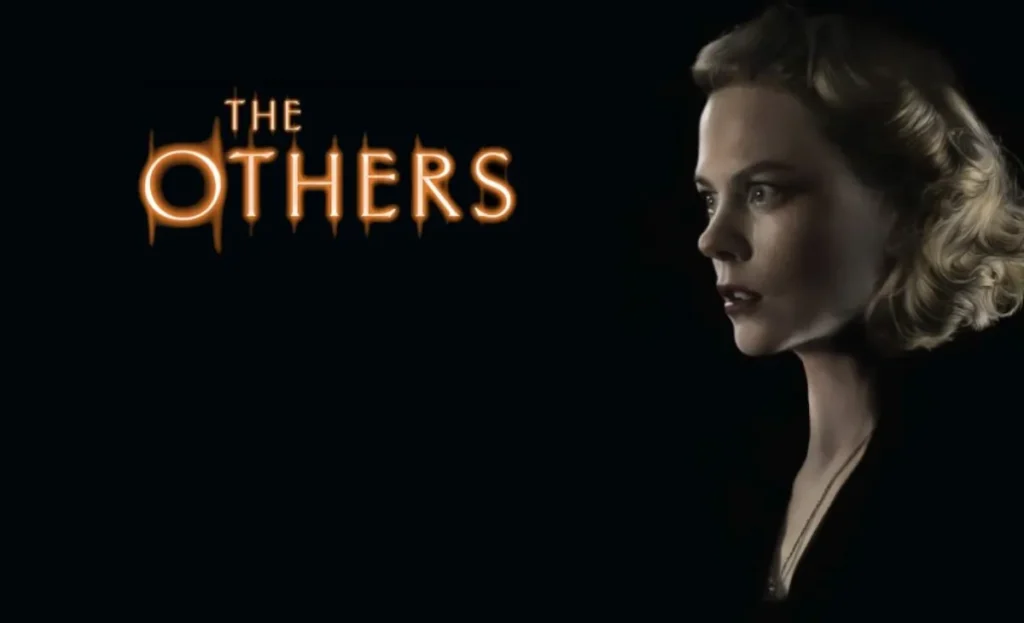
The Othersis far more than a simple ghost story. Its themes are what elevate it to classic status.
- Denial and Grief:The film’s central theme is the denial of death. Grace cannot accept that she, her children, and her husband are dead. She has constructed an elaborate reality to avoid facing the truth of her violent actions. As one critic notes, the film uses denial as the “real ectoplasm” that binds the story together.
- Religious Guilt and Limbo:Grace’s strict Catholicism is a constant presence. She teaches her children about the circles of Hell and the concept of Limbo—a place for innocent souls who die without baptism. Ironically, Grace and her children are literally living in a state of limbo, trapped in their home, unable to move on.
- Fear of the Unknown:The film masterfully plays with the idea that what we cannot see is scarier than what we can. The darkness protects the children, but it also hides the truth. The constant fog outside the mansion represents the murky boundary between the world of the living and the dead.
6. Characters Explained
- Grace Stewart (Nicole Kidman):A complex figure of authority and fragility. She is a loving but severe mother, whose rigid control stems from a deep-seated terror. Her transformation from a “haunted” woman to a “haunting” one is the core of the film. She represents the “egocentrically religious” person who believes she is righteous but is blind to her own sins.
- Mrs. Mills (Fionnula Flanagan):The mysterious housekeeper is the anchor of the story. She is Creepy Good—her demeanor is often sinister, but her intentions are ultimately benevolent. As a ghost who has long accepted her state, she gently guides Grace toward the truth, acting as a maternal figure who understands the rules of the afterlife.
- Anne Stewart (Alakina Mann):The perceptive daughter. Anne sees the living family (Victor) clearly, but her mother labels her a liar. She represents the truth that adults refuse to see. She also carries the memory of “that day,” making her resentful and distant toward Grace.
- Charles Stewart (Christopher Eccleston):Grace’s husband. He is a ghost trapped between worlds. His brief, emotionless return signifies that he has accepted his death, which is why he cannot stay with Grace, who remains in denial.
7. Twist Explained
The film presents a brilliant double-layered twist. Initially, we believe Grace and her children are the living residents being haunted by spectral intruders (Victor’s family). The first revelation is that the servants are ghosts, having died in a tuberculosis outbreak in 1891.
However, the final, devastating twist is thatGrace and her children are also dead. They are the ones haunting the house. The “intruders” are the living family who have moved in and are trying to contact the spirits they hear. Grace didn’t just lose her husband; she murdered her children and herself. Her reality is a ghost’s denial, a purgatory of her own making.
8. Movie Ending Explained
This is the most crucial section of ourThe Others Ending Explainedbreakdown.
What Exactly Happens?
After the séance reveals the truth, the living family flees the house in terror. Grace, Anne, and Nicholas are left alone. For the first time, Anne and Nicholas step into the sunlight—and it doesn’t hurt them. They laugh and play, finally free. Mrs. Mills explains that the house will be sold again, and new people will come. They will have to learn to cohabitate with the living. Grace, finally at peace, accepts this, stating firmly that the house is theirs.
What the Ending Means
The ending is Bittersweet. On one hand, Grace and her children are trapped forever in the house where they died. They are ghosts, bound to the location of their trauma. On the other hand, they have finally accepted their reality. The sun, once a symbol of mortal danger, now represents their liberation from fear and denial. The children can finally play.
How It Connects to the Theme
It connects directly to the theme of Limbo. The family is no longer in denial, but they are not in Heaven or Hell either. They are simply “there,” in a state of eternal waiting. Grace’s final line, “This house is ours,” is not a threat but an acceptance of her eternal reality.
Director’s Intention
Alejandro Amenábar intended to create a film where the audience experiences the protagonist’s denial. He uses the “vertigo of the unknown” to keep us guessing. By having the characters be ghosts who don’t know they are dead, he forces us to question our own perceptions and sympathize with figures who, by all rights, should be monsters.
9. Performances
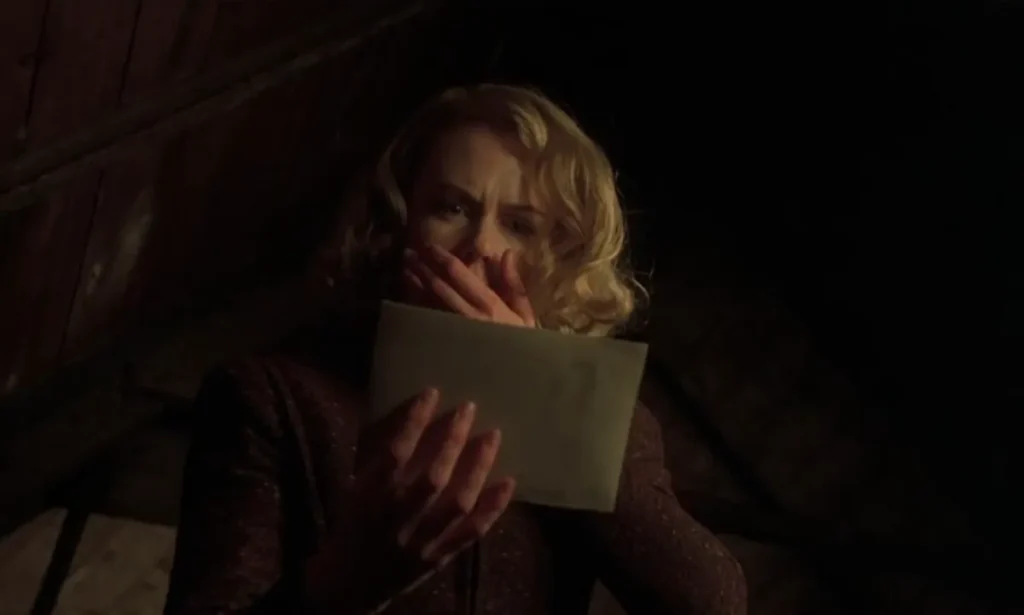
- Nicole Kidman:This is a career-defining performance. Kidman perfectly captures Grace’s icy exterior and the hysteria bubbling just beneath the surface. She makes a woman who murdered her children somehow sympathetic and tragic. Her ability to shift from rigid control to utter devastation is breathtaking.
- Fionnula Flanagan:As Mrs. Mills, Flanagan is the film’s secret weapon. She balances motherly warmth with an unsettling omniscience. You never quite trust her, which makes the final revelation that she is a helpful ghost all the more impactful.
- Alakina Mann and James Bentley:The child actors are superb. Mann, in particular, brings a sharp, knowing edge to Anne. Her defiance feels like a defense mechanism against the trauma she half-remembers.
10. Direction & Visuals
Alejandro Amenábar directs with the confidence of a master stylist. He understands that true horror comes from anticipation, not gore.
- Cinematography:Javier Aguirresarobe’s cinematography is drenched in shadows and sepia tones. The house feels like a character itself—cold, vast, and labyrinthine. The use of natural light (or the lack thereof) is brilliant; darkness is safety, and light is danger, inverting the typical horror tropes[citation:18].
- Sound Design:The sound is arguably scarier than the images. The creaking floors, the distant piano, the heavy breathing—all of it builds a world of unbearable tension.
- Symbolism:The constant fog acts as a veil between the living and the dead. The heavy curtains represent Grace’s psychological barriers against the truth.
11. Pros and Cons
Pros:
- Masterful atmosphere and slow-burn tension.
- A brilliant twist that holds up to repeated viewings.
- Nicole Kidman’s best performance in a horror drama.
- Intelligent writing that respects the audience.
Cons:
- The slow pace might feel too methodical for viewers expecting modern jump-scare horror.
- Some may find the religious themes heavy-handed.
- It invites direct comparison toThe Sixth Sense, which can overshadow its unique merits.
12. Cast
| Actor | Character |
|---|---|
| Nicole Kidman | Grace Stewart |
| Fionnula Flanagan | Mrs. Bertha Mills |
| Christopher Eccleston | Charles Stewart |
| Alakina Mann | Anne Stewart |
| James Bentley | Nicholas Stewart |
| Eric Sykes | Mr. Edmund Tuttle |
| Elaine Cassidy | Lydia |
| Renée Asherson | The Old Lady (Medium) |
13. Crew
| Role | Crew Member |
|---|---|
| Director | Alejandro Amenábar |
| Writer | Alejandro Amenábar |
| Producer | Fernando Bovaira, José Luis Cuerda |
| Cinematography | Javier Aguirresarobe |
| Editor | Nacho Ruiz Capillas |
| Music | Alejandro Amenábar |
14. Who Should Watch?
You should watchThe Othersif you appreciate atmospheric horror over gore. If you lovedThe Sixth Sense,The Haunting of Hill House(Netflix series), orCrimson Peak, this film is essential viewing. It’s perfect for fans of slow-burn mysteries and gothic melodrama.
15. Verdict
The Othersis a timeless ghost story that proves horror doesn’t need blood to be terrifying. With a stunning central performance from Nicole Kidman and a script that rewards attentive viewers, it remains one of the most intelligent and emotionally resonant films of the 2000s. The ending doesn’t just surprise you; it stays with you, forcing you to reconsider everything you just watched. It is, without a doubt, a modern classic.
16. Reviews & Rankings
- Rotten Tomatoes:84% (Critics) / 79% (Audience)
- Metacritic:74/100 (Generally Favorable)
- Roger Ebert:2.5/4 Stars (Praised the atmosphere but felt style sometimes substituted for substance)[citation:17].
- Ranking:Frequently listed among the best horror films of the 21st century. In 2025,The Hollywood Reporternamed it the 14th greatest horror film of the century.
17. Where to Watch
You can currently streamThe OthersonMAX. It is also available for rental or purchase onAmazon Prime Video,Apple TV, andParamount+.
⛅ THE OTHERS (2001) FAQ
10 things you were curious about — no big secrets, just friendly answers
Grace Stewart (Nicole Kidman) is the deeply protective mother of two photosensitive children, Anne (Alakina Mann) and Nicholas (James Bentley). They live in a dark, fog-shrouded manor on Jersey island while waiting for the father to return from WWII. Three mysterious servants — Mrs. Bertha Mills (Fionnula Flanagan), Mr. Edmund Tuttle (Eric Sykes), and the mute girl Lydia (Elaine Cassidy) — arrive to help.
No, it’s an original screenplay written and directed by Alejandro Amenábar. However, it shares thematic echoes with classic ghost stories like The Turn of the Screw and gothic novels. The story is entirely fictional, but Amenábar crafted it with a deep respect for suspense traditions.
Anne and Nicholas suffer from xeroderma pigmentosum (XP) — a rare genetic condition that makes any UV light extremely dangerous. That’s why the mansion is always draped with heavy curtains, and every door must be locked before opening another. It’s a crucial part of the family’s isolation.
The shocking revelation: Grace and her children are actually the ghosts. They died years earlier (Grace killed them and herself in a moment of despair). The “intruders” they hear are a living family who unknowingly moved into the house. The famous line “I am your daughter, not your mother!” echoes that revelation.
☁️ twist unveiled – but the journey is everythingMrs. Mills, Mr. Tuttle and Lydia answer an ad and claim to have worked at the house decades earlier. In the end we learn they are also spirits — they died long before Grace’s family, but stayed. Mrs. Mills gently guides Grace toward the truth. They are benevolent, but their presence terrifies the living tenants.
Only spiritually — both are ghostly dramas with a reality‑bending twist. But The Others came out in 2001, two years after The Sixth Sense. They share a similar eerie atmosphere and explore the perspective of the dead, but Amenábar’s film stands completely on its own (and many argue it’s more subtle).
Actually the film uses a muted, desaturated color palette – it’s not black & white, but the lighting is intentionally dim, cold and foggy. The only “bright” light is harsh and associated with the outside world. The cinematography (by Javier Aguirresarobe) reinforces the gothic, claustrophobic mood.
On the surface, “the others” are the unseen intruders – the living family that disturbs Grace’s home. But in a deeper sense, it points to Grace and her children: they are the “others” to the living world. It’s a title about perception, and how we label whoever is different from us.
Yes, The Others received wide acclaim. It won 8 Goya Awards (Spanish Academy) including Best Film and Best Director. Nicole Kidman won a BAFTA for Best Actress, and the film was also nominated for the Golden Globe for Best Drama. It’s considered a modern gothic masterpiece.
No post-credits scene. The story ends perfectly with the famous voiceover: “Now we can begin to live…”. There has never been a sequel – and Amenábar has said he prefers to leave it as a standalone. (There was a loose French adaptation but not an official follow-up.)