
🎬 The Matrix (1999)
Release Year: 1999
Streaming Platform: MAX
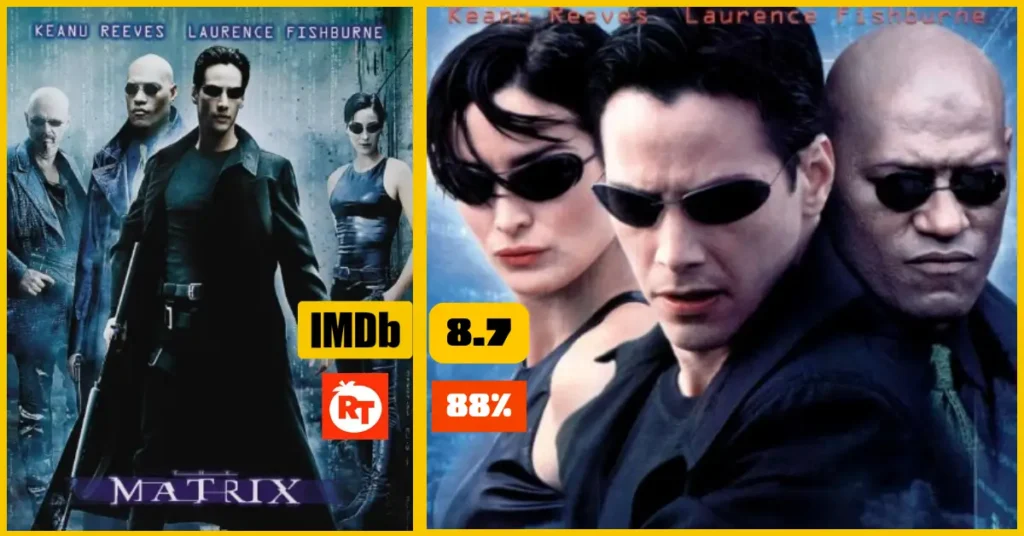
⭐ IMDb: 8.7/10 | 🍅 Rotten Tomatoes: 88%
1. The Matrix 1999 Movie Explained: The Red Pill, Neo’s Journey, and Ending Analysis
Welcome back to the rabbit hole. Twenty-five years after it first blew our minds,The Matrixremains a titan of science fiction. It is a film that works on multiple levels: a blistering action spectacle, a philosophical maze, and a deeply human story about self-discovery. ThisThe Matrix 1999 Movie Explainedbreakdown will guide you through the labyrinthine plot, decode its heavy symbolism, and finally unpack that iconic ending.
Whether you are plugging back in for a rewatch or experiencing it for the first time, understanding the layers of this world makes the journey even more rewarding. We will explore everything from the nature of reality to the reason Neo can fly. Let’s take the red pill and see how deep the rabbit hole goes.
2. Overview
Directed and written by Lana and Lilly Wachowski,The Matrixis a cyberpunk action film that blends Hong Kong martial arts, dystopian futures, and philosophical questions about existence. The runtime is 136 minutes, and its mood is a unique blend of dark, gritty realism and awe-inspiring wonder. The story follows Thomas Anderson (Keanu Reeves), a computer programmer and hacker known as “Neo,” who is led to a shocking truth: the world he lives in is a simulation.
3. SPOILER WARNING
🚨SPOILER ALERT: We are going deep into the Matrix. This article contains major spoilers for the 1999 film, including the full plot, twists, and the ending explained. If you haven’t seen it yet, turn back and watch it first!🚨
4. Story Explained (Full Breakdown)
The narrative ofThe Matrixis structured like a hero’s journey, but one that takes place inside a computer program.
Act 1: The Call to Adventure
We meet Neo, a hacker who feels a deep, unexplainable dissonance with his reality. He is searching for a mysterious figure named Morpheus. His digital life is interrupted by Trinity, who leads him to Morpheus. Morpheus offers Neo a choice between a blue pill (to forget everything and return to his slumber) and a red pill (to learn the truth). Neo takes the red pill and is “unplugged,” awakening in the real world: a bleak, machine-controlled wasteland where human bodies are harvested for energy.
Act 2: Training and Betrayal
Onboard the hovercraftNebuchadnezzar, Morpheus explains the truth. The year is actually closer to 2199, and the “Matrix” is a neural-interactive simulation created by artificial intelligence to keep human minds docile while their bodies are farmed. Neo undergoes training, learning to bend the rules of the simulation. However, a crew member, Cypher, feeling betrayed by the harsh reality, makes a deal with the machines to hand over Morpheus in exchange for a comfortable life back in the Matrix. This leads to Morpheus’s capture by the ruthless Agent Smith.
Act 3: Resurrection and Realization
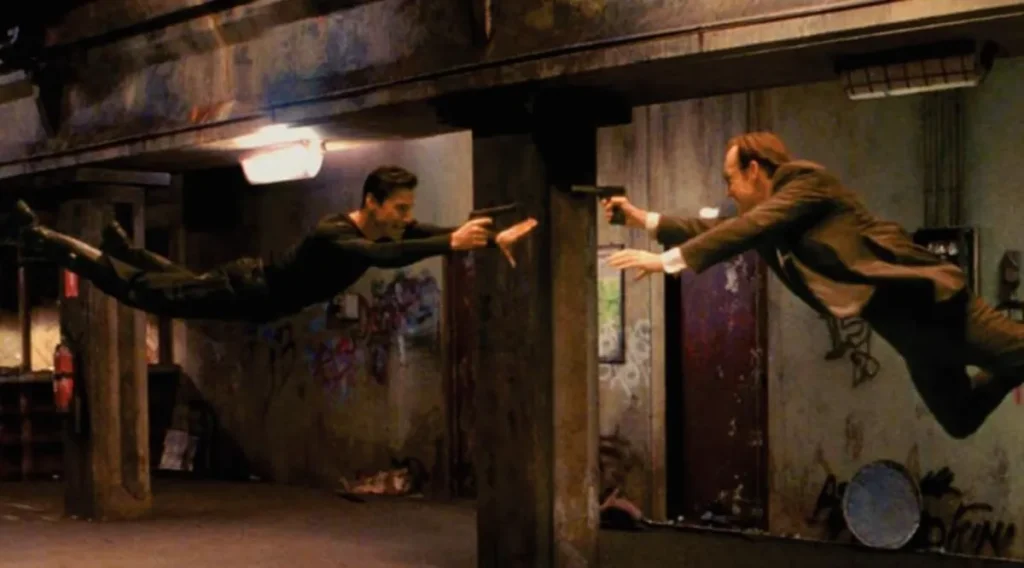
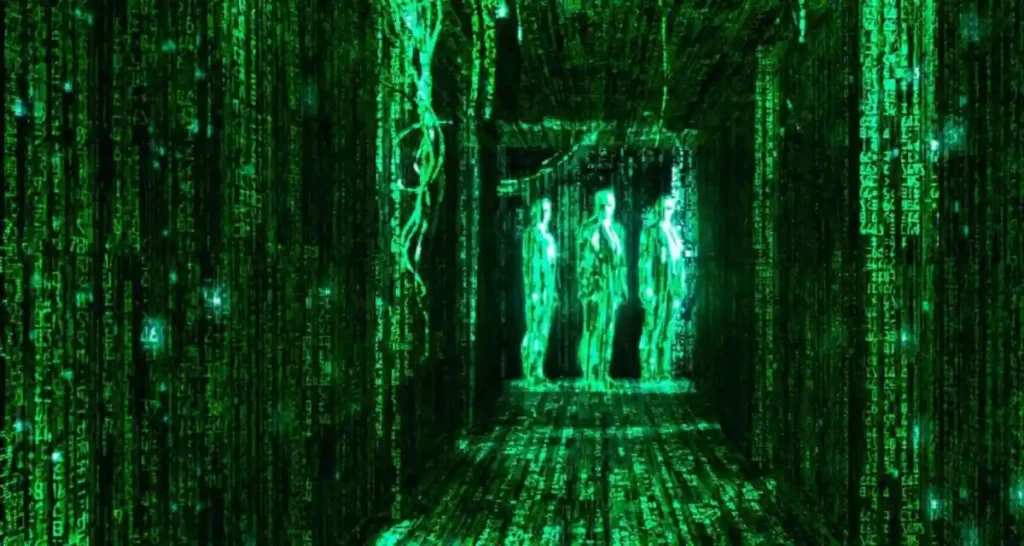
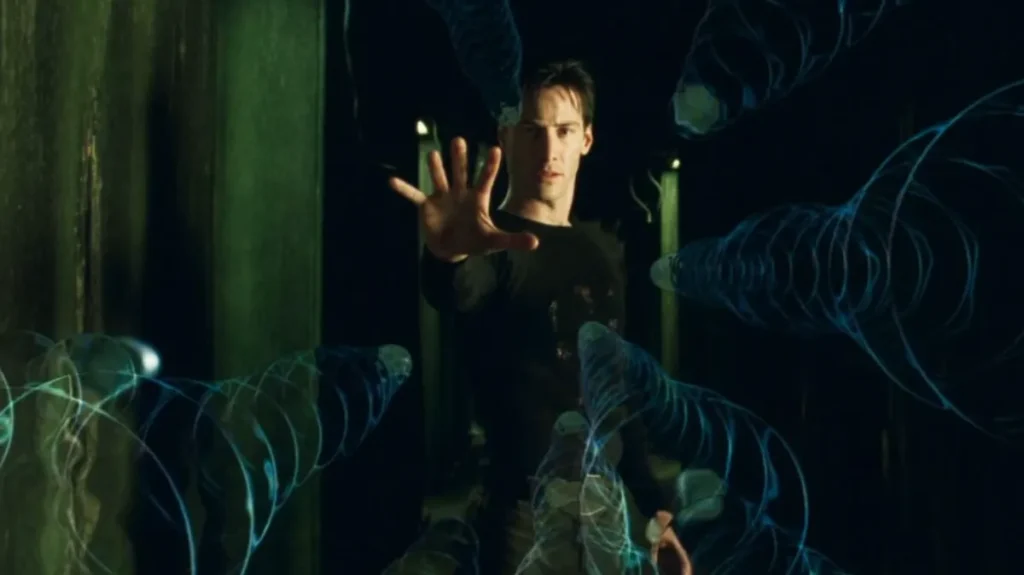
Neo, convinced he is not “The One,” decides to rescue Morpheus anyway. He and Trinity launch a spectacular assault on the government building where Morpheus is held. In the final confrontation, Neo faces Agent Smith. Despite his improved skills, Neo is outmatched and shot dead in the Matrix. As his real-world body flatlines, Trinity whispers to him that the Oracle told her she would fall in love with the One, meaning Neo cannot be dead because she loves him. In that moment of love and belief, Neo is resurrected. He now sees the Matrix for what it truly is: lines of code. He stops bullets with his mind and destroys Agent Smith from the inside, proving he is, in fact, The One.
5. Key Themes Explained
The Matrixis dense with ideas.
- Reality vs. Illusion:The central theme is the nature of reality. The film asks us to consider if our perceptions can be trusted. Is the world we experience “real,” or is it a construct designed to keep us compliant?.
- Control and Rebellion:The Matrix is a system of control. The machines represent any oppressive system (government, media, social norms) that keeps individuals from reaching their true potential. The human rebellion is a fight for free will.
- Self-Knowledge:The journey of Neo is not just about saving the world, but about knowing himself. Morpheus tells him, “I’m trying to free your mind.” The ending is only possible because Neo finally believes in his own power and identity.
6. Characters Explained
- Neo (Keanu Reeves):A Christ-like figure, his name is an anagram of “One.” He starts as a confused seeker and transforms into a confident savior, embodying the potential for self-actualization in all of us.
- Morpheus (Laurence Fishburne):The prophet and disciple. He is a man of unwavering faith who believes in the prophecy and in Neo. He acts as the guide, much like John the Baptist preparing the way for Jesus.
- Trinity (Carrie-Anne Moss):Her name evokes the Holy Trinity. She is a warrior and the emotional anchor. Her love for Neo is the catalyst for his resurrection, blending the spiritual with the deeply human.
- Agent Smith (Hugo Weaving):A sentient program designed to eliminate threats. He represents the dehumanizing nature of the system. Interestingly, he is the only program that seems to have developed a hatred for humanity, making him a unique and unpredictable virus within the Matrix.
- Cypher (Joe Pantoliano):The Judas figure. He betrays the rebellion because he cannot handle the truth. He represents those who prefer “comfortable lies” over “uncomfortable truths”.
7. Twist Explained
The biggest twist inThe Matrixis the initial reveal: the world isn’t real. But a deeper twist lies in the nature of “The One.” Neo spends the entire film trying to prove he is the savior, but fails at every test the Oracle gives him. The twist is that the Oracle didn’t tell him he wasn’t the One; she told him what heneededto hear to push him toward the choice that would make him the One. His “death” and subsequent resurrection were the final pieces of the puzzle. He couldn’t become the One until he stopped trying to be and simplybelievedhe was.
8. Movie Ending Explained
This is the section you have been waiting for:The Matrix Ending Explained.
What Exactly Happens:After resurrecting and effortlessly defeating Smith, Neo exits the Matrix. He makes a phone call promising to show the people still trapped inside a world without rules or control. He hangs up, walks out of a phone booth, puts on his sunglasses, and launches into the sky like Superman.
What the Ending Means:On the surface, this is a triumphant victory. The savior has arrived. He can now bend the Matrix to his will. However, a deeperMatrix ending explainedreveals a more complex and subtle truth.
- The Real Power:Neo doesn’t fly because he has superpowers. He flies because he now understands that the Matrix is a computer program, and its rules are suggestions. Death, gravity, and even Agents are just code. He has achieved a state of “enlightenment” within the simulation. As Morpheus said, once you free your mind, you are no longer bound by the laws of physics.
- The Allegorical Meaning:Many analysts and fans, especially after the Wachowskis came out as transgender, have re-contextualized the ending. The red pill can be seen as a metaphor for estrogen (red estrogen pills), and Neo’s transformation is a powerful allegory for gender transition. His final act of becoming his true self is not just about saving the world, but about finally living authentically. Agent Smith deadnaming him (“Mr. Anderson”) reinforces this idea of rejecting a false identity.
- The Cycle of Control (Alternate Angle):A more cynical interpretation suggests Neo hasn’t broken free at all. He has simply entered a new, higher level of control. The Oracle’s prophecy set him on a path that was already predetermined. By flying off, he is playing the role the system (or the prophecy) has created for him. He is the anomaly that the system expects, thus allowing the cycle of control to continue in a new form.
Director’s Intention:The Wachowskis crafted an ending that is hopeful but also ambiguous. It suggests that the real fight is internal. The revolution is won not with guns, but with the rejection of imposed identities and the acceptance of one’s own truth.
9. Performances
- Keanu Reevesis perfectly cast as Neo. His stoic confusion in the first half gives way to a quiet confidence by the end. While some critics point to his limited range, others argue his “fish-out-of-water” quality makes the journey from confused hacker to enlightened savior incredibly believable.
- Laurence Fishburnebrings a gravitas and Shakespearean weight to Morpheus. He sells the wildest philosophical concepts with total conviction, making the audience believe right along with him.
- Hugo Weavingdelivers an iconic performance. His slow, deliberate, and menacing delivery of lines like “Mr. Anderson” creates one of cinema’s most memorable villains. He makes a computer program feel chillingly human in its malice.
- Carrie-Anne Mossholds her own as the fierce Trinity. She is physically commanding in the action scenes but also provides the film’s emotional heart in its quietest moments.
10. Direction & Visuals
The Wachowskis created a visual language that changed cinema. Cinematographer Bill Pope used a technique called “flow-mo” (later dubbed “bullet time”), using multiple still cameras to create the illusion of freezing time while the camera moves. The color palette is legendary: a sickly green tint dominates the Matrix scenes, while the real world is bathed in cold, steel blues. This instantly signals to the audience which reality they are in. The action choreography, overseen by Yuen Woo-ping, brought the grace of Hong Kong wire-fu to Western audiences, creating fights that were both brutal and balletic.
11. Pros and Cons
Pros:
- Groundbreaking Visual Effects:Bullet time remains stunning and innovative.
- Intelligent Storytelling:It successfully blends high-concept philosophy with blockbuster entertainment.
- Cultural Impact:It defined a generation’s fashion, slang (“red-pilled”), and filmmaking style.
Cons:
- Expository Dialogue:Some critics feel the “mumbo jumbo” quotient is high, with characters often explaining the plot to the audience.
- Pacing:For some modern viewers, the first act can feel slow compared to the relentless action of the finale.
12. Cast
| Actor | Character |
|---|---|
| Keanu Reeves | Neo (Thomas Anderson) |
| Laurence Fishburne | Morpheus |
| Carrie-Anne Moss | Trinity |
| Hugo Weaving | Agent Smith |
| Joe Pantoliano | Cypher |
| Gloria Foster | The Oracle |
13. Crew
| Role | Crew Member |
|---|---|
| Directors | Lana Wachowski, Lilly Wachowski |
| Writers | Lana Wachowski, Lilly Wachowski |
| Producers | Joel Silver |
| Cinematographer | Bill Pope |
| Composer | Don Davis |
| Editor | Zach Staenberg |
14. Who Should Watch?
The Matrixis essential viewing for fans ofscience fiction, action cinema, and cyberpunk. If you enjoy films that make you think while also providing adrenaline-pumping thrills, this is for you. It is also a must-watch for anyone interested inphilosophy, trans allegories in media, or the history of visual effects.
15. Verdict
The Matrixis a masterpiece that has only grown in relevance and depth over time. It is a rare film that works as a perfect action movie, a complex philosophical text, and a deeply personal allegory. Its influence is inescapable, and its ending remains one of the most triumphant and thought-provoking finales in cinematic history. Whether you see it as a story of a messiah, a trans woman, or just a guy who learns to dodge bullets,The Matrixcontinues to invite us to question the nature of our own reality.
16. Reviews & Rankings
The Matrixholds a permanent place in the canon of great American films.
| Platform | Rating / Score |
|---|---|
| IMDb | 8.7/10 (Top 20 of all time) |
| Rotten Tomatoes | 88% (Critics) / 85% (Audience) |
| Metacritic | 73/100 |
17. Where to Watch
Ready to unplug? You can currently streamThe MatrixonMAX. It is also available for digital rental or purchase on platforms like Amazon Prime Video, Apple TV, and Vudu.
˗ˋˏ THE MATRIX ˎˊ˗ 1999
⚡ frequently unplugged questions ⚡