
🎬 Source Code
Release Year: 2011
Streaming Platform: Amazon Prime Video, The Roku Channel, Tubi
⭐ IMDb: 7.5/10 | 🍅 Rotten Tomatoes: 92%
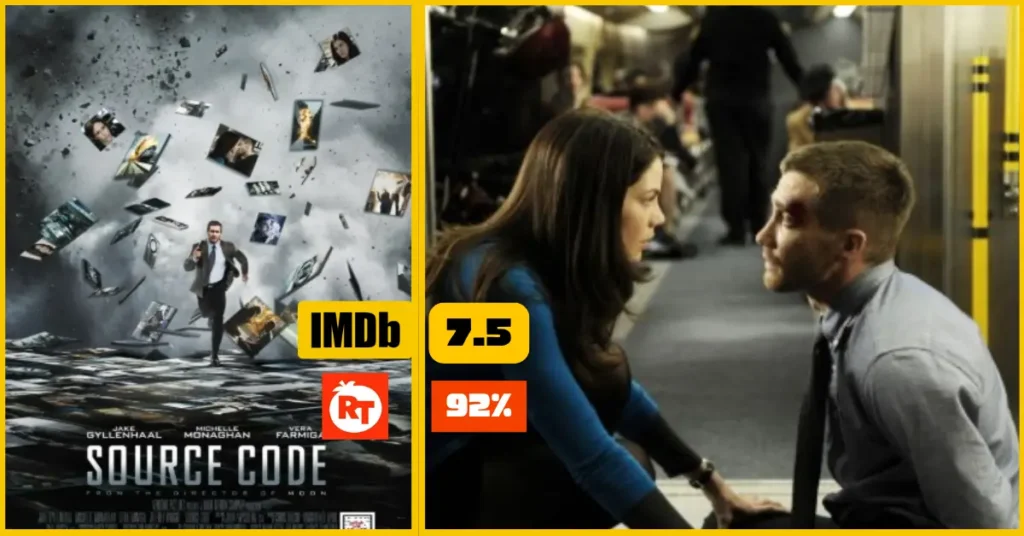
1. Source Code Ending Explained: Does Colter Survive in a Parallel Reality?
If you love science fiction that messes with your head in the best way possible, Duncan Jones’Source Codeis a film you simply cannot miss. This 2011 thriller isn’t just another action movie; it’s a tightly-wound puzzle box that blends time loops, identity crises, and a surprisingly emotional core. In thisSource Code movie explainedbreakdown, we will journey through the film’s intricate plot, decode its complex themes, and most importantly, dive deep into themovie ending explainedto understand what really happens to Captain Colter Stevens.
2. Overview
Source Codeis a cerebral sci-fi thriller directed by Duncan Jones (Moon) and starring Jake Gyllenhaal. The film runs a tight 93 minutes and creates a mood of paranoia, urgency, and existential dread. The premise is deceptively simple: a soldier wakes up in a stranger’s body on a train destined to explode. However, he soon learns this is no dream—it’s a top-secret government program that allows him to experience the last eight minutes of a dead man’s life. The mission? Find the bomber. The theme? What would you do with your final moments?
3. ⚠️ SPOILER WARNING: Entering the Source Code ⚠️
We are about to discuss the film in extreme detail, including the finale and its philosophical implications. If you haven’t seenSource Codeyet, go watch it first—then come back for the deep dive.
4. Story Explained (Full Breakdown)
Let’s break the narrative down into its core phases.
Act 1: The Incident
Captain Colter Stevens (Jake Gyllenhaal) wakes up disoriented on a commuter train heading to Chicago. Across from him is a beautiful woman, Christina (Michelle Monaghan), who calls him “Sean” and acts as if she knows him. Before he can make sense of the situation, the train explodes in a fiery blast, killing everyone instantly. Colter jolts awake in a dark, cramped cockpit, strapped into a harness. On a fuzzy screen, Air Force Captain Colleen Goodwin (Vera Farmiga) informs him that he is part of a program called the “Source Code” and that his mission is to find the bomb and identify the terrorist.
Act 2: The Repetition
Colter is sent back to the train repeatedly. Each time, he has only eight minutes. He tries different tactics: searching for the bomb, interrogating passengers, and saving Christina. We learn that Colter’s last memory is flying a helicopter in Afghanistan. The truth is horrifying: Colter’s body is severely damaged and life support is keeping his brain alive in a lab. His consciousness is being “piggybacked” onto the last eight minutes of a deceased passenger, Sean Fentress. The “Source Code” isn’t time travel; it’s a quantum simulation of the past.
Act 3: The Mission and the Plea
After identifying the bomber, Derek Frost, Colter relays the info to Goodwin, allowing the police to stop a second, larger attack. Mission accomplished. But Colter refuses to be “reset” for the next mission. He begs Goodwin to send him back one last time—not to gather intel, but to save the people on the train. Against orders, she agrees. Colter successfully subdues Frost, saves the passengers, and shares a kiss with Christina as the clock hits 7:58.
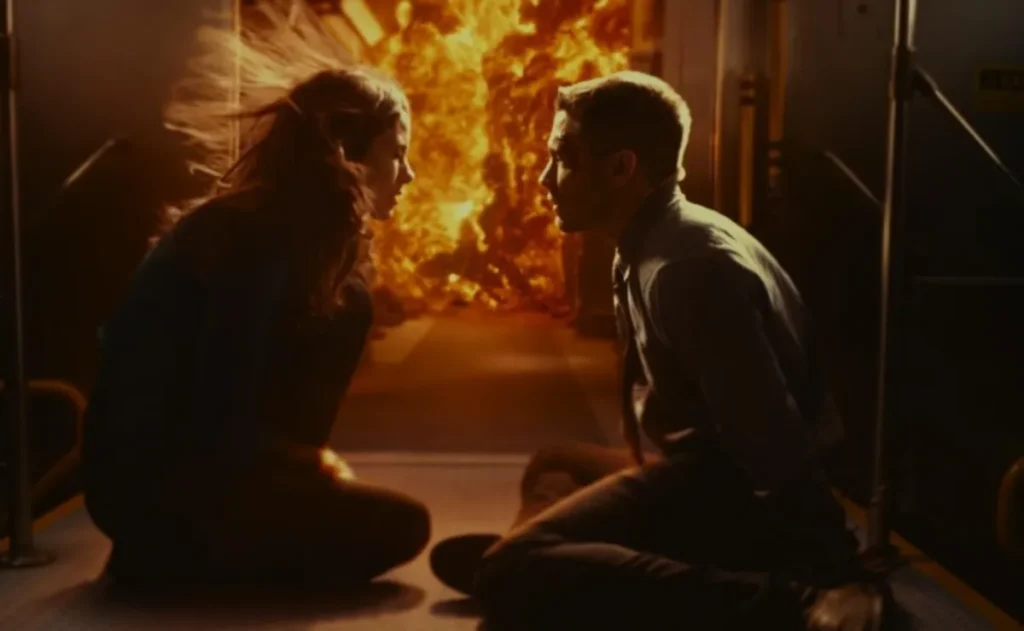
5. Key Themes Explained
- Trauma and the Afterlife:The film acts as a metaphor for death and acceptance. Colter is, technically, a dead man. His journey through the loop mirrors the stages of grief—denial, anger, bargaining, and finally, acceptance. By choosing to return and save others, he finds peace.
- Consciousness vs. Physicality:Source Codeasks a profound question: if your consciousness could be separated from your body, are you still “alive”? Colter’s existence in the tank challenges the definition of humanity.
- The Power of the Present:With only eight minutes to live, Colter learns to appreciate small moments. The film is a reminder to cherish the “now,” a concept deeply rooted in mindfulness and spiritual teachings.
6. Characters Explained
- Captain Colter Stevens (Jake Gyllenhaal):A soldier clinging to life and his relationship with his father. He is heroic not because he follows orders, but because he retains his empathy in a dehumanizing situation. His physicality and confusion ground the sci-fi premise.
- Christina Warren (Michelle Monaghan):She represents the “normal life” Colter lost. She is witty, warm, and becomes his anchor. In the loops, she is the reason he fights not just for the mission, but for a moment of human connection.
- Captain Colleen Goodwin (Vera Farmiga):The moral compass of the lab. Initially a voice of protocol, she eventually sees Colter as a human being, not just a tool. Her decision to help him is the film’s emotional turning point.
- Dr. Rutledge (Jeffrey Wright):The “creator” of the Source Code. He views the program as a scientific marvel and the passengers as collateral damage. Wright plays him as a cold, arrogant visionary, though some critics felt his performance was slightly over-the-top.
7. Twist Explained
The biggest twist isn’twhothe bomber is, butwhatColter is.
Midway through the film, Colter discovers he is not on a secret mission. He is a quadruple amputee kept alive in a dark pod. His body is gone. This revelation shatters his reality. The second twist comes when Dr. Rutledge insists the Source Code cannot create a new reality—it’s just a replay. However, the ending suggests Rutledge is wrong.
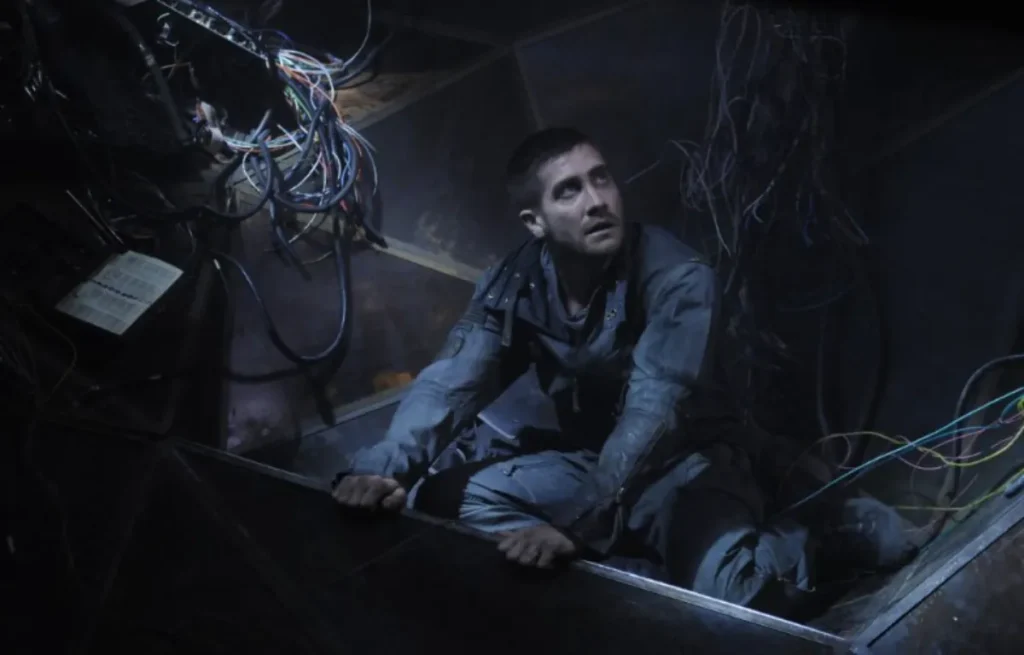
8. Movie Ending Explained (H2)
This is the moment everyone debates. Here is themovie ending explainedin detail.
What Exactly Happens?
At the 7:58 mark, Colter kisses Christina. According to Dr. Rutledge, the simulation should end. Instead, the world freezes. Then, the sound returns. Christina gets a text, the coffee spills, and the world moves on. Colter, still in Sean’s body, walks with Christina through Chicago to the Millennium Park plaza. He leaves her a voicemail as his father—a poignant goodbye.
Simultaneously, in the “real world,” Goodwin is seen pulling the plug on Colter’s life support. She is then escorted out by military police for violating protocol. As she leaves her desk, her phone buzzes. It’s an email from Colter Stevens. In the email, he thanks her and explains that the Source Code did more than just access memories—it created a new, branching reality.
What the Ending Means: The Quantum Resolution
So, what happened? The answer lies in quantum mechanics and the Many-Worlds Interpretation. Physicist Jim Kakalios explains that when Colter enters the Source Code, he isn’t justwatchingthe past; he is interacting with a parallel reality.
- The Creation of a New Timeline:When Colter goes back for the final time, he succeeds in disarming the bomb. By changing the outcome, he splits the timeline. In Timeline A, the bomb explodes. In Timeline B (the new one), the train is safe. Colter’s consciousness doesn’t return to the pod because, in this new timeline, there wasno bombing, therefore no need to activate the Source Code. He is now “native” to this new reality.
- The Email Paradox:The email Goodwin receives confirms this. Colter in Timeline B is now living forward in time. He knows that in Timeline A, a version of Goodwin exists who helped him. By sending an email across the quantum divide (or perhaps just to the Goodwin in his own timeline, who has yet to experience the events), the film confirms that his consciousness is permanent and real. He is not a ghost in a machine; he is a man in a new world.
Alternate Angle: Is It Just the Afterlife?
A darker, more spiritual interpretation suggests that the final sequence is Colter’s “Heaven.” Since his physical body dies at the exact moment the clock freezes, some argue the blissful ending in Chicago is a dream-like state his consciousness creates as it fades away. However, the existence of the email—which arrivesafterhis death—contradicts this, leaning harder into the parallel universe theory.
Director’s Intention
Duncan Jones intentionally left the ending ambiguous but hopeful. He wanted to reward Colter’s heroism. The film suggests that acts of selflessness have power beyond our understanding. Colter couldn’t save himself in his original world, but his love for Christina and his duty allowed him to “awaken” in a world where hecouldlive.

9. Performances
Jake Gyllenhaal carries the film with a performance that is both physically demanding and emotionally vulnerable. He effectively portrays the confusion of a man waking up in a stranger’s life and the determination of a soldier refusing to give up. Vera Farmiga delivers a standout performance, bringing warmth and conflict to a role limited to a computer screen. Jeffrey Wright, while a fantastic actor, divides opinion; his eccentric portrayal of Dr. Rutledge is seen by some as a distracting parody, though it certainly makes the character memorable.
10. Direction & Visuals
Duncan Jones proves he is a master of smart sci-fi. He uses the repetitive structure of the train sequence not as a crutch, but as a tool. Each revisit reveals new details about the passengers, making the audience care about the people Colter is trying to save. Cinematographer Don Burgess uses a desaturated color palette in the lab (cold blues and greens) to contrast with the warmer, sunlit tones of the train, symbolizing the difference between death and life. The freeze-frame finale is beautifully staged, giving the audience a moment to breathe before revealing that time has indeed moved on.
11. Pros and Cons
Pros:
- A smart, original sci-fi concept that respects the audience’s intelligence.
- Jake Gyllenhaal’s committed lead performance.
- An emotional core that elevates it above a typical action thriller.
- Tight pacing and a runtime that leaves no room for fat.
Cons:
- Jeffrey Wright’s performance can be jarringly theatrical compared to the others.
- The science is pure fantasy (“parabolic calculus” doesn’t exist), though the film embraces it.
- Some viewers may find the “happy ending” clashes with the darker tone of the first two acts.
12. Cast
| Actor | Role |
|---|---|
| Jake Gyllenhaal | Captain Colter Stevens / Sean Fentress |
| Michelle Monaghan | Christina Warren |
| Vera Farmiga | Captain Colleen Goodwin |
| Jeffrey Wright | Dr. Rutledge |
| Michael Arden | Derek Frost (The Bomber) |
| Russell Peters | The Comedian |
13. Crew
| Crew Member | Role |
|---|---|
| Duncan Jones | Director |
| Ben Ripley | Writer |
| Mark Gordon | Producer |
| Don Burgess | Cinematography |
| Chris P. Bacon | Music Composer |
14. Who Should Watch?
If you love cerebral sci-fi likeInception,Looper, orArrival, this movie is for you. It’s also perfect for viewers who enjoy character-driven stories within a high-concept framework. Avoid if you need hard science in your sci-fi; this one runs on emotion and philosophy, not physics textbooks.
15. Verdict
Source Codeis a modern sci-fi gem. It takes a familiar “groundhog day” structure and infuses it with genuine mystery and pathos. While it may not reach the meditative heights of Duncan Jones’Moon, it is a wildly entertaining and thought-provoking thriller. The ending doesn’t just tie up a bow; it opens up a universe of possibilities, leaving the audience with a smile and something to think about long after the credits roll.
16. Reviews & Rankings (TABLES/GRAPHS)
Audience Sentiment Graph:
- Positive:85% (Praise for concept, Gyllenhaal’s acting, and ending)
- Mixed:10% (Criticism of villain and scientific plausibility)
- Negative:5% (Found the premise too confusing)
17. Where to Watch
Ready for a rewatch or experiencing it for the first time? You can catchSource CodeonAmazon Prime Video. It is also available for free onThe Roku ChannelandTubi(with ads).
18. FAQs:
⚡ SOURCE CODE · 2011 10 Q&A
red / white edition — discover the 8-minute loop, the bomber & the ending
Captain Colter Stevens wakes up in the body of an unknown man and discovers he is part of a mission to find the bomber of a commuter train. He only has 8 minutes at a time in a simulated reality called ‘Source Code’.
Duncan Jones (known for Moon and Mute) directed the film, blending sci-fi with emotional depth.
Jake Gyllenhaal plays Captain Colter Stevens, Michelle Monaghan is Christina Warren, and Vera Farmiga appears as Captain Colleen Goodwin. Jeffrey Wright plays Dr. Rutledge.
The Source Code is a device that lets a user inhabit the last 8 minutes of a deceased person’s memory (in this case, a passenger on the train). It’s not time travel, but a simulation based on quantum state memory.
No. The filmmakers emphasize it’s not time travel; it’s a reconstruction of the past using residual quantum data. However, the ending suggests the simulation might be more real than expected.
The Source Code experiment is limited to the 8‑minute memory window of the passenger, Sean Fentress. After each loop, the system resets. Colter learns to use that time creatively.
Colter finds the bomb, identifies the terrorist, and asks Goodwin to disconnect his life support. In a final loop, he saves Christina and stops the bomb. Time freezes, and he discovers the Source Code universe continues — he now lives as Sean in a new reality.
Director Duncan Jones has hinted that the final scene shows that the Source Code created a parallel reality where Colter’s consciousness fully transfers, making it ‘real’ for him.
Derek Frost, a mentally unstable former professor and military veteran, planted the bomb on the train. Colter identifies him through repeated loops and eventually confronts him.
No, there is no post-credits scene. The film ends with the freeze‑frame and text message to Goodwin, confirming Colter is now in the new timeline.