
🎬 Dune: Part One & Part Two
Release Year: 2021 / 2024
Streaming Platform: Max
⭐ IMDb: 8.0/8.5 | 🍅 Rotten Tomatoes: 83% / 92%

1. Complete Dune Breakdown: Full Story, Themes, and Ending Analysis
IfDune: Part Onewas the haunting, atmospheric walk through the desert,Dune: Part Twois the full-blown sandstorm. Together, Denis Villeneuve’s two-part adaptation of Frank Herbert’s 1965 novel is not just a sci-fi spectacle; it is a warning about charismatic leaders wrapped in the shimmer of IMAX visuals.
In thisDune Part 1 & 2 Movie Explainedbreakdown, we will move beyond the surface level of “boy meets worm, boy rides worm.” We will analyze the full narrative arc—from the fall of House Atreides to the rise of Paul Muad’Dib—and dedicate significant time to theDune 2 ending explained. We will explore why Paul takes Princess Irulan’s hand, why Chani rides away, and why Villeneuve wants us to fear the hero we thought we wanted.
2. Overview (No Spoilers)
Denis Villeneuve’sDuneduology is an epic space opera that adapts the first novel by Frank Herbert.
- Genre:Sci-Fi, Political Thriller, War Epic
- Mood:Solemn, Sweeping, Intimate
- Runtime:155 mins (Part 1) + 166 mins (Part 2)
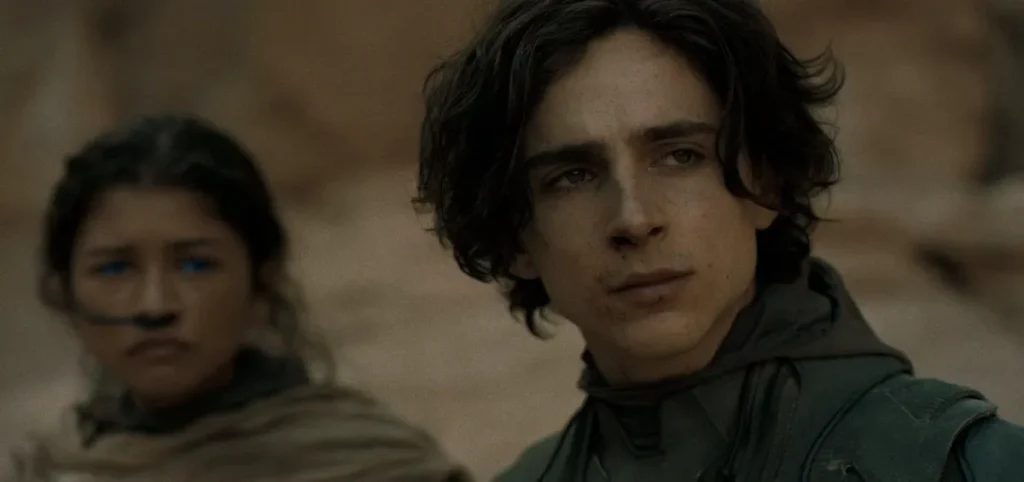
The story followsPaul Atreides (Timothée Chalamet), a gifted young nobleman who possesses powers stemming from Bene Gesserit conditioning and genetic prophecy. After his family is betrayed and destroyed by the Emperor and the Harkonnens, Paul flees to the desert planet Arrakis. There, he assimilates with the Indigenous Fremen, falls in love withChani (Zendaya), and ignites a religious war that will consume the universe.
⚠️ SPOILER WARNING
We are going deep into the sands here. This article contains MAJOR SPOILERS for both Dune: Part One and Dune: Part Two, including the ending and Paul’s full transformation. Read the spice agony at your own risk.
3. Story Explained (Full Breakdown)
Act 1 Explained: Betrayal and Survival
Dune: Part Oneis essentially a 2.5-hour prologue designed to break our heroes.
House Atreides is gifted Arrakis by the Padishah Emperor. This is a trap. Duke Leto (Oscar Isaac) knows it is dangerous, but the pull of the spice—and the alliance with the Fremen—is too strong. The Harkonnens, led by the grotesqueBaron Vladimir Harkonnen (Stellan Skarsgård), invade with the Emperor’s secret Sardaukar troops. Dr. Yueh betrays the Duke to save his wife, leading to Leto’s death.
Paul and Lady Jessica (Rebecca Ferguson) are cast into the deep desert. Here, the myth begins. Paul kills Fremen warriorJamisin ritual combat. This act is not a victory; it is the first step toward his self-martyrdom. He takes the Fremen nameMuad’Dib.
Act 2 Explained: Assimilation and Awakening
Dune: Part Twoopens with Paul proving his worth. He learns to walk without rhythm, rides a sandworm (a breathtaking visual metaphor for controlling chaos), and earns the respect ofStilgar (Javier Bardem).
Meanwhile,Lady Jessicaundergoes the Spice Agony to become a Reverend Mother. This transforms her into a zealot. She weaponizes the Fremen’s messianic beliefs, planting seeds that Paul is theLisan al Gaib(Voice from the Outer World). On the Harkonnen side, the Baron replaces the failing Rabban with the psychotic savantFeyd-Rautha (Austin Butler), setting up the final confrontation.
Act 3 Explained: The Holy War Ignites
Paul, haunted by visions of a galaxy burning in his name, tries to resist the messiah role. However, after the Harkonnens slaughter the Fremen at Sietch Tabr and take his son captive, Paul surrenders to his fate.
He drinks the Water of Life. This “almost-death” awakens his prescience completely. He becomes theKwisatz Haderach—the superbeing the Bene Gesserit spent millennia trying to create, but they cannot control him. He sees all timelines, and the only path to survival for his people is through total war.
4. Key Themes Explained
1. The Danger of Messianic Figures
This is the heart of Villeneuve’s adaptation. Unlike traditional heroes, Paul does not want to be the chosen one. The film argues that believing a leader is infallible leads to genocide. Stilgar’s blind faith is portrayed as tragic, not noble.
2. Colonialism and Exploitation
Arrakis is a clear allegory for oil-rich occupied nations. The Fremen are not savages waiting to be saved; they are a sophisticated culture being strip-mined by white saviors and foreign empires. Paul ultimately exploits their faith to seize the throne.
3. Ecological Consciousness
Kynes’ dream of transforming Arrakis into a green world lingers in the background. The spice is tied to the sandworms, and the sandworms are Arrakis. Destroying the ecology for profit is the Imperium’s sin.
5. Characters Explained
Paul Atreides (Timothée Chalamet)
Paul begins as a compassionate, cautious boy. By the end ofPart Two, he is a reluctant tyrant. Chalamet shifts his posture from soft nobility to rigid, machine-like certainty. He accepts the burden of Jihad because the alternative is extinction. He is neither good nor evil—he is necessary.
Chani (Zendaya)
This is the most significant change from the book. In the novel, Chani is a loyal supporter. In the film,Zendayaplays Chani as the audience’s moral compass. She despises the prophecy, viewing it as a foreign superstition used to manipulate her people. Her heartbreak drives the emotional weight of the finale.
Lady Jessica (Rebecca Ferguson)
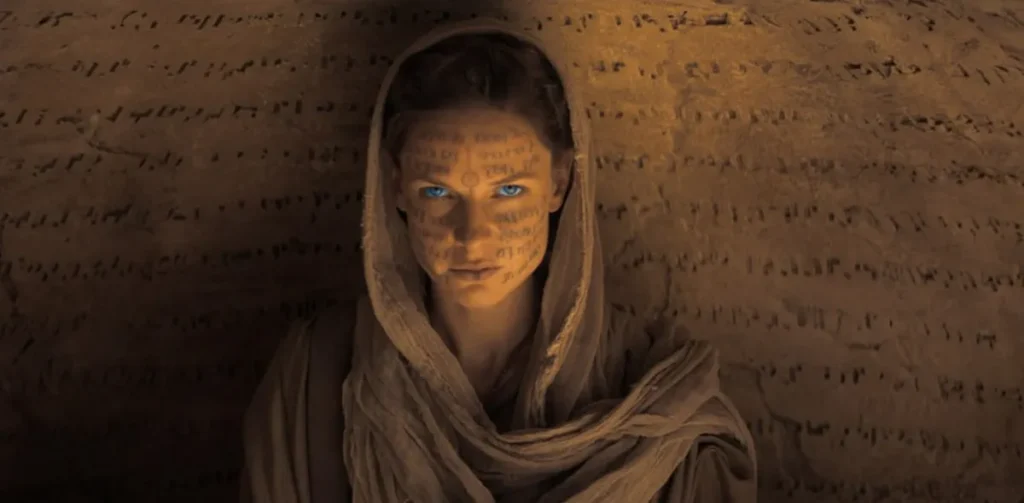
Jessica transforms from a protective mother into a religious leader. She is the true believer. She pushes Paul toward the throne, weaponizing her grief and her power to engineer a dynasty.
Feyd-Rautha (Austin Butler)
The twisted mirror to Paul. Where Paul is reluctant, Feyd is eager. He is a monster sculpted by the Baron, and his arena duel with Paul is the physical manifestation of the Imperium’s cruelty vs. the Fremen’s resilience.
6. Twist Explained
The twist ofDuneis not a plot reveal like “Luke, I am your father.” The twist isPaul’s villainy.
Audiences conditioned by Star Wars expect Paul to overthrow the evil Emperor and live happily with Chani. But Villeneuve flips this. Paul wins. He gets the throne. But to do so, he must marry someone he doesn’t love (Princess Irulan), send his Fremen army to kill billions, and abandon his moral compass.
The real twist? Paul saw this coming inPart One. He knew the cost. He chose the war anyway.
7. Movie Ending Explained (H2)
This is the section we’ve been waiting for:Dune 2 Ending Explained.
What Exactly Happens?
Paul and the Fremen launch a final assault on the Emperor’s base. Paul demands the Emperor abdicate. The Baron is killed—not by Paul, but by his own daughter-in-law, Jessica, sealing the Harkonnen line’s doom.
Paul faces Feyd-Rautha in single combat. It is a brutal, ugly fight. Paul kills Feyd, proving his martial supremacy. He then threatens to destroy the spice fields forever unless Princess Irulan is given to him as bride. The Emperor concedes. Paul is now the ruler of the known universe.
What the Ending Means: The Anti-Love Story
As Paul ascends the throne,Chaniwatches in horror. He has done everything she begged him not to do. He has used religion to seize power.
In the final shot, Chani does not embrace him. She turns her back and rides a sandworm into the desert. This is Villeneuve’s genius. In most movies, the hero gets the girl. Here, the hero loses her the moment he wins the crown.
Director’s Intention
Denis Villeneuve has stated he viewsDuneas a tragedy. He is setting upDune Messiah, where Paul reaps what he sows. The ending is not a triumph; it is the beginning of a dark age. The hero is now the oppressor.
Alternate Interpretation
Some viewers argue Paul had no choice—it was the Golden Path or extinction. This is the tragic lock of the film: Paul is a prisoner of prescience. His goodness is stripped away by his own visions.
8. Performances
- Timothée Chalametsheds his indie pretty-boy skin. InPart Two, he hardens. His voice drops an octave; his eyes go cold. It is a transformation that feels earned over four hours.
- Zendayais the MVP ofPart Two. She is given far more screen time and uses it to inject raw humanity into a film about gods and monsters. Her silent heartbreak in the finale is Oscar-worthy.
- Austin Butlervanishes into Feyd-Rautha. He moves like a feral animal, and his voice is a whispery hiss. He creates an iconic villain out of very little source material in this film.
9. Direction & Visuals
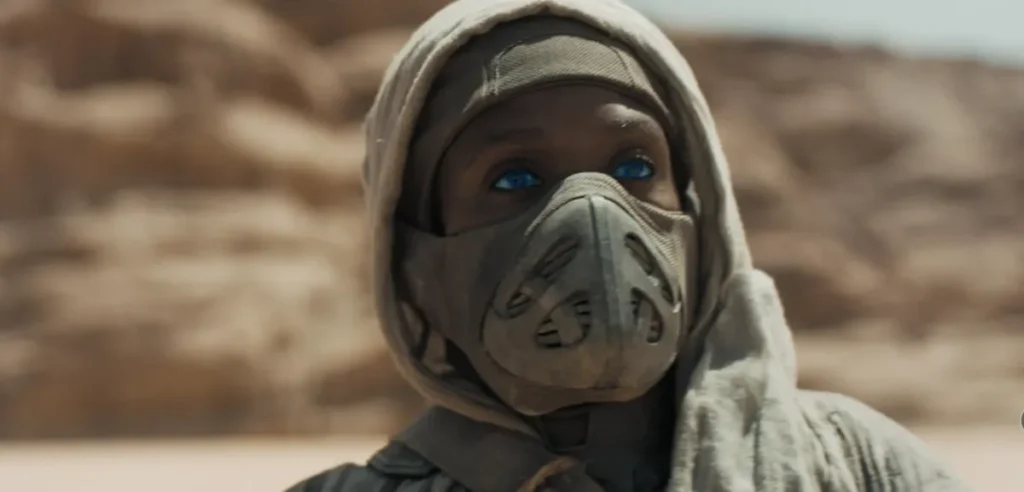
Denis Villeneuveunderstands scale. Where other directors use CGI as a crutch, Villeneuve and cinematographerGreig Fraserbuilt practical sets in the desert.
- Color Palette:A stark contrast between Arrakis (golden, warm, alive) and Giedi Prime (black/white, sterile, dead). The Harkonnen arena fight was shot in infrared, creating a hellish, alien look.
- Sound Design:Hans Zimmer’s score abandons traditional melody for bagpipes, eerie vocals, and thumping percussion. The sound of a sandworm approaching isn’t a roar; it’s a grinding, scraping dread.
10. Pros and Cons
Pros:
- Faithful to the book’s spirit while improving character arcs (Chani).
- Visually groundbreaking; a theatrical experience that demands the big screen.
- Smart, intellectual sci-fi that doesn’t talk down to the audience.
- Butler’s Feyd-Rautha is an instant classic antagonist.
Cons:
- Skipping Alia’s “child assassin” arc may disappoint purists (though it works for the film’s grounded tone).
- The pacing inPart Oneis slow for casual viewers.
- Those looking for a traditional happy ending will leave frustrated—this is the point, but it stings.
11. Cast
12. Crew
13. Who Should Watch?
- Sci-Fi Purists:If you loveBlade Runnerand *2001*, this is your church.
- Game of Thrones Fans:The political backstabbing and family feuds are right up your alley.
- Viewers seeking “Popcorn Flicks”:Skip this.Duneasks you to sit, listen, and think. It is loud, but it is not mindless.
14. Verdict
Dune: Part One and Part Twoare not just the greatest sci-fi adaptations of the 21st century—they are a necessary corrective to the “hero’s journey” formula. Denis Villeneuve has crafted a cinematic warning wrapped in a blockbuster. It is visually intoxicating, thematically dense, and emotionally devastating.
Paul Atreides wins the war, but he loses his soul. And we, the audience, are left to question whether we cheered for a monster.
Rating: ★★★★½ (Masterpiece)
15. Reviews & Rankings
| Platform | Part One Score | Part Two Score |
|---|---|---|
| IMDb | 8.0/10 | 8.5/10 |
| Rotten Tomatoes (Critics) | 83% | 92% |
| Rotten Tomatoes (Audience) | 90% | 95% |
16. Where to Watch
Both films are streaming exclusively onMaxin 4K Ultra HD. The black-and-white Harkonnen scenes are particularly stunning on an OLED screen.
[Watch it on Max]
17. FAQs:
DUNE PART 1 & 2
Yes. Dune: Part 1 (2021) covers the first half of Frank Herbert’s novel, ending shortly after Paul and Jessica join the Fremen. Dune: Part 2 (2024) completes the story, covering Paul’s alliance with the Fremen, his rise as Muad’Dib, and the war against House Harkonnen.
Not at all. Villeneuve’s adaptations are carefully crafted to be accessible for newcomers. Both films provide rich context, visual storytelling, and political depth. Readers will notice faithful details, but the movies stand alone.
The core cast includes Timothée Chalamet (Paul Atreides), Zendaya (Chani), Rebecca Ferguson (Lady Jessica), Oscar Isaac (Duke Leto – Part 1), Josh Brolin (Gurney Halleck), Stellan Skarsgård (Baron Harkonnen), Dave Bautista (Beast Rabban), Stephen McKinley Henderson (Thufir Hawat). Part 2 adds Austin Butler (Feyd-Rautha), Florence Pugh (Princess Irulan), Christopher Walken (Emperor Shaddam IV), and Léa Seydoux (Lady Margot).
Spice is the most valuable substance in the universe. Only found on Arrakis, it extends life, expands consciousness, and makes space navigation possible. Controlling Spice means controlling the Imperium – it’s the heart of the conflict.
Dune: Part 1 runs 155 minutes. Dune: Part 2 is 166 minutes. Both are epic in scale, designed for immersive IMAX experiences.
Denis Villeneuve (Arrival, Blade Runner 2049) directs both parts. He also co-wrote the screenplay with Jon Spaihts and Eric Roth.
Sandworms are colossal creatures that roam the deserts of Arrakis. They produce the Spice and are central to Fremen culture and survival. Riding a sandworm is a rite of passage. Shai-Hulud is the Fremen term for the worm, seen as a divine force.
Part 2 completes the story of the first novel. However, Denis Villeneuve has expressed interest in adapting Dune Messiah (the second book) as a feature film. Nothing is officially greenlit yet, but discussions are ongoing.
Both movies were primarily shot in the deserts of Abu Dhabi and Jordan (Wadi Rum), standing in for Arrakis. Studio work took place in Budapest, Hungary. Part 2 also used locations in Italy.
A mysterious matriarchal order with advanced mental and physical abilities. They secretly manipulate bloodlines and politics to breed the Kwisatz Haderach – a male Bene Gesserit who can access both male and female genetic memory. Lady Jessica is a Bene Gesserit.