
🎬 Arrival
Release Year: 2016
Streaming Platform: Paramount+, Amazon Prime Video
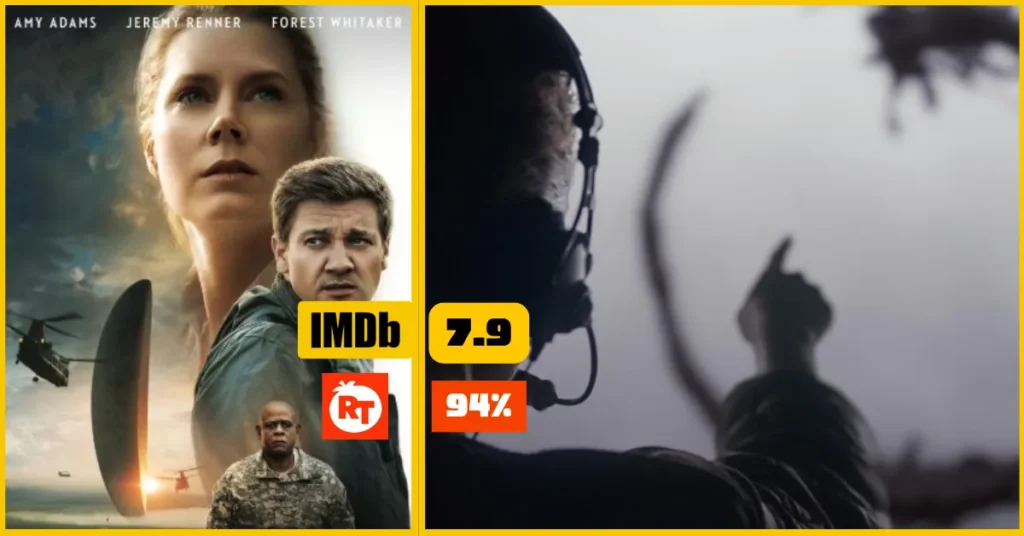
⭐ IMDb: 7.9/10 | 🍅 Rotten Tomatoes: 94%
1. Introduction
Arrivalis not your typical alien invasion movie. Directed byDenis Villeneuve, this 2016 science fiction drama is a profound meditation on language, time, and the human experience. Based on Ted Chiang’s novella “Story of Your Life,” the film challenges our linear perception of reality. This article will provide a completeArrival movie explainedbreakdown, followed by a deep dive into theArrival ending explained. We’ll unravel the complex narrative, the purpose of the heptapods, and the heartbreaking choice at the story’s core. If you left the film with more questions than answers, you’re in the right place.
2. Overview
Arrivalis a cerebral sci-fi drama that prioritizes emotional and intellectual depth over action and spectacle. Its mood is somber, atmospheric, and deeply philosophical, set against a backdrop of global tension and personal grief. With a runtime of 1 hour and 56 minutes, the film demands and rewards close attention. The central premise involves linguist Louise Banks being recruited by the military to communicate with mysterious alien visitors who have arrived in twelve spacecraft around Earth. The genre bends from a first-contact thriller into a moving character study about destiny and memory.
3. SPOILER WARNING
4. Story Explained (Full Breakdown)
Act 1 Explained: The Arrival and The Assignment
The film opens with poignant, fragmented scenes of linguistDr. Louise Banksraising her daughter, Hannah, from birth to her tragic death from a rare disease. We then learn these are memories—or so we believe. Louise’s quiet academic life is shattered when twelve massive, mysterious spacecraft appear at random locations across the globe. The world plunges into panic and suspicion.
Colonel Weber recruits Louise and theoretical physicist Ian Donnelly to the Montana site. Their mission: establish communication with the beings inside, dubbed “heptapods.” Inside the zero-gravity chamber of the ship, they encounter two heptapods, named Abbott and Costello, who communicate through complex, circular symbols written with ink they eject. Louise’s task is to ask the fundamental question: “What is your purpose on Earth?”
Act 2 Explained: Learning a New Reality
Louise makes painstaking progress, teaching the heptapods basic English vocabulary and learning their written language. She discovers their language is nonlinear. Unlike human language, which is sequential, their circular symbols (logograms) express a complete, complex thought all at once. Ian posits that this would rewire one’s brain, fundamentally altering their perception of reality.
As Louise’s understanding deepens, she begins experiencing vivid, intrusive “flashbacks” of her daughter Hannah. Global tensions escalate. China, interpreting a heptapod message as a threat (“use weapon”), prepares for attack, pushing the world toward war. In a desperate move, Louise and Ian re-enter the ship alone. Abbott provides them with a massive amount of the heptapod language in written form. The cost is high—the heptapods’ non-linear time perception means Abbott knows this act will lead to its death.
Act 3 Explained: Seeing Through Time
With the world on the brink of conflict, Louise has a breakthrough. The “weapon” is actually a “tool”—their gift of language. By fully immersing herself in it, her brain unlocks the ability to perceive time as the heptapods do: all at once. Past, present, and future exist simultaneously. The heartbreaking scenes of Hannah are not memories, butflash-forwards. She is seeing her future.
Armed with knowledge from the future—specifically, a private phone number and the words of the Chinese General Shang—Louise stages a daring gambit. She calls Shang at a crucial diplomatic event, repeats the dying words his wife told him in the future (which she “remembers” from a future meeting), and convinces him to stand down. This act of unity, sharing the heptapods’ language globally, averts war. The ships depart, their mission complete.
5. Key Themes Explained
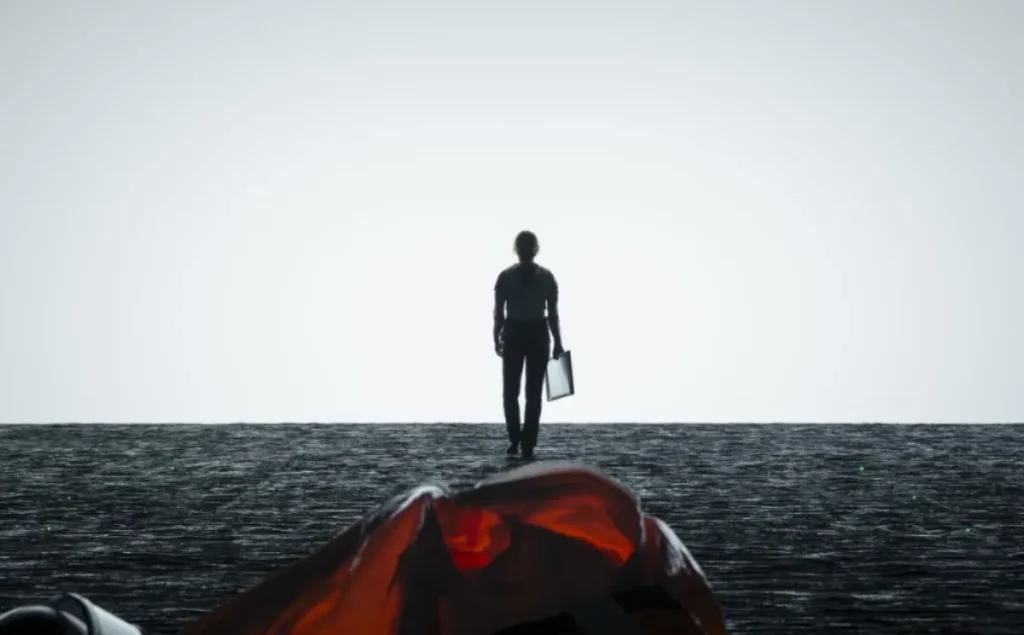
At its heart,Arrivalis about theSapir-Whorf hypothesis—the idea that the language you speak shapes how you think. The heptapod language doesn’t just communicate; it restructures cognition to perceive time non-linearly. The movie asks: if you could see your entire life from birth to death, would you change your choices?
This connects to the central theme ofchoice and determinism. Louise’s journey is about embracing a painful, beautiful destiny with full awareness. The film argues that true freedom isn’t changing a pre-ordained path, but knowingly and willingly walking it. It’s also a profound reflection oncommunication vs. conflict. The global crisis stems from humanity’s instinct to misinterpret and weaponize the unknown, while the solution lies in collaborative understanding.
6. Characters Explained
Dr. Louise Banks (Amy Adams):Louise is defined by intellectual courage and profound emotional resilience. Her “memories” of Hannah’s death color her with a sense of loss that paradoxically prepares her for her future. Her transformation is cognitive and spiritual; she becomes a bridge between human and heptapod consciousness, accepting a future of joy and pain.
Ian Donnelly (Jeremy Renner):Ian represents the scientific, analytical counterpart to Louise’s linguistic intuition. His openness to new paradigms (“Louise, they must have come for a reason, maybe it’s you”) is crucial. He fathers Hannah but leaves Louise in the future when he learns she knew their child would die and chose that path anyway—a revelation of his human, linear limitations.
Colonel Weber (Forest Whitaker):Weber is the embodiment of military pragmatism. His arc is one of learning to trust the “soft science” of linguistics over brute force, symbolizing the necessary shift humanity must make.
7. Twist Explained
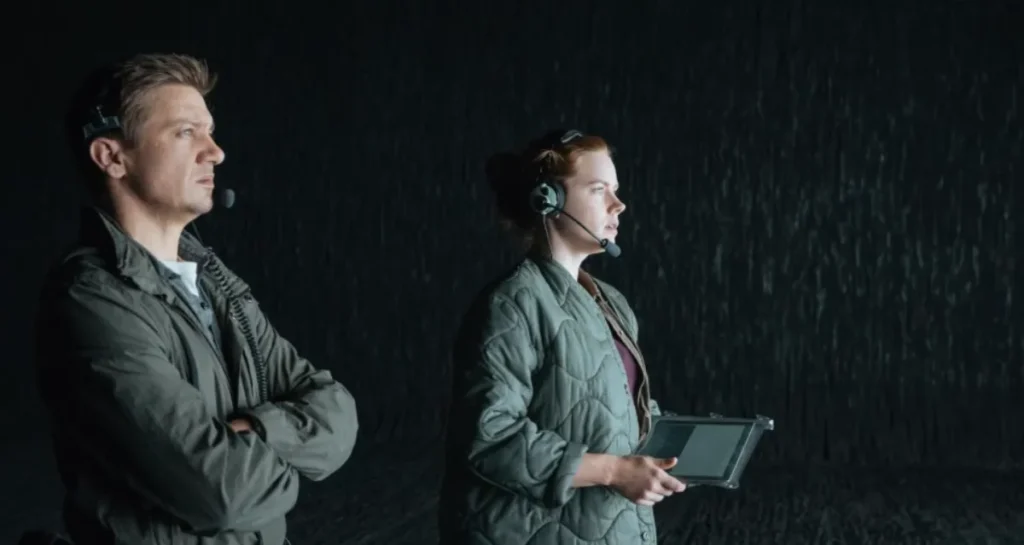
The film’s masterful twist recontextualizes the entire narrative. The emotional scenes of Louise with her daughter Hannah, which we assume are tragic memories from her past, are actuallypremonitions of her future. This revelation occurs as Louise fully comprehends the heptapod language.
The twist means Louise falls in love with Ian, decides to have a child with him, and raises Hannah, all while knowing the child will die young from an incurable disease. The pain she has been “remembering” is actually a pain she is choosing to embrace. It’s not a story about recovering from loss, but about consciously accepting future loss for the sake of present love. This flips the script from a linear tragedy to a nonlinear act of immense courage.
8. Movie Ending Explained
What exactly happens?
In the final act, after the ships depart, Ian asks Louise if she’d like to “make a baby.” In a nonlinear moment, we see a future where a teenage Hannah asks her mother about her father’s name, “Ian,” and if Louise ever wondered what her life would be like without her. Louise, with tears in her eyes but certainty in her heart, says, “Yeah, I did. And I still do.” The film ends with Louise embracing Ian in the present, fully aware of the beautiful, heartbreaking journey that awaits them.
What the ending means?
The ending is the ultimate expression of the film’s theme. Louise is not a passive victim of fate. She is an active participant who, with full knowledge of the suffering to come, says “yes” to life, love, and her daughter. Her question, “If you could see your whole life from start to finish, would you change things?” is answered with a resoundingno. The joy and connection, however brief, are worth the inevitable pain.
How it connects to the theme:
It directly links language, perception, and choice. The heptapods’ gift was not a tool to change time, but to changehowone experiences it. Louise gains a tragic grace—the ability to cherish every moment with Hannah, even the difficult ones, because she knows their total sum and final number.
Alternate angle interpretations:
Some viewers question if Louise’s vision is a deterministic trap. Is her choice truly free, or is she compelled by a future she already knows? The film suggests that seeing the futurecreatesthat future—her knowledge is what enables the key actions (like calling General Shang) that ensure the timeline unfolds as she has seen.
Director’s intention:
Denis Villeneuvehas framed the story as one about embracing life. The intention is not to present a bleak, fatalistic view, but a profoundly humanist one. It’s about the courage to love despite knowing loss is intrinsic to love, and about choosing connection in a universe of uncertainty.
9. Performances
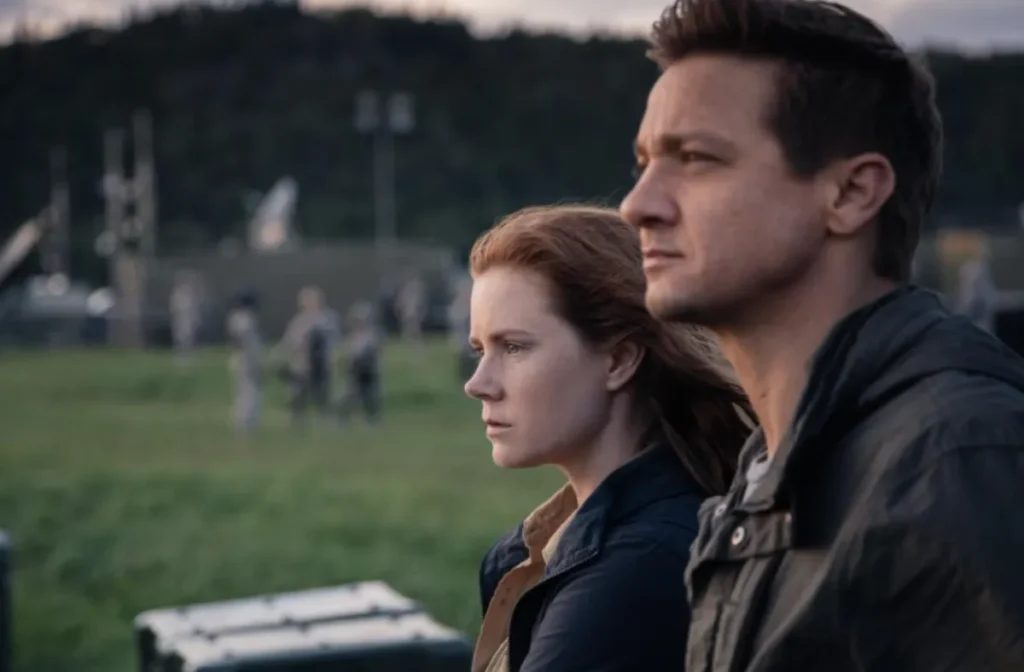
Amy Adamsdelivers a career-best performance that is almost entirely internal. Her work is in the eyes—the dawning comprehension, the flicker of future memory, the resolute sorrow. She makes the abstract concept of non-linear time feel viscerally emotional.Jeremy Rennerprovides essential warmth and grounded curiosity, making Ian a believable and empathetic partner.Forest Whitakeradds gravitas and subtle growth as the military man learning a new way. The success of the film rests on Adams’s ability to make us believe she is experiencing time itself differently.
10. Direction & Visuals
Denis Villeneuve’sdirection is patient, atmospheric, and masterfully controlled. He builds tension not with explosions, but with eerie silence and looming wide shots of the monolithic spacecraft. The production design is stark and minimalist, making the organic, ink-based heptapod language feel truly alien. CinematographerBradford Younguses a desaturated, grey-blue palette, reflecting Louise’s emotional state and the film’s sober tone.
The visual genius lies in the rendering of the heptapod language—beautiful, circular, smoke-like symbols that are both artistic and logically constructed. The flashforward sequences are seamlessly woven into the narrative fabric, deliberately indistinguishable from memories, which is key to the twist. Jóhann Jóhannsson’s haunting, vocal-heavy score acts as a bridge between the human and the incomprehensible.
11. Pros and Cons
Pros:
- A brilliantly intelligent and emotionally resonant script that rewards multiple viewings.
- Amy Adams’s subtle, powerhouse performance.
- Stunning, minimalist visuals and sound design that create immense atmosphere.
- A unique and philosophical take on the first-contact genre.
- A twist that fundamentally enriches the story rather than just surprising the audience.
Cons:
- The deliberate, slow pacing may frustrate viewers expecting a conventional sci-fi action film.
- The core linguistic and philosophical concepts can be challenging to grasp on a first watch.
- Some character relationships, particularly Ian’s, could feel underexplored to serve the central thesis.
12. Cast
| Actor | Character | Role Description |
|---|---|---|
| Amy Adams | Dr. Louise Banks | A brilliant linguist tasked with communicating with the alien visitors. |
| Jeremy Renner | Ian Donnelly | A theoretical physicist working alongside Louise. |
| Forest Whitaker | Colonel G.T. Weber | The military leader overseeing the Montana site. |
| Michael Stuhlbarg | Agent Halpern | A CIA operative with a suspicious, hawkish stance. |
| Tzi Ma | General Shang | The Chinese general whose actions push the world toward war. |
| Mark O’Brien | Captain Marks | A soldier on the base. |
13. Crew
| Role | Name | Contribution |
|---|---|---|
| Director | Denis Villeneuve | Orchestrated the film’s tense, cerebral, and emotional tone. |
| Screenwriter | Eric Heisserer | Adapted Ted Chiang’s complex novella “Story of Your Life.” |
| Cinematographer | Bradford Young | Created the film’s muted, atmospheric visual palette. |
| Composer | Jóhann Jóhannsson | Crafted the iconic, haunting score (with additional work by Max Richter). |
| Production Designer | Patrice Vermette | Designed the monolithic spacecraft and minimalist interiors. |
| Editor | Joe Walker | Seamlessly wove together the nonlinear narrative threads. |
14. Who Should Watch?
This movie is perfect for viewers who love thoughtful, philosophical science fiction like2001: A Space OdysseyorContact. It’s for anyone who enjoys puzzles of language and time, and stories that prioritize emotional truth over spectacle. If you prefer fast-paced action or clear-cut answers, this might not be for you.
15. Verdict
Arrivalis a modern science fiction masterpiece. It transcends its genre to ask the biggest questions about life, love, and loss. With a stunning central performance from Amy Adams and impeccable craft fromdirector Denis Villeneuve, it’s a film that lingers long after the credits roll. More than an alien movie, it is a profoundly human story about the choices that define us, viewed through the lens of a reality we can scarcely imagine. It is both heartbreaking and uplifting, a true cinematic achievement.
16. Reviews & Rankings
| Source | Score | Verdict Excerpt |
|---|---|---|
| Rotten Tomatoes | 94% (Critics) | “Arrivaldelivers a must-see experience for fans of thinking person’s sci-fi that anchors its heady themes with genuinely affecting emotion.” |
| IMDb | 7.9/10 | User Score: Highly rated for its intelligence and emotional depth. |
| Metacritic | 81/100 | “Universal acclaim based on 54 critic reviews.” |
17. Where to Watch
Arrivalis available to stream with a subscription onParamount+and for digital rental/purchase on platforms likeAmazon Prime Video,Apple TV, andGoogle Play Movies.