
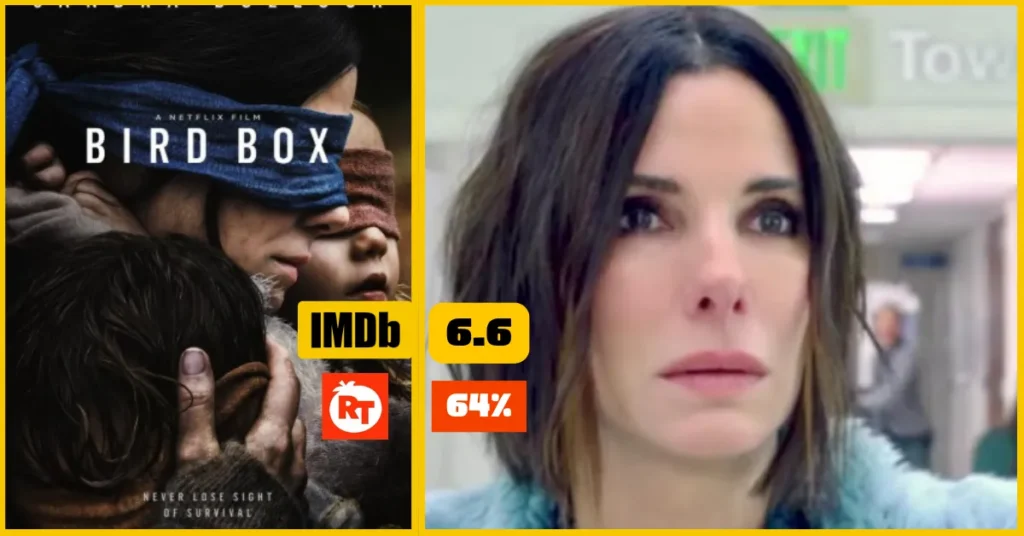
🎬 Bird Box
Release Year: 2018
Streaming Platform: Netflix
⭐ IMDb: 6.6/10 | 🍅 Rotten Tomatoes: 64%
Introduction
Bird Boxis a post‑apocalyptic horror thriller where simply looking outside can drive you to suicide, forcing survivors to live blindfolded in a world ruled by unseen entities. This article offers a complete Bird Box movie explained breakdown plus a detailed Bird Box movie ending explained section, focusing on Malorie’s journey, the creatures, and the final sanctuary. Expect a cinematic walkthrough of the plot, the timeline jumps, and how the last scene ties together the film’s big ideas about fear, hope, and parenthood.
Overview
Released in 2018,Bird Boxis an American post‑apocalyptic horror thriller directed bySusanne Bierand led bySandra Bullockas Malorie, a reluctant mother forced into survival mode. The film runs about 2 hours 4 minutes and mixes tense creature-feature horror with emotional character drama and parallel timelines: one in the early outbreak, one five years later on a blindfolded river journey. The mood is bleak and oppressive, with occasional warmth whenever Malorie finds brief connection or hope in a collapsing world.
Spoiler Warning
⚠️SPOILER ALERT – FULL MOVIE & ENDING EXPLAINED
This Bird Box movie explained guide goes into complete plot details, character deaths, and the final twist of the sanctuary.
If you haven’t watched theNetflixmovie yet and want to stay surprised, bookmark this page, watch the film, and then come back for the full breakdown.
Story Explained (Full Breakdown)
Act 1 explained – The world falls apart
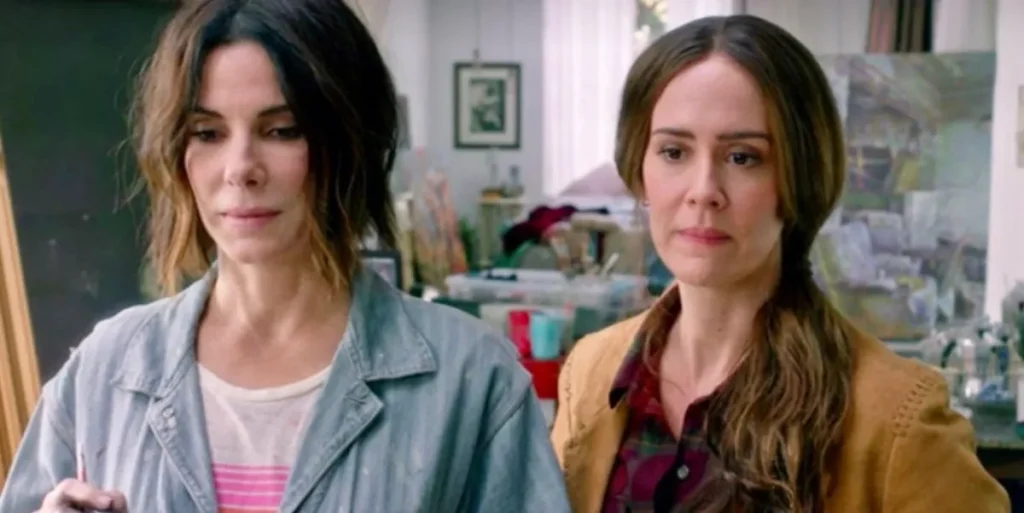
The film opens with Malorie harshly instructing two small children, simply calledBoyandGirl, on how to travel blindfolded down a dangerous river to a promised safe place. This tense present-day frame cuts back five years earlier, when Malorie is a cynical, emotionally detached artist, pregnant and unsure about motherhood.
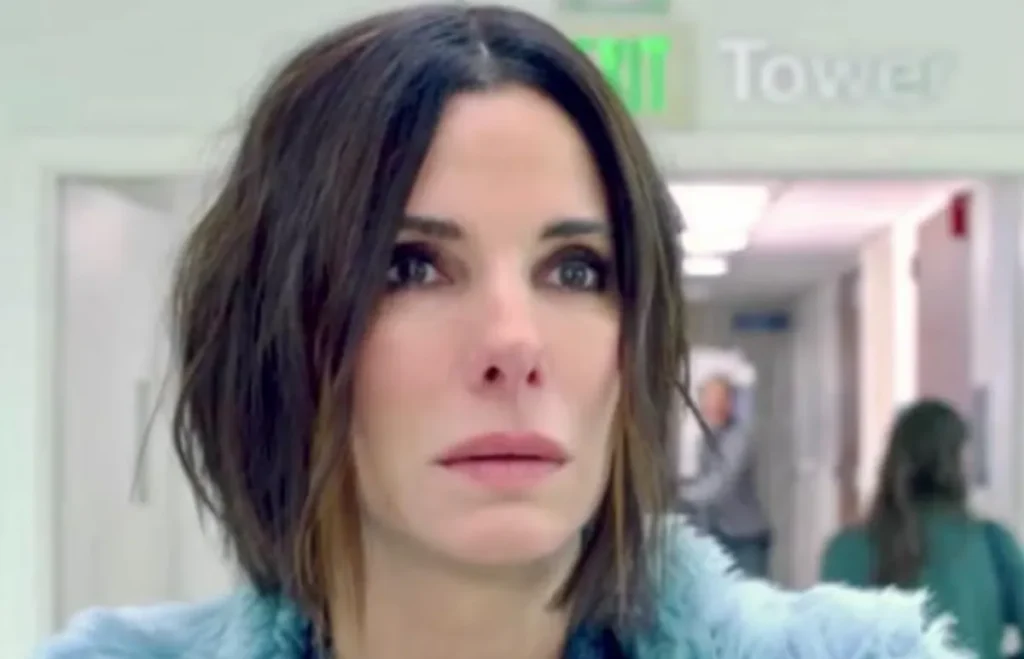
During a hospital visit with her sisterJessica, news of a mysterious wave of mass suicides suddenly becomes terrifyingly real as people start killing themselves in the streets. Jessica sees something invisible, becomes entranced, and crashes their car before calmly walking into oncoming traffic, forcing Malorie to run blindly through chaos until she’s pulled into a nearby house with other survivors.
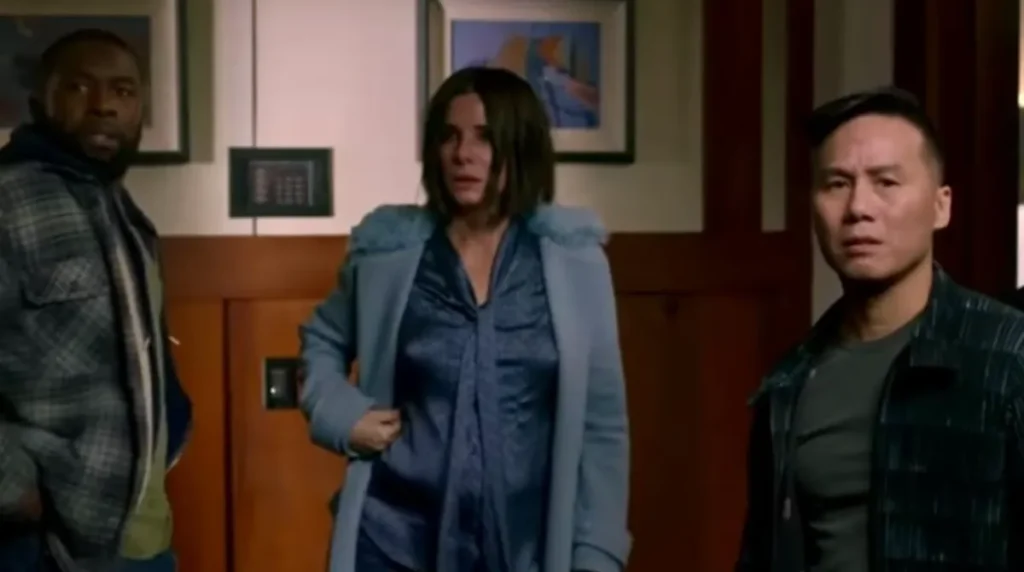
Inside, Malorie meetsTom,Douglas,Olympia,Greg,Cheryland others, learning the rules: if youseethe outside entities, your mind snaps and you kill yourself. The group covers windows, uses cameras and blindfolds when going out, and slowly accepts that their lives are now about containment and rationing rather than rescue.
Act 2 explained – The house, the births, the fall
The survivors attempt practical tasks like a blindfolded supermarket run using GPS and covered windows to gather food and birds, which later act as early warning alarms against the creatures. Tensions grow as personalities clash, especially between pragmatic Tom and bitter Douglas, while Malorie keeps her emotional distance from everyone, including her unborn child.
Things shift when a naïve pregnant woman,Olympia, is let into the house, mirroring Malorie’s own condition and setting up their parallel destinies as mothers. Later, Olympia repeats that vulnerability by allowing a stranger namedGaryinto the house; Gary turns out to be one of the “converted” people who can see the creatures and worship them, forcing others to look.
Gary gradually reveals his instability, drawing pictures of the creatures and removing covers from the windows, triggering multiple suicides in the house. In a brutal sequence, Olympia and Malorie go into labor at the same time while Gary opens windows and forces people’s eyes open, leading Olympia to jump to her death as Malorie grabs and claims responsibility for both newborns.
Tom manages to kill Gary, but by then nearly everyone else in the house is dead, leaving only Malorie, Tom, and the two babies. This traumatic night cements Malorie’s hardened survival philosophy: attachment is dangerous, names are a luxury, and softness gets people killed, so she refuses to give the babies real names and calls them simplyBoyandGirl.
Act 3 explained – Five years later and the river journey
Five years later, Malorie and Tom live together with the children, making cautious supply runs while a growing group of “seers” roam around trying to force survivors to look at the entities. Tom helps balance Malorie’s cynicism with hope, urging her to let the children experience small joys and believe in a future beyond constant fear.
On one supply run, they encounter armed fanatics who drive with uncovered eyes, hunting for people to convert. Tom sacrifices himself by removing his blindfold to shoot their attackers, killing the last of them even after looking at the creatures, but finally succumbing and taking his own life.
After his death, Malorie takes a radio transmission from a man namedRickwho promises a sanctuary downriver and decides to risk the treacherous blindfolded boat journey with Boy and Girl. The film gradually catches up to the opening scene: rough rapids, disorientation in the forest, the children nearly removing their blindfolds, and Malorie forced to confront her own harshness toward them.
Key Themes Explained
- Fear vs hope
The central conflict inBird Boxis not just humans vs creatures butfear vs hopeinside Malorie herself. Her survival-first mindset protects the children physically but emotionally starves them, and the ending requires her to soften without becoming naïve. - Motherhood and emotional distance
At the start, Malorie treats pregnancy and motherhood as burdens she didn’t choose, keeping everyone at arm’s length, including her future child. By the end, choosing names and claiming the kids as “her” children signals that caring is no longer a weakness but the very reason to survive. - The unseen monster as metaphor
The invisible entities work as a metaphor for invisible mental struggles—depression, intrusive thoughts, and existential dread that can push someone toward self-destruction. Because the monsters are never clearly shown, they become projections of each character’s deepest fear and guilt, which matches how the victims react by seeing personal hallucinations. - Community vs isolation
The house and later sanctuary show that humans can’t survive alone for long in this universe. Malorie’s shift from isolated, mistrustful loner to someone willing to join a community and trust strangers is part of the film’s emotional resolution.
Characters Explained
- Malorie (Sandra Bullock)
Malorie begins as a guarded artist who doesn’t want to be a mother and distrusts attachments in general. Trauma hardens her into a hyper-practical survivor who thinks love is a liability, calling the kidsBoyandGirlto avoid emotional ties, but the journey forces her to admit that they are her reason to go on. - Tom (Trevante Rhodes)
Tom is the moral center and emotional anchor, a former soldier who retains empathy even after the world collapses. He believes in stories of safe places and insists that survival must include hope and connection, and his final sacrifice passes that philosophy to Malorie. - Douglas (John Malkovich)
Douglas is abrasive, paranoid, and often cruel, but his paranoia is partly right about the dangers of trusting outsiders. He represents one extreme of survival—suspicion without compassion—and his death underlines that being right about danger isn’t enough if you cannot cooperate. - Olympia (Danielle Macdonald)
Olympia is gentle and trusting, the opposite extreme to Malorie and Douglas. Her kindness brings both Gary and her baby into the story, leading to disaster but also enabling Malorie’s eventual growth as she takes in Olympia’s child as her own. - Gary (Tom Hollander)
Gary embodies the fanatic “seers” who worship the creatures and despise the blindfolded survivors. His calm, polite facade masks deep madness, showing how ideology can be more dangerous than the monsters themselves because it actively spreads the horror. - Boy and Girl (later Tom and Olympia)
The children are raised under strict fear, learning rules before affection. Their confusion and longing for warmth put pressure on Malorie’s worldview, and their eventual naming marks the emotional payoff of the entire Bird Box ending.
Twist Explained
The film’s “twist” is less about a sudden reveal and more about context: the safe place Malorie has been risking everything to reach is not a military base or heavily armed colony but aschool for the blind. These residents are naturally protected because they cannot see the entities, flipping the logic of the apocalypse—disability becomes an unexpected advantage rather than a weakness.
Another softer twist is structural: the river journey we see cut throughout the film is not the main plot but actually the final desperate chapter of a five-year story. As the timelines sync at the end, the audience realizes that the harsh Malorie on the river is still processing Tom’s sacrifice and her own fear of loving the children too much.
Movie Ending Explained
What exactly happens in the ending?
Near the end, Malorie and the children are lured off their boat when disembodied voices imitate familiar people, trying to trick them into removing their blindfolds. Girl almost gives in because Malorie’s strictness has made her feel unloved, but Malorie breaks down, finally speaking with genuine vulnerability and promising that she will always protect them.
They eventually follow the sound of birds and arrive at a gated compound, where they’re pulled inside by survivors led by Rick, whose radio broadcast Malorie heard earlier. The sanctuary turns out to be a formerschool for the blind, now filled with blind and sighted survivors who have fortified the space and use birds as living alarms when entities approach.
Inside a courtyard filled with birds and greenery, Malorie meets people who knew her doctor, Dr. Lapham, linking her pre-apocalypse life to this new beginning. Surrounded by safety and community for the first time, she finally gives the children real names:GirlbecomesOlympia, in honor of her kind but doomed mother, andBoybecomesTom, honoring the man who loved and protected them.
What does the ending mean?
The Bird Box movie ending explained in simple terms: Malorie’s journey is not just about reaching a safe building but about reaching asafe emotional statewhere she can allow love and vulnerability again. The school for the blind represents a place where people live with limitations but still build joy and connection, mirroring Malorie’s acceptance that life can be worth living even with constant danger.
Naming the children is a powerful symbolic act; it signals that Malorie is no longer trying to protect herself by staying detached. She chooses to carry the pain of love and grief rather than the numbness of pure survival, completing her arc from reluctant mother to fiercely loving parent.
How it connects to the themes
The sanctuary’s birds and greenery contrast sharply with the grey, decaying world outside, visually signaling hope and renewal. The fact that blind people thrive there challenges the film’s earlier assumption that sight is always an advantage, tying back to themes of perspective and the unseen struggles people carry.
Malorie’s speech to Girl in the forest—admitting her fear and promising she wants them to live not just survive—directly channels Tom’s earlier philosophy. The ending shows she has finally internalized Tom’s belief that hope is not a naive luxury but a survival tool as essential as blindfolds and food.
Alternate interpretations
Some viewers see the ending as almosttoo hopeful, reading the sanctuary as a metaphorical afterlife where Malorie has finally reached peace after unseen deaths. Under that lens, the birds and warm light feel like a spiritual reward for her sacrifices, though the film itself plays the sanctuary as a grounded, physical location.
Another angle suggests the entities might represent an inescapable force—like depression or global trauma—that humanity can never fully defeat but must adapt around. In this reading, the blind community shows that survival in the Bird Box universe depends on accepting limits and building systems of mutual care rather than trying to conquer the monsters directly.
Director’s intention (storytelling analysis)
By never clearly showing the creatures, Susanne Bier keeps the focus on how humans respond to fear rather than indulging in monster spectacle. The cross-cutting between the house timeline and the river journey builds suspense while slowly revealing how Malorie became so hardened and why the final release of emotion matters.
The ending’s emotional design is simple but effective: sight is still deadly, the world is still broken, but Malorie’s internal world has healed enough to let in love. The director uses this to end on a cautiously optimistic note—people are still trapped in a dangerous universe, yet community and compassion have carved out a pocket of safety.
Performances
Sandra Bullockcarries the film with a physically demanding performance that mixes steely resolve with moments of raw, almost animal panic. Her body language while blindfolded—reaching, stumbling, clutching the children—sells the terror more than any CGI creature could.
Trevante Rhodesbrings warmth and calm to Tom, grounding the film’s bleak tone and making his sacrifice feel genuinely painful instead of just plot-required.John Malkovichleans into Douglas’s bitter sarcasm, sometimes feeling theatrical but effectively embodying the “I told you so” survivalist who still ends up doomed.
Supporting players likeDanielle Macdonaldas Olympia andSarah Paulsonas Jessica maximize their limited screen time, setting emotional stakes that echo throughout Malorie’s journey. Even smaller roles likeTom Hollander’s Gary manage to leave a strong impression, making his quiet menace feel more unsettling than loud villainy.
Direction & Visuals
The direction emphasizescontrast between light and danger: bright outdoor scenes often mean risk, while dark, enclosed spaces offer relative safety. This inversion of traditional horror lighting plays into the blindfold concept, making sunlight feel almost predatory.
Cinematography favors tight close-ups whenever characters are blindfolded, trapping the audience in their limited perspective and heightening every sound—crunching leaves, distant screams, flapping birds. The color palette is muted, with greys, blues, and washed-out greens reinforcing the sense of a world drained of vitality, while the sanctuary’s courtyard finally introduces richer, warmer tones.
Pros and Cons
Pros
- Tense, high-concept premise with a clear rule:if you see it, you die, creating instant suspense.
- Strong central performance bySandra Bullockand emotionally resonant ending anchored in motherhood and hope.
- Effective use of sound, birds, and off-screen horror to keep the creatures scarier in the imagination.
Cons
- Some supporting characters feel underdeveloped, acting more like archetypes than fully rounded people.
- World-building leaves many questions about the creatures and global situation, which can frustrate viewers wanting concrete answers.
- The dual-timeline structure occasionally undercuts momentum as the story jumps back and forth.
Cast
Crew
(Some crew roles summarized from available credit listings; full extended crew appears on official credit pages.)
Who Should Watch?
Bird Boxis ideal for viewers who enjoy high-concept horror thrillers likeA Quiet Place, where strict survival rules create tension. It also works for fans ofSandra Bullocklooking for a darker, more physically demanding role anchored in emotional stakes and parent-child drama.
Verdict
As a complete Bird Box movie explained viewing experience, the film succeeds more as an emotional survival story than a detailed creature lore saga. The ending lands because it resolves Malorie’s internal war between fear and love, even if many questions about the entities remain unanswered.
OnNetflix, it stands as a lean, tense post‑apocalyptic horror that’s easy to binge yet lingers in the mind afterward. Imperfect but gripping,Bird Boxis worth watching for its central performance, its clever “don’t look” premise, and its quietly hopeful final stretch.
Reviews & Rankings
Where to Watch
Bird Boxis available to stream exclusively onNetflix, as it is a Netflix Original movie.
Watch it on Netflixif you want a tense, emotionally charged horror thriller with a memorable, discussion-worthy ending.