
🎬 The Number 23
Release Year: 2007
Streaming Platform: Amazon Prime Video (rent/buy)
⭐ IMDb: 6.4/10 | 🍅 Rotten Tomatoes: 7%
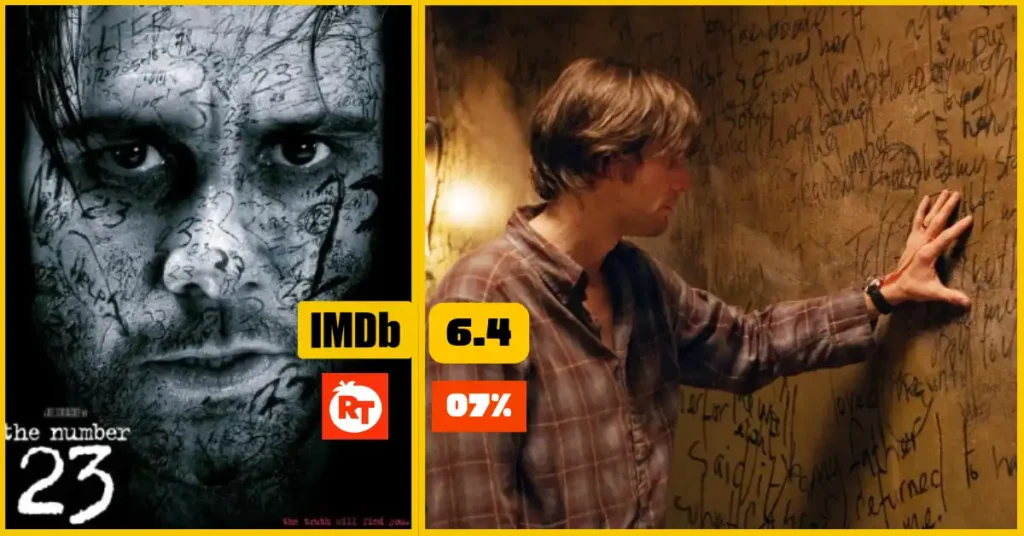
1. The Number 23 Ending Explained: What Really Happened to Walter Sparrow?
The Number 23is a psychological mystery thriller whereJim Carreysteps away from comedy and dives into paranoia, guilt, and obsession. This article will give a full The Number 23 movie explained breakdown, from the strange book to the final confession.
The focus is on story, themes, twist, and a clear The Number 23 movie ending explained section in simple language. By the end, the movie’s confusing structure and the truth about Walter Sparrow should feel much clearer.
2. Overview
The Number 23is a dark psychological thriller with neo‑noir flavor, running about 98 minutes and directed byJoel Schumacher. The movie mixes detective fantasy, murder mystery, and mental breakdown, following a man who starts seeing the number 23 everywhere and believes it controls his life.
The mood is obsessive, gloomy, and increasingly surreal, moving between Walter’s real life and the hard‑boiled alter ego “Detective Fingerling.” Expect a heavy tone, lots of narration, and a protagonist slowly losing his grip on reality.
3. Spoiler Warning
⚠️SPOILER ALERT:
This The Number 23 movie explained guide reveals major plot points, the central twist, and the full ending.
If you have not watched themovieyet and want to experience the mystery first, it is better to watch it onAmazon Prime Video(rent/buy) and then come back.
4. Story Explained
Act 1 Explained – The Book and the Obsession Begins
Walter Sparrow is a mild‑mannered animal control officer whose life changes after his wife Agatha discovers a mysterious self‑published book titledThe Number 23in a bookstore. The book tells the story of a detective named Fingerling, and Walter quickly notices eerie similarities between Fingerling’s life and his own.
As Walter reads further, he becomes obsessed with the number 23, seeing it in dates, names, license plates, and random calculations. The idea of a “23 enigma” starts to consume him, and his mood darkens from curiosity to paranoia.
Act 2 Explained – Blurred Lines Between Walter and Fingerling
Act 2 jumps back and forth between Walter’s real world and stylized noir sequences whereJim Carreyplays Fingerling, a tough detective pulled into a case involving a woman called the Suicide Blonde and the murder of a student named Laura Tollins. In these fantasy segments, Agatha appears as Fabrizia, a dangerous femme fatale, and other real‑world characters also have exaggerated counterparts.
Walter becomes convinced that the book is not fiction, but a coded confession written about a real murder. He starts to believe he is destined to repeat Fingerling’s actions or that his life is being controlled by the number 23. His family watches him spiral as he covers walls with calculations and theories.
Act 3 Explained – The Truth About Walter
In the final act, Walter discovers that the book was actually written by someone named Topsy Kretts, a name that itself is a playful code (topsy‑turvy secrets). He begins to investigate the Laura Tollins case in the real world, convinced that the author is the killer.
As clues pile up, Walter learns that the real murder happened years ago, and that Laura’s body was never officially found. The deeper he digs, the more it points back toward one shocking truth: he himself may be the missing piece in this unsolved crime. This sets up the major twist and the movie’s ending.
5. Key Themes Explained
One of the strongest themes isobsession. Walter’s fixation on the number 23 shows how the human brain can force patterns onto random events and then treat them as cosmic signs. The more he searches, the more “evidence” he finds, proving how dangerous confirmation bias can become.
Another core theme isguilt and repression. The story hints that Walter is running from something in his past, and the book becomes a psychological trigger that forces buried memories to resurface. Underneath the thriller surface, the movie is about how guilt will eventually demand to be faced, even if it returns in distorted, symbolic form.
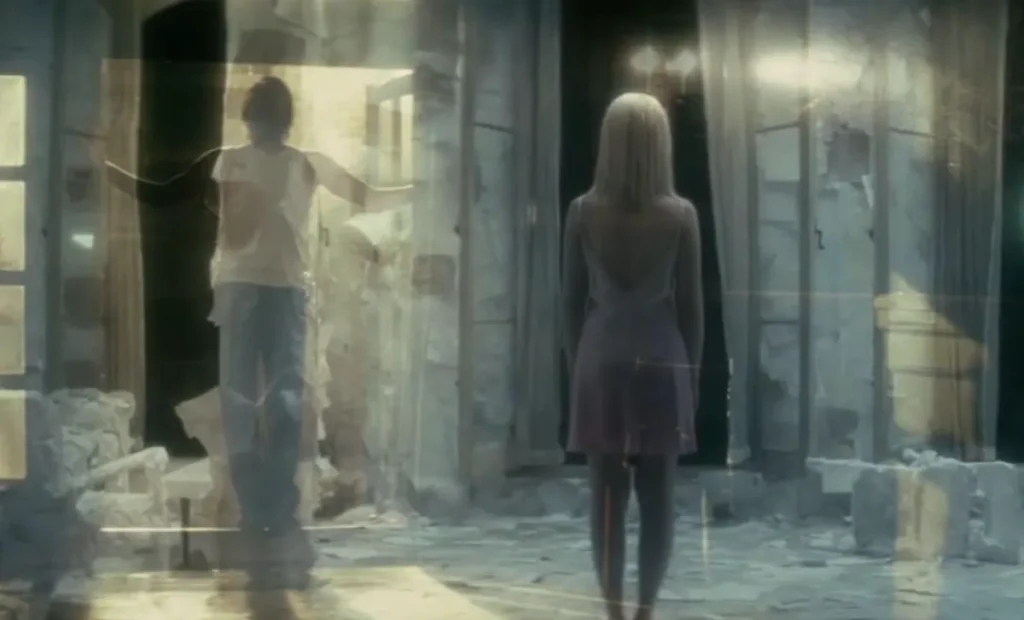
The film also exploresidentity and self‑destruction. Walter’s split into Walter/Fingerling, Agatha/Fabrizia, and Isaac French/Dr. Miles Phoenix shows how people reinvent themselves to escape responsibility. The noir world acts like a dramatized version of his inner mind, where he rewrites reality to cope with what he has done.
6. Characters Explained
- Walter Sparrow / Det. Fingerling (Jim Carrey)– Walter starts as a normal, slightly passive man, but once he reads the book, he becomes unstable and dangerous. Fingerling is the hyper‑sexual, violent, “cool” alter ego he imagines for himself, representing the darker impulses and past actions he does not want to own.
- Agatha Sparrow / Fabrizia (Virginia Madsen)– Agatha is Walter’s supportive wife, who mostly tries to bring him back to reality. In the book’s fantasy world, she becomes Fabrizia, a seductive and manipulative woman, reflecting Walter’s fears and distorted view of female temptation, as shaped by his guilt.
- Isaac French / Dr. Miles Phoenix (Danny Huston)– Isaac appears to be a helpful friend and therapist figure in Walter’s life. His alter ego, Dr. Miles Phoenix, is a morally ambiguous psychiatrist in the book, symbolizing how Walter both trusts and resents the authority figures who tried to treat him in the past.
- Robin Sparrow (Logan Lerman)– Walter’s son Robin is mostly an observer who slowly realizes how far his father’s obsession is going. He becomes crucial in the climax when the family uncovers physical evidence of Walter’s buried crime.
7. Twist Explained
The big twist reveals that Walter is not a victim of some mysterious author, but the author himself. Years earlier, before he reinvented his life, he was a young man who had an affair with a girl named Laura Tollins and ended up killing her in a fit of rage, then staging it as a suicide.
Overcome with guilt, he wroteThe Number 23as a confession under the pseudonym Topsy Kretts and then attempted suicide, which left him with memory loss. A doctor used the manuscript as part of his therapy, but the book eventually got separated from him and resurfaced years later, landing in Agatha’s hands by chance.
The twist re‑frames the entire movie: the strange parallels between Walter and Fingerling exist because Fingerling is simply Walter’s fictionalized version of himself. The number 23 obsession is less a supernatural curse and more a psychological scar he used to encode his crime.
8. Movie Ending Explained
In the climax, Walter, Agatha, and Robin go to an old site connected to the Laura Tollins case and literally dig up the past—uncovering her skeleton where Walter had buried the body after staging the fake suicide. This physical discovery confirms that Walter’s fragmented memories and the book’s story are real.
Realizing that he is both the killer and the author, Walter runs into traffic intending to kill himself and end the cycle of guilt, but a truck stops just in time. Instead of dying, he is forced to confront what he has done. Agatha and Robin persuade him that the only honest path is to confess and face punishment.
Walter decides to turn himself in to the police, knowing that his new identity, his marriage, and his life will be destroyed. The final scenes show him in prison, serving his sentence while his family continues on the outside. The film suggests that accepting responsibility—even at a high cost—is the only way to silence the obsessive pull of the number 23.
What the Ending Means
The ending ofThe Number 23is not about cosmic numerology winning; it is aboutguilt finally breaking through denial. The number 23 becomes a symbol of the crime and of Walter’s attempt to encode his confession into patterns, words, and calculations.
Once the truth is out, the number itself loses its mystical power. The final scenes imply that what really haunted Walter was never a cursed number but his refusal to acknowledge the hurt he caused. In that sense, the movie’s message is surprisingly moral: you can run from the law for a while, but you cannot run from your own conscience.
Alternate Interpretations
Some viewers interpret the ending as a subtle critique of conspiracy thinking. Walter’s obsession looks like a cosmic mystery, but it turns out to be a deeply personal trauma dressed up as a “23 enigma.” The movie suggests that many grand conspiracies are just people projecting inner chaos onto the outside world.
Another angle sees the ending as a commentary on storytelling. Walter literally rewrites his past as a pulpy detective novel to make himself the tragic anti‑hero instead of a straightforward murderer. When the façade collapses, the real man is far less glamorous, just a flawed human being facing justice.
9. Performances
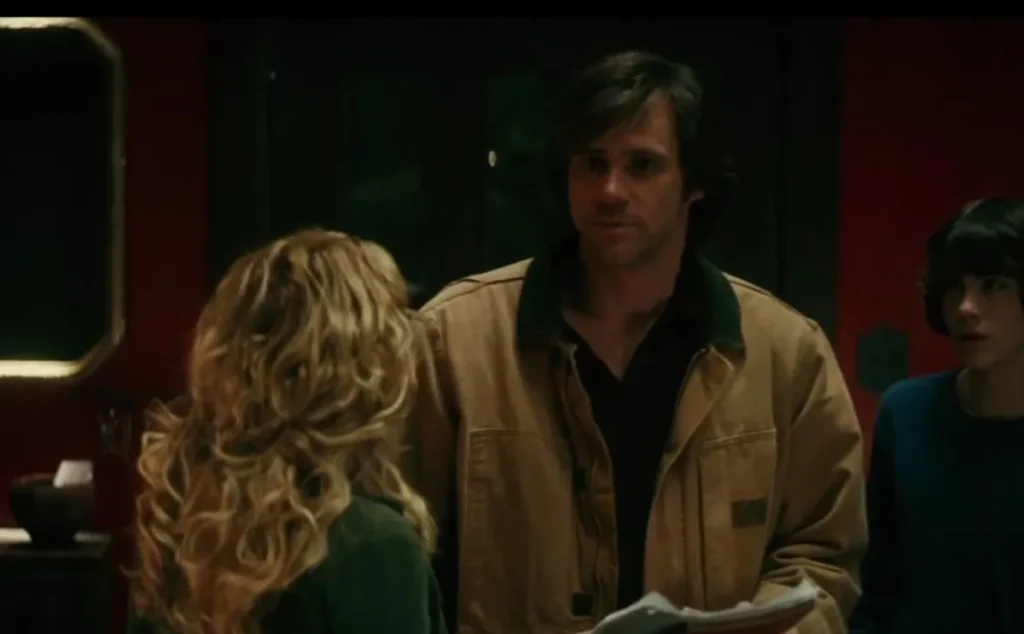
Jim Carreydelivers a deliberately heightened performance, shifting between the anxious, ordinary Walter and the stylized, hard‑boiled Fingerling. Some scenes lean into his trademark intensity, which fits the meltdown sequences but can feel over‑the‑top, matching the movie’s lurid tone.
Virginia Madsenhas fun playing both the grounded, patient Agatha and the dangerous Fabrizia in the noir segments. Her dual performance gives the movie texture, showing how Walter’s mind sexualizes and demonizes the same woman he loves.
Danny Hustonbrings a calm, slightly unsettling presence to Isaac French / Dr. Miles Phoenix, hinting that there is more going on beneath the surface.Logan Lermanas Robin adds a believable, worried teen energy, especially in scenes where he and Walter dig up the past—his reactions help ground the more melodramatic moments.
10. Direction & Visuals
DirectorJoel Schumacherleans heavily into stylized visuals to separate Walter’s reality from the Fingerling fantasy. The noir sequences use harsher lighting, saturated colors, and exaggerated costumes to feel like pages ripped from a pulpy crime novel rather than real life.
In contrast, Walter’s everyday world has a colder, more muted palette, underlining his growing depression and distance from normalcy. The camera lingers on numbers, clocks, street signs, and documents, visually reinforcing how the number 23 keeps intruding into his perception. This repetitive visual motif makes the audience feel a bit of the same claustrophobic obsession.
11. Pros and Cons
Pros:
- Bold concept that turns a simple numerology obsession into a psychological puzzle.
- Interesting dual performances fromJim CarreyandVirginia Madsen, especially in the shifting Walter/Fingerling and Agatha/Fabrizia roles.
- Stylish noir sequences that give the movie a distinct visual identity.
Cons:
- The script can feel heavy‑handed and overly literal in explaining the number 23 connections, which some viewers find clumsy.
- The final twist, while logical, arrives in a melodramatic way that may not satisfy viewers expecting a more grounded psychological exploration.
- Critical reception was very poor (around 7% on Rotten Tomatoes), suggesting many critics found it confusing and self‑serious.
12. Cast
13. Crew
(Crew roles beyond director/writer are summarized from typical credit listings for the film; specific names may vary slightly by source.)
14. Who Should Watch?
The Number 23is best for viewers who enjoy psychological thrillers with unreliable narrators, pulpy style, and a slightly over‑the‑top tone. Fans ofJim Carrey’sserious roles who want to see him in a darker, more intensemoviewill also find this interesting.
If you like conspiracy‑style plots, numerology, and twisty narratives where reality and fiction blur together, this film can be a fun, guilty‑pleasure watch despite its low critic scores.
15. Verdict
As a complete package,The Number 23is a flawed but fascinating psychological thriller that uses the “23 enigma” as a vehicle to explore guilt, identity, and obsession. The storytelling is messy, but the central idea is strong enough to keep you curious, especially on a first viewing.
For anyone searching for The Number 23 movie ending explained, the key is simple: there is no supernatural curse, only a man forced to face the crime he tried to bury. If you accept the heightened style and melodramatic twist, themovieworks as a dark, surreal ride through one man’s fractured mind.
16. Reviews & Rankings
Ratings Snapshot
Overall, critics seeThe Number 23as clumsy and overwrought, but a cult group of viewers enjoy it as a stylish, guilty‑pleasure thriller. That mixed reputation actually makes it more interesting to revisit, especially if you go in knowing it is more psychological pulp than prestige drama.
17. Where to Watch
In many regions,The Number 23is currently available to rent or buy onAmazon Prime Videoand other digital platforms like Apple TV or Fandango at Home. Availability can change by country, so it is best to search directly on your localOTTapps or aggregator services.
If you are planning a themed thriller night and wanted The Number 23 movie ending explained before pressing play, you can now stream it with a clearer idea of what the twist really means—and then decide whether the number 23 feels like a curse, a coincidence, or just a mirror of human guilt.