
🎬 The Game (1997) Ending Explained
Release Year: 1997
Streaming Platform: Tubi / Rent on Prime Video, Apple TV, others (varies by region)[1][2]
⭐ IMDb: 7.8/10 | 🍅 Rotten Tomatoes: 77%
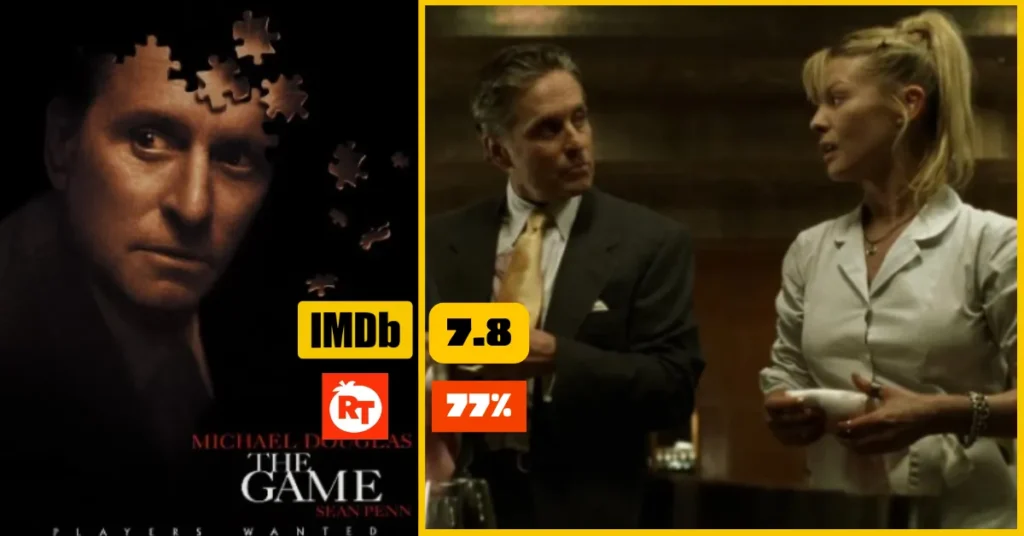
1. The Game (1997) Explained: Twists, Themes and Shocking Ending
TheThe Game (1997) Ending Explainedconversation always starts with one thing: can you really trust anything you see in this movie? David Fincher’s mystery thriller follows cold billionaire bankerNicholas Van Orton, whose life is hijacked by a bizarre “entertainment” service called CRS that blurs the line between reality and a sadistic prank.
This article offers a fullThe Game movie explainedbreakdown, including acts 1–3, key themes, character arcs, the big twist, and a deep dive into the controversial ending. By the end, the goal is to make sense of what happens on that rooftop, why Nicholas jumps, and what the game actually changes in him.
2. Overview
The Gameis a psychological mystery thriller with strong neo‑noir flavor, directed byDavid Fincherand running about 128 minutes. The mood is tense, paranoid and clinical, with San Francisco presented as a cold maze that mirrors Nicholas’s emotionally frozen inner life.
Genre‑wise it mixes suspense, psychological horror, corporate drama and dark satire about wealth and control. Without going into spoilers, the movie slowly escalates from minor inconveniences to full-blown life‑or‑death chaos, always making viewers question what is staged and what is real.
3. Spoiler Warning
⚠️SPOILER WARNING — The Game (1997)
This is a fullThe Game movie explained + ending explainedbreakdown.
Major plot points, twists, and the final reveal are discussed in detail from here on.
4. Story Explained (Full Breakdown)
Act 1 Explained – The Birthday Gift
Nicholas Van Orton is a wealthy, emotionally distant San Francisco investment banker who lives alone in a huge mansion and runs his business with ruthless precision. He is haunted by the memory of his father’s suicide, who jumped from the mansion roof when Nicholas was a teenager.
On his 48th birthday, his younger brotherConrad(played bySean Penn) reappears and gives him a strange gift: a voucher for Consumer Recreation Services (CRS), a company that offers “a game” tailored to your life. Nicholas is skeptical but intrigued, and after extensive psychological testing and interviews, he signs up, not realizing how deeply CRS will invade his reality.
Soon after, small disruptions begin: his television “talks” directly to him, his briefcase won’t open properly, and a clown doll is left in his driveway as a creepy echo of his father’s death. These incidents feel like pranks but are just plausible enough to be brushed off, priming both Nicholas and the audience to expect something bigger is coming.
Act 2 Explained – Reality Collapses
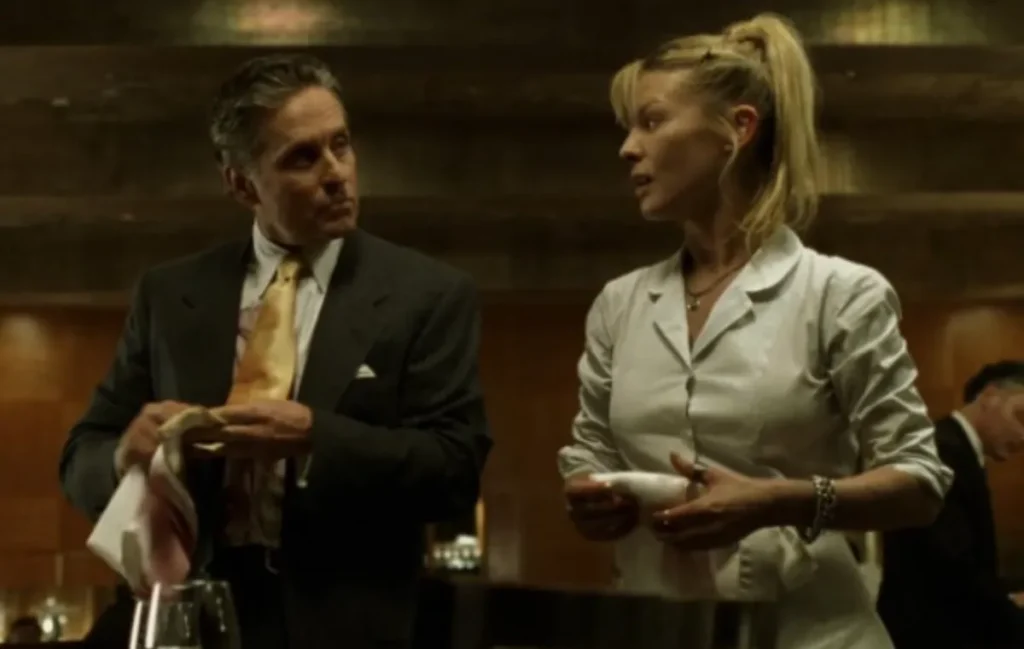
The incidents escalate when Nicholas meets a waitress namedChristine(Deborah Kara Unger), whose apartment is suddenly attacked by armed men, forcing them to flee together. His bank accounts appear emptied, his home is broken into, and it seems CRS has access to every part of his life.
As Nicholas panics, he tries to shut the game down and confront CRS, only to find their sleek office building abandoned as if the company never existed. This is a key turning point: the movie pushes him from controlling banker into hunted victim, stripping away his wealth, status and sense of safety.
Christine appears to be an ally, then reveals herself as part of the game, and Nicholas is drugged and wakes up in Mexico with no money and barely any possessions. Watching a rich, hyper‑controlled man reduced to helplessness is the film’s brutal middle act, forcing him to improvise, hitchhike and literally climb back into his life.
Act 3 Explained – The Rooftop and the Shot
Nicholas fights his way home, breaks into his own mansion and discovers a staged “party” that looks like a sinister meeting of all the people who might be conspiring against him. Believing CRS is a real criminal operation trying to destroy him, he arms himself and heads to the CRS building to take revenge.
Inside, he ends up on the rooftop, convinced that everyone below is part of one massive betrayal. Conrad approaches him, trying to explain that it is all just the game and about to end, but Nicholas, terrified and paranoid, believes it is another setup.
When the rooftop elevator opens, Nicholas fires his gun, accidentally shooting Conrad, who collapses seemingly dead. Devastated and convinced he has killed his brother, Nicholas walks to the edge of the building and steps off, mirroring his father’s suicide.
He crashes through a glass roof and lands safely on a giant airbag in the middle of a lavish party—his own surprise post‑game celebration. Everyone he thought was an enemy, including Christine and Conrad, is there alive and smiling, revealing that every step was part of“the game”, designed to break him down and rebuild him.
5. Key Themes Explained
One major theme inThe Gameiscontrol versus vulnerability. Nicholas is a man who believes money and power can shield him from pain, and CRS systematically removes that shield, forcing him to confront chaos and fear without hiding behind his wealth. The movie asks whether a person like him can rediscover empathy and humility only by being completely dismantled.
Another theme isprivilege and manufactured suffering. What is a “game” to the rich is life‑shattering terror for anyone without a safety net, and the film has a darkly satirical edge about how far the ultra‑wealthy will go to feel something again. Finally, the repeated rooftop imagery and the mirroring of his father’s death underscore themes ofintergenerational traumaand whether Nicholas can choose a different ending than the one that defined his childhood.
6. Characters Explained
Nicholas Van Orton (Michael Douglas)is the core of the story: a cold, efficient banker who has turned emotional distance into a survival strategy. His motive is not adventurous fun; he accepts the game half out of boredom, half out of arrogance, assuming he can control or outsmart anything.
As the game progresses, his behavior shifts from aloof dismissal to raw desperation—he begs for help, clings to Christine, and finally shows genuine remorse when he believes he has killed Conrad. The game succeeds not by killing him, but by cracking his emotional armor and making him feel guilt, fear, and eventually gratitude.
Conrad (Sean Penn)starts as the reckless younger brother who seems like a screw‑up but is secretly orchestrating the greatest intervention of Nicholas’s life. His motivation is guilt and concern; he has gone through CRS himself and believes it can stop Nicholas from becoming as emotionally dead as their father.
Christineis the most ambiguous character, hired by CRS but playing a layered role as both seductress and guide. Her behavior feels inconsistent on purpose, giving the audience the same whiplash Nicholas feels, and by the end she becomes the bridge between him and this surreal “therapy” he has endured.
7. Twist Explained
The central twist ofThe Gameis that what appears to be a deadly conspiracy is, in fact, an extreme, hyper‑realistic “experience” built entirely around Nicholas’s psychology and personal history. Every apparent disaster—financial ruin, assaults, kidnappings, and even Conrad’s apparent death—has been carefully scripted with safety nets built in, though the movie deliberately never shows those safety nets in advance.
The brilliance of the twist lies in point of view: the audience never leaves Nicholas’s perspective, so viewers only know what he knows, making the final reveal feel both shocking and, in hindsight, plausibly seeded. The story also toys with the idea that this might be too elaborate and risky to be “just a game,” which fuels ongoing debates about whether the twist is believable or intentionally exaggerated to underline its themes.
8. The Game Movie Ending Explained
What Exactly Happens
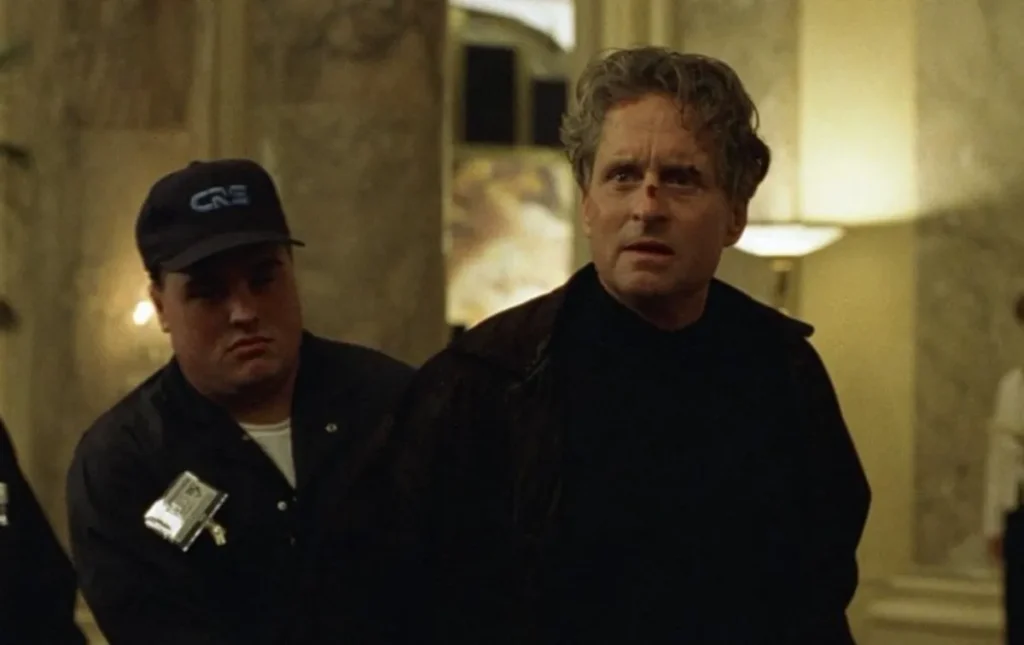
On the rooftop, Nicholas believes CRS has pushed him beyond breaking point and that Conrad is just another actor in the con. When he shoots Conrad, the horror on his face is real, not staged, and for a moment he truly believes he has committed murder.
Unable to live with that guilt, he steps off the roof, recreating the pose and drop of his father’s suicide, effectively choosing what he thinks is the same tragic exit. Instead, he crashes onto a massive airbag inside a decorated hotel atrium, surrounded by friends, colleagues and CRS staff waiting to shout “Surprise!” as the game ends.
Conrad appears alive, revealing that the “body” Nicholas saw was part of the act and that the gun was loaded with blanks or carefully controlled to avoid real harm. The party, complete with a birthday cake and champagne, confirms that every horror was part of a controlled design meant to culminate in this cathartic fall and rebirth.
What the Ending Means
Symbolically, the fall is adeath and rebirth. Nicholas “kills” the version of himself that is emotionally dead, just as he thinks he has killed his brother, then survives to get a second chance at life and relationships. The airbag is not only a literal safety device but a metaphorical cushion provided by the people who still care about him.
By surviving the jump, he breaks the cycle that started with his father’s suicide—he reaches the same physical point but chooses differently, even if he thinks he is repeating the past. The ending suggests that real change for someone like Nicholas requires a shock so intense that it forces him to confront his deepest fears and regrets.
Connection to Themes
The ending ties together the movie’s obsession with control. Nicholas loses everything he controls—money, home, reputation—and finally even control over his own survival when he steps off the roof believing death is certain. In that moment of surrender, he experiences a raw, honest emotion that has nothing to do with status or power, just regret and love for his brother.
The party and his calmer, almost dazed behavior afterward hint that the experience has softened him. He pays for Christine’s taxi, speaks to people with more warmth, and even considers going for a drink with her, small gestures that imply he may use his wealth and control differently going forward.
Alternate Interpretations
Some viewers read the ending asstill part of the game, arguing that the neatness of the airbag landing and Conrad’s perfect timing feel almost too convenient, like one last manipulation. Under this angle, Nicholas might never fully escape being handled and watched, and the “happy” ending is just a more palatable stage of the same performance.
Another interpretation sees the whole film asa rich man’s therapy fantasy, a critique of how the wealthy imagine trauma as something purchasable and reversible. This doesn’t change the literal events but reframes the morality: what Nicholas experiences is transformative for him, but morally disturbing when you consider the resources and risk involved.
Director’s Intention (Storytelling Analysis)
Looking at David Fincher’s style—precise framing, chilly color palette, and obsession with unreliable systems—the ending plays like a controlled experiment in breaking a man’s ego. The point is less about whether CRS is realistic and more about pushing Nicholas into a situation where his money cannot save him and his only escape is emotional honesty.
The symmetrical rooftop imagery, from the early home‑video flashbacks of his father to Nicholas’s own jump, signals that Fincher wants viewers to read this as a generational loop being disrupted. By landing safely and accepting Conrad’s hug, Nicholas symbolically accepts help and vulnerability, something his father never did.
9. Performances
Michael Douglascarries the movie with a performance that leans into his persona as a powerful, sometimes unlikable authority figure. His stiff body language early on—tight jaw, clipped speech, controlled movement—makes his later breakdowns (especially in Mexico and on the rooftop) feel genuinely raw and unsettling.
Deborah Kara Ungergives Christine an icy ambiguity that keeps viewers guessing whose side she is really on. Her switches from panic to cold competence are sharp, which can seem jarring but perfectly fits a character whose job is to keep Nicholas off balance.
Sean Pennuses limited screen time efficiently, making Conrad feel both irritating and sincere. In the rooftop scene where Nicholas believes he has shot him, the brother dynamic lands emotionally because Penn has sold the idea that Conrad genuinely cares, even if his methods are extreme.
10. Direction & Visuals
Fincher’s direction uses San Francisco as a cold, geometric playground, full of reflective surfaces and looming architecture that dwarf Nicholas. The camera often tracks him in wide shots through sterile offices and empty streets, emphasizing his isolation despite his wealth.
The color palette is dominated by cold blues, greys and muted tones, reinforcing the movie’s emotional chill and Nicholas’s inner numbness. As the game destabilizes him, Fincher uses more handheld shots and tighter framing, visually trapping Nicholas as his world shrinks and spins out of control.
Symbolic touches—like the clown doll, recurring rooftop imagery, and use of video screens that “talk” back—underscore how mediated and artificial Nicholas’s life has become. The ending’s bright, warmly lit party contrasts sharply with the rest of the film, visually representing his step into a potentially warmer emotional state.
11. Pros and Cons
Pros
- Tense, consistently engaging mystery structure that keeps viewers guessing what is real and what is staged.
- Strong central performance byMichael Douglasand confident direction byDavid Fincher, with meticulous visual control and pacing.
- Rich thematic material about control, privilege, trauma and emotional disconnection beneath the thriller surface.
Cons
- The ending’s logistics can feel implausible, with some critics calling it “preposterous” despite its emotional impact.
- CRS’s capabilities are almost magical, which may break immersion for viewers who demand realistic stakes.
- The film focuses so tightly on Nicholas that side characters, including Christine, can feel underdeveloped outside their function in the game.
12. Cast Table
13. Crew Table
14. Who Should Watch?
The Game (1997)is ideal for viewers who enjoypsychological thrillerswith unreliable realities and morally ambiguous setups. Fans ofDavid Fincher’sother work (Seven,Fight Club,Gone Girl) will appreciate the meticulous tension and thematic depth.
If you like twisty stories that spark post‑movie debates about plausibility, ethics, and meaning, this is a must‑watch. However, if you need every plot mechanic to be completely realistic, the ending may frustrate more than satisfy.
15. Verdict
As a complete package,The Gamestands as one of the more underrated entries inDavid Fincher’sfilmography, offering a gripping puzzle built around a memorably icy lead performance byMichael Douglas. The movie’s willingness to push its concept to extreme, almost unbelievable lengths is both its biggest strength and the source of most criticism.
From aThe Game movie explainedperspective, the thriller works best when read as a psychological fable about control, guilt and second chances rather than a literal blueprint for a real‑world “game.” If you accept that, the ending lands as cathartic and haunting, a perfect thematic echo to the opening rooftop tragedy.
16. Reviews & Rankings
Ratings Snapshot
Critical commentary often highlights the film’s technical excellence and relentless suspense while debating whether the final twist is brilliant or overreaching. Over the years, it has developed a cult reputation among thriller fans who consider it one of the most rewatchable puzzle movies of the 1990s.
17. Where to Watch
Availability changes by country, butThe Game (1997)is currently streamable on some ad‑supported OTT platforms likeTubi, and is widely available to rent or buy digitally on services such asPrime VideoandApple TV.
🎥Watch it on your preferred OTT platform(Tubi where available, or rent on Prime Video / Apple TV) to experience the full tension before reading thisThe Game (1997) Ending Explainedbreakdown in detail.