
🎬 Tenet
Release Year: 2020
Streaming Platform: Amazon Prime Video (select regions)
⭐ IMDb: 7.3/10 | 🍅 Rotten Tomatoes: 69% (critics), 76% (audience)
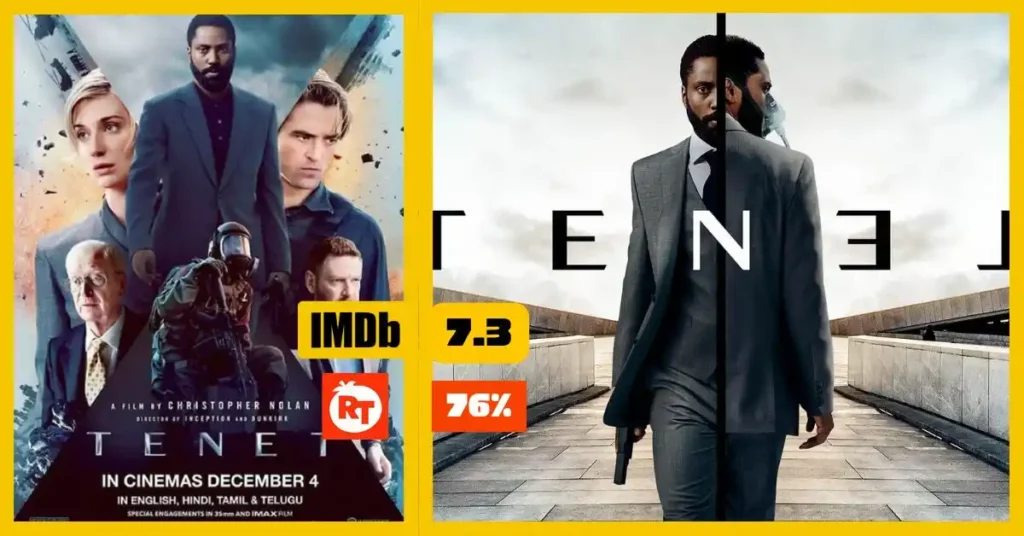
Christopher Nolan’sTenetis a high-concept sci‑fi espionagemoviethat mixes spy thrills with dense, brain‑twisting time mechanics built around “inversion.” Tenet Ending Explained breakdowns exist for a reason: most viewers walk out entertained but confused.
This article offers a completeTenet Movie Explainedguide in simple language, covering the story, key concepts, and a detailed Tenet Ending Explained section. It also looks at character motivations, major twists, performances, visuals and where this ambitiousChristopher Nolanfilm sits in the modern OTT era.
Overview
Released in 2020 and directed byChristopher Nolan, Tenet is a sci‑fi action thriller that follows an unnamedProtagonistrecruited into a secret organization to stop a world‑ending temporal war. The tone is cold, sleek and cerebral, with big‑scale set‑pieces and a constant sense of mystery.
Themovieruns about 150 minutes and blends spy tropes, heists, and war scenes with dense science‑fiction built around time inversion, where objects and people move backward through time while the rest of the world runs forward. The mood is intense and disorienting, demanding close attention and often multiple viewings.
Spoiler Warning
⚠️Spoiler Alert – Tenet Story & Ending Explained Ahead
From this point, the article goes deep into Tenet’s plot, twists and ending, including who lives, who dies, and what the final reveal really means. Read only if you’ve watched themovieor don’t mind full spoilers.
Story Explained:
Act 1 Explained – The Word “Tenet”
TheProtagonist(played byJohn David Washington) is a CIA operative involved in an undercover operation at a Kyiv opera house, which secretly connects to a test by a mysterious organization. After being captured and choosing death over betrayal, he wakes up to learn he has passed the test and is recruited into “Tenet,” a secret group working to prevent a future catastrophe.
He learns from scientistBarbara(Clémence Poésy) that the world is facing weapons sent back from the future, built around a concept called “time inversion,” where entropy is reversed so bullets, objects and even people move backward through time. His first mission leads him to arms dealerPriya(Dimple Kapadia) in Mumbai and then to the powerful Russian oligarchAndrei Sator(Kenneth Branagh), who appears to be receiving technology and instructions from the future.
Act 2 Explained – Kat, Sator & Inversion
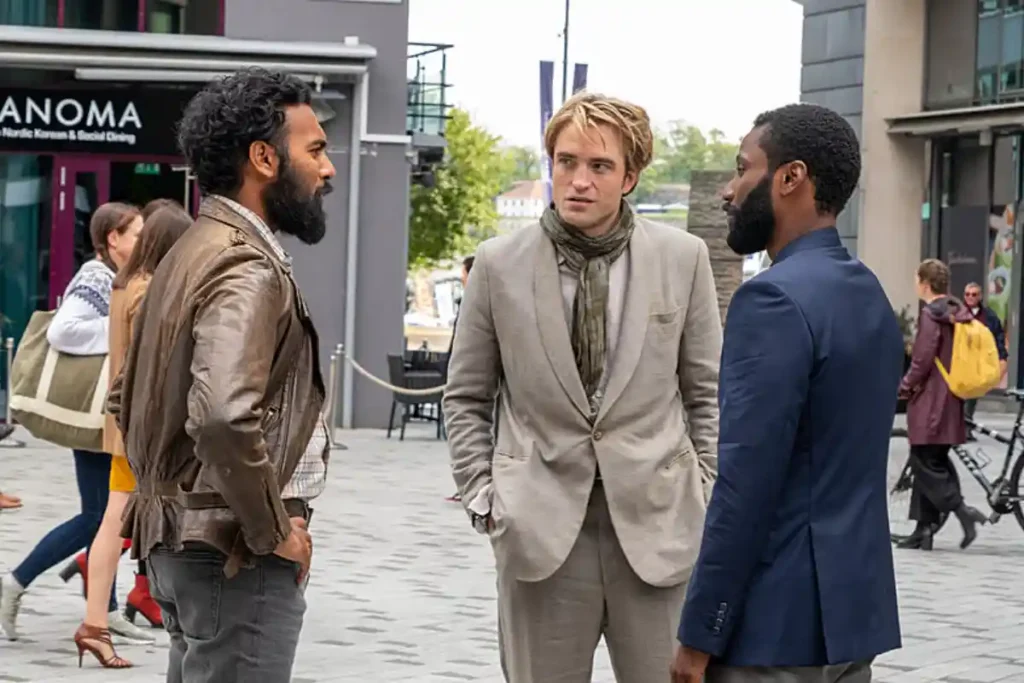
To reach Sator, the Protagonist gets close to Sator’s estranged wifeKat(Elizabeth Debicki), an art appraiser trapped in an abusive marriage because Sator is blackmailing her over a forged Goya drawing. With the help of charming operativeNeil(Robert Pattinson), the Protagonist pulls off an elaborate Freeport heist at an Oslo airport, encountering a mysterious masked attacker who seems to move backward in time.
As the Protagonist digs deeper, he learns Sator is collecting pieces of a device called “the Algorithm,” which if assembled and activated could invert the entire world’s entropy and effectively destroy reality as we know it. Time inversion tech lets Sator replay events with knowledge of the future, giving him an almost unbeatable advantage, especially because he is linked to the future through an unknown entity that wants to reverse time to save its own world.
Act 3 Explained – Temporal Pincer & Final Mission
In the second half, themoviedoubles down on inversion as the Protagonist and Neil use turnstiles—machines that invert a person’s flow of time—to move backward through events. The Protagonist inverts himself to rescue Kat after Sator shoots her, leading to the famous highway sequence where forward and inverted car chases intersect.
The climax centers on a “temporal pincer movement,” where two teams attack the same target at different points in time: a red team moving forward and a blue team moving backward. Sator plans to kill himself at a Vietnam holiday spot (where he was happiest) and trigger the Algorithm to end the world if he cannot have it, while the Tenet team must stop both his death and the device’s activation in a synchronized operation.
Key Themes Explained
One central theme in Tenet isfree will versus determinism. The characters constantly debate whether events are fixed or can be changed, with the Protagonist pushing against the idea that “what’s happened, happened,” while still using information from the future. The Tenet Ending Explained section shows that the film leans toward a paradoxical middle: actions in the present are both influenced by and help create the future.
Another strong theme issacrifice and friendship, especially visible in Neil’s arc and his relationship with the Protagonist. The idea of fighting a war where the enemy is in the future also brings in eco‑anxiety and generational conflict, as the future tries to undo the past’s environmental damage by literally reversing time.
Characters Explained
- The Protagonist (John David Washington)
The unnamedProtagonistbegins as a loyal CIA agent but gradually becomes the architect of Tenet itself. Over themovie, he moves from reacting to events to realizing he is the one who will later recruit Neil and orchestrate the whole operation from the future, making his own journey a closed time loop. - Neil (Robert Pattinson)
Neil is introduced as a laid‑back, resourceful handler, but clues—like knowing the Protagonist’s drink order—hint he has known the Protagonist for years from his own future. By the end, it’s clear Neil has been moving backward along a friendship that began later for the Protagonist, and his ultimate sacrifice is part of a mission he has already lived through many times. - Kat (Elizabeth Debicki)
Kat is trapped between love for her son and hatred for Sator, who controls her through threats and emotional abuse. Her journey is about reclaiming agency; by the end, her decision to kill Sator at “their” happiest moment is both a personal liberation and a risky move within the larger temporal plan. - Andrei Sator (Kenneth Branagh)
Sator is a ruthless arms dealer dying of pancreatic cancer, linked to the future through “dead drops” in Soviet nuclear sites and the Algorithm. His nihilistic logic—“If I can’t have the world, no one can”—makes him a villain whose personal ego aligns with a future generation’s desperate willingness to destroy the past. - Priya (Dimple Kapadia)
Priya initially appears as an arms broker but is revealed to be a high‑level Tenet contact pulling strings from the shadows. Her pragmatic approach shows another angle of moral ambiguity in this war, which the Protagonist ultimately rejects when he decides she cannot be allowed to treat people like disposable pawns.
Twist Explained
Tenet’s biggest twist is that the Protagonist is not just a recruit of Tenet; heisthe founder and future leader of the organization. The future Protagonist sets up Tenet, recruits Neil, and orchestrates the entire operation, including the events that his past self experiences for the “first” time in themovie.
Another twist is Neil’s true relationship to the Protagonist and the timeline. The Tenet Ending Explained reading suggests that Neil has been working with the Protagonist for years, possibly recruited as a young man in the Protagonist’s future, and then sent backward into earlier events. When Neil says “for me, this is the end, but for you, it’s the beginning,” it confirms their friendship runs in opposite temporal directions.
Tenet Ending Explained
What Exactly Happens in the Ending
In the final act, Tenet launches a temporal pincer attack on a Siberian closed city where Sator has hidden the complete Algorithm. The red team moves forward in time, the blue team moves backward, and together they coordinate to locate and extract the device before Sator’s dead‑man switch triggers global inversion.
At the same time, inverted Sator travels to Vietnam to die at the yacht where he was once happy with Kat, intending his heartbeat to be the signal that activates the Algorithm. Kat, pretending to still be under his control, kills him earlier than scheduled after finally reclaiming her agency, while the ground team—led by the Protagonist, Neil and Ives—successfully retrieves and disarms the Algorithm in the underground blast site.
What the Ending Means
After the operation, the Algorithm is split into nine parts and given to different Tenet operatives to hide, with the understanding that none of them should trust anyone enough to reveal all locations. The Protagonist realizes that he, in the future, is the mastermind who set up this entire puzzle and that his present actions are part of a long‑range plan he himself designed.
Neil reveals he was recruited by the Protagonist in the future, and his casual familiarity and deep loyalty now make sense. His final walk back toward the blast site—where he will unlock a gate and take a bullet so the mission can succeed—is a quietly tragic moment, showing that his whole inverted journey was always moving toward this sacrifice.
How It Connects to the Themes
The ending reinforces the theme ofpredestination mixed with choice. The characters operate under the belief that “what’s happened, happened,” yet their decisions still matter because they create the very timeline they are trying to preserve. The Protagonist chooses a moral line—deciding to protect Kat and her son, and to execute Priya when she threatens them—showing that even in a closed loop, ethics and responsibility still count.
Neil’s sacrifice makes the abstract time puzzle emotional, turning a cold structural trick into a story about friendship and duty. Kat killing Sator at their happiest memory symbolically severs his control over her life and the future at the same time.
Alternate Interpretations & Director’s Intent
Some viewers read the ending as hinting that the loop could theoretically break, especially if someone in the future decided not to send back the Algorithm or inversion tech. Others see it as a stable time loop where all events—including the future’s failed attempt to erase the past—are already baked into reality.
WhileChristopher Nolantends to avoid giving definitive answers, the meticulous symmetry of Tenet suggests he favors aself‑consistent loopwhere cause and effect twist around each other but never fully break. The Tenet Ending Explained reading that fits best is that Nolan wants the audience to accept uncertainty and live with the tension between fate and agency.
Performances
John David Washingtonplays the Protagonist with cool physicality and precise movement, excelling in the hand‑to‑hand fights and inverted stunts, though the script gives him limited emotional backstory. This deliberate blankness supports the idea of him as a construct in a time puzzle, but some viewers may find him underdeveloped.
Robert Pattinsonbrings warmth and mischief to Neil, stealing many scenes with his relaxed charm and subtle hints of deeper knowledge.Elizabeth Debickidelivers the most emotionally grounded performance as Kat, making her scenes of abuse, fear for her son, and ultimate revenge hit harder than any exposition.Kenneth Branagh’sSator can feel broad, but his mix of cruelty and pathetic vulnerability fits the operatic tone.
Direction & Visuals
Tenet is crafted as a large‑scale IMAX spectacle, withHoyte van Hoytema’scinematography emphasizing clean lines, glass, steel and reflections to visually echo the idea of mirrored timelines. The forward‑and‑backward action scenes—like the Oslo Freeport fight, highway chase and final war sequence—are staged practically as much as possible, giving them tactile weight.
Nolan and his team use a relatively muted color palette, favoring blues, greys and sandy tones, which supports the austere spy thriller mood. The reversed explosions, inverted dust and water, and characters moving backward inside forward‑moving environments create images that feel truly alien yet grounded in physical reality.
Pros and Cons
Pros
- Ambitioussci‑fi movieconcept that pushes the time‑travel genre into new structural territory.
- Inventive action sequences using inversion in ways that reward rewatching and close attention.
- Strong supporting performances, especially fromRobert Pattinson,Elizabeth Debicki, andKenneth Branagh.
Cons
- Exposition‑heavy dialogue and muffled sound mixing make already complex ideas harder to follow.
- Emotional connection can feel thin because characters are often sacrificed to the puzzle structure.
- Some viewers may find the cold tone and complexity off‑putting, especially on a casual OTT watch.
Cast
Crew
Who Should Watch?
Tenet is ideal for viewers who enjoy dense, puzzle‑boxmovieslike Inception, Primer or Predestination and don’t mind rewatching to catch details. It also suits action fans who want large‑scale IMAX‑style set‑pieces with a strong visual identity, even if the story is challenging.
If you prefer emotional, character‑driven dramas or light, easy OTT comfort viewing, Tenet may feel too cold and demanding. But forChristopher Nolanfans and sci‑fi lovers, it’s essential viewing.
Verdict
Tenet is a bold, technically stunningmoviethat turns a spy thriller into a massive time‑loop experiment, even if its heart sometimes gets lost inside the machinery. The Tenet Ending Explained perspective shows how carefully Nolan has interlocked the timelines, with the Protagonist and Neil’s friendship acting as the emotional core inside the structure.
On OTT, the ability to pause, rewind and rewatch actually suits thisfilm, making streaming a powerful way to decode its layers. For anyone curious about how far blockbuster storytelling can stretch in terms of structure and concept, Tenet remains one of the most fascinating mainstream sci‑fi releases of the last decade.
Reviews & Rankings
Where to Watch
Tenet has been available onAmazon Prime Videoin India and several other regions, offering multiple languages including English, Hindi, Tamil and Telugu. Availability can shift between OTT platforms over time, so check your localstreaming platformlistings or JustWatch‑style guides for the latest status.
If you’re ready to put this Tenet Ending Explained guide to the test, watch or re-watch it on your regional OTT service and follow the inversion clues step by step.